

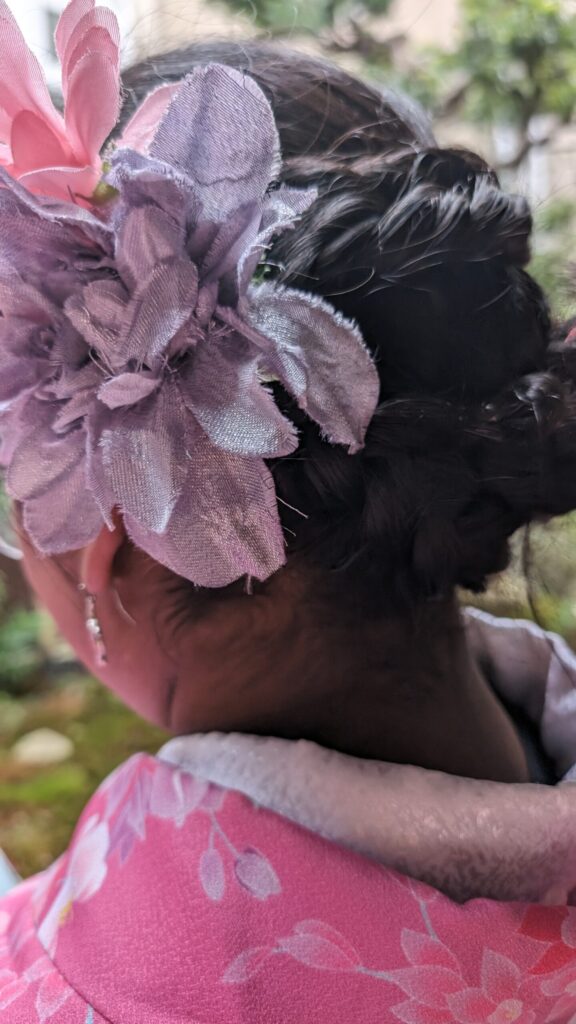
Today, we traded the frenetic pace of high-speed trains for the timeless attractions of Kyoto. Our first stop was the famed Nishiki Market, not for food (yet), but for something that is classic Japan: a traditional Japanese matcha tea ceremony at Mai-Koya. Of course, you can’t just stroll into a tea ceremony. First, we had to look the part. Some of us were whisked off to a fitting area, while the rest of us crossed the street into what can only be described as a kimono wonderland. Hundreds of kimonos in every imaginable shade lined the walls, and we were faced with the delightful challenge of choosing just one. After much deliberation (and some color coordination anxiety), we finally selected our kimonos. But the decisions didn’t stop there. We had to choose the obi (sash) and matching hair accessories. Our stylist dressed us with practiced deftness: layering inner robes, wrapping the kimono just right, tying the obi in an artful knot, and doing up our hair.
We slipped into the classic five-toed socks and wooden sandals and looked as though we had stepped out of a Japanese painting. Today, we traded the frenetic pace of high-speed trains for the timeless attractions of Kyoto. Our first stop was the famed Nishiki Market, not for food (yet), but for something that is classic Japan: a traditional Japanese matcha tea ceremony at Mai-Koya. Of course, you can’t just stroll into a tea ceremony. First, we had to look the part. Some of us were whisked off to a fitting area, while the rest of us crossed the street into what can only be described as a kimono wonderland. Hundreds of kimonos in every imaginable shade lined the walls, and we were faced with the delightful challenge of choosing just one. After much deliberation (and some color coordination anxiety), we finally selected our kimonos. But the decisions didn’t stop there. We had to choose the obi (sash) and matching hair accessories. Our stylist dressed us with practiced deftness: layering inner robes, wrapping the kimono just right, tying the obi in an artful knot, and doing up our hair. We slipped into the classic five-toed socks and wooden sandals and looked as though we had stepped out of a Japanese painting.
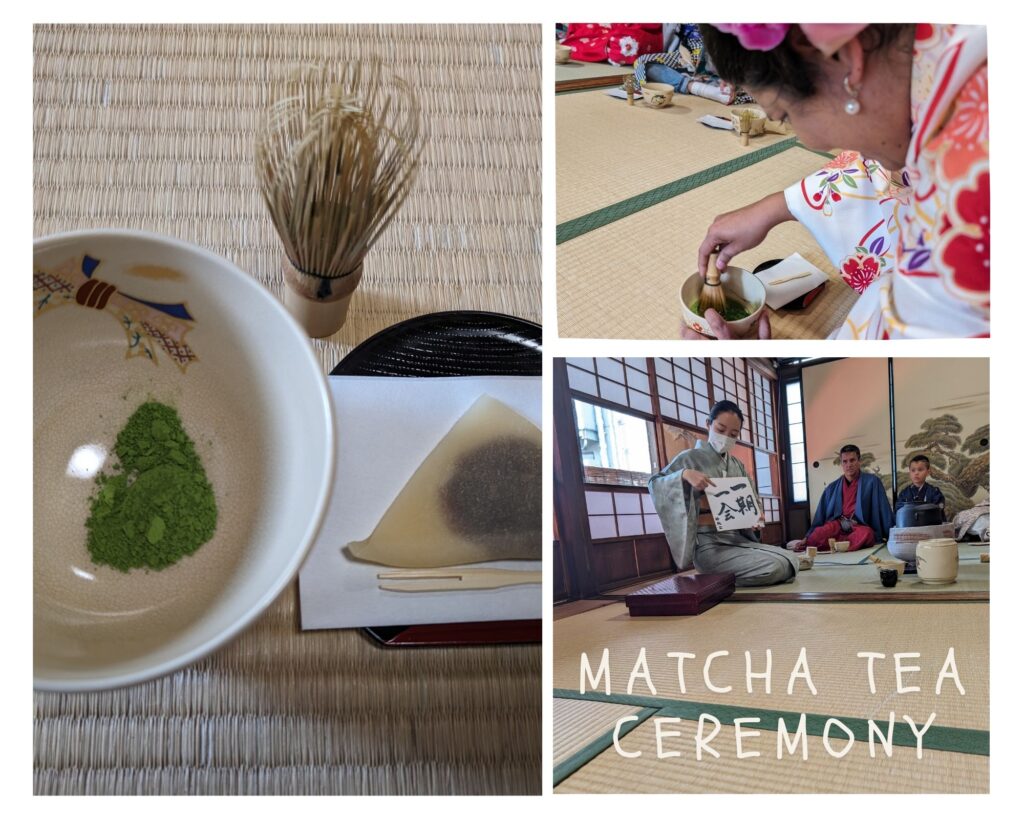
The tea ceremony at Mai-Koya was no casual tea break with friends. It was a quiet, sacred ritual. Every gesture was deliberate. Our host moved with graceful precision as she cleaned the utensils, swirled the matcha, and guided us through the steps of pouring, turning, sipping, and silently appreciating the moment. Pure matcha is an acquired taste. It is grassy, earthy, and bitter, far from the sugary versions found at Starbucks. Our host kindly reassured us that finishing it wasn’t mandatory, though we all gave it our best shot. We were also served wagashi, delicate confections made from sweet bean paste and glutinous rice, crafted to balance the bitterness of the tea. After the ceremony, we posed for photos with fans, umbrellas, and other props they thoughtfully provided, everything needed for a perfect Instagram post.
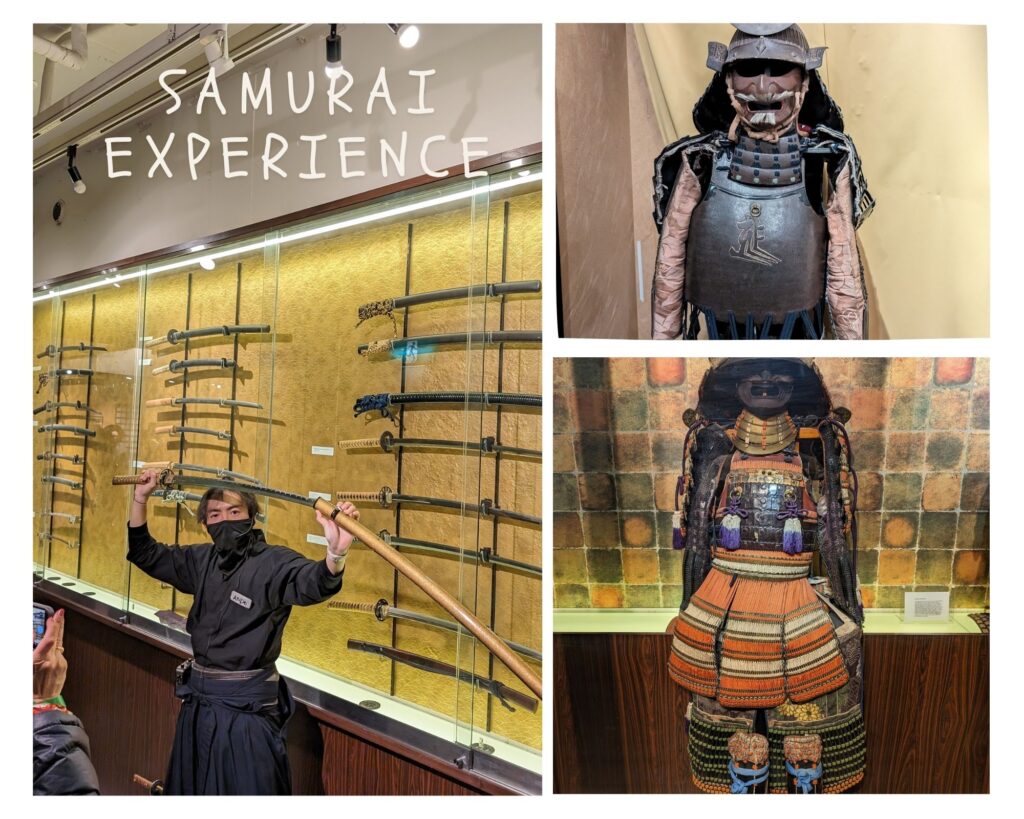
Back in our regular clothes, we headed to our next stop just a few meters away: the Ninja and Samurai Museum. We swapped kimonos for helmets and armor and were transported into the fascinating world of Japan’s warrior class. Tales of honor, deception, female samurai, ritual seppuku, and sanctioned assassinations had us hooked. Samurai belonged to an aristocratic warrior class and followed a strict code of discipline called Bushido. Though baffling by today’s standards, these values of respect, discipline, and honor still echo throughout Japanese society. And yes, we got to don ninja gear and pose with swords, because when in Japan.
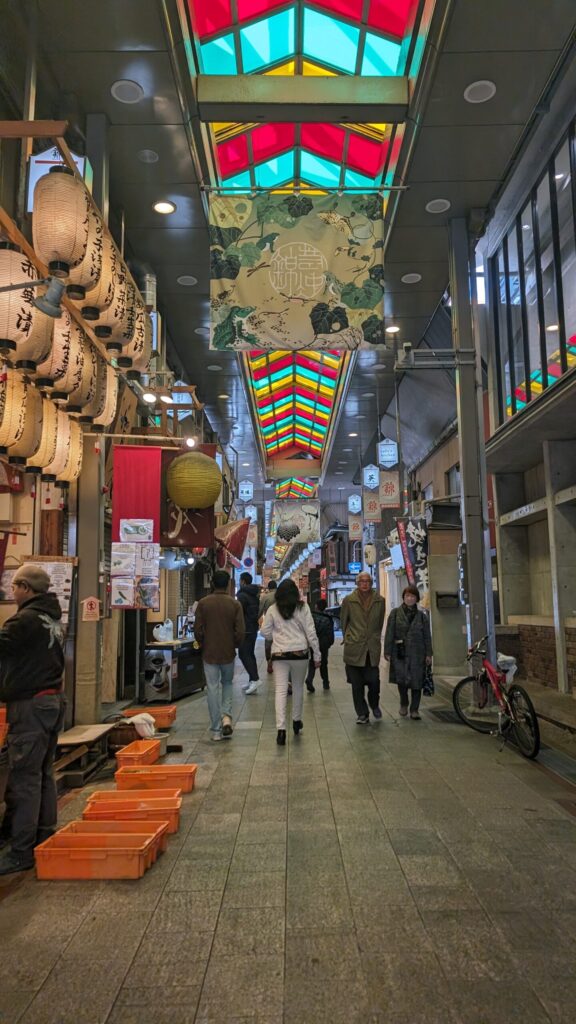
Back near Nishiki Market, we strolled through stalls packed with snacks, souvenirs, and a lively mix of tourists and locals. Window shopping was a joy with so many unique stores to browse, including an “American style” gun store.

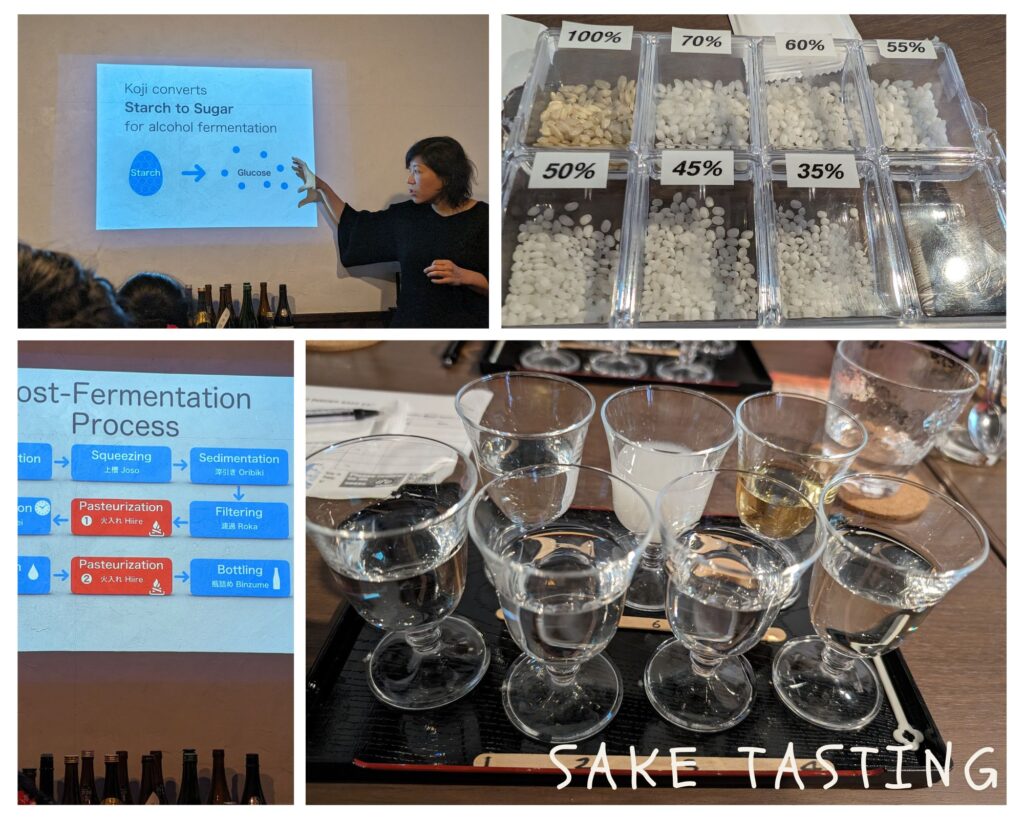
Next, we made our way to the Kyoto Insider Sake Experience near Fushimi. This wasn’t your leisurely vineyard wine tasting. It was sake, the Japanese way. We sat through a PowerPoint presentation, yes really, on rice polishing, water quality, and fermentation temperatures. It felt very corporate, but if all meetings ended with sake tastings, meetings would probably have many more fans. The sake itself ranged from delicate and fruity to dry and sweet. Thanks to the generous pours, we were happily tipsy.
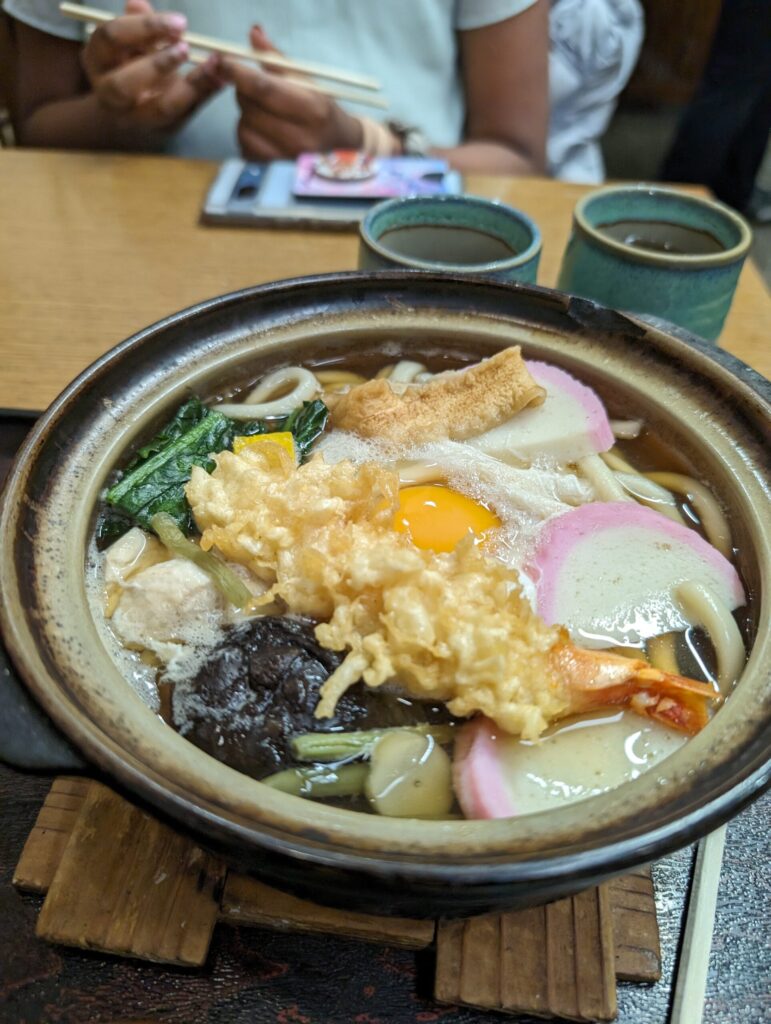
In search of food to soak up the alcohol, we wandered through back alleys and stumbled upon a quiet ramen shop in a residential neighborhood. There was no English menu, so we pointed, gestured, and hoped for the best. What arrived was heart and stomach warming ramen: spicy, hearty, and absolutely perfect.
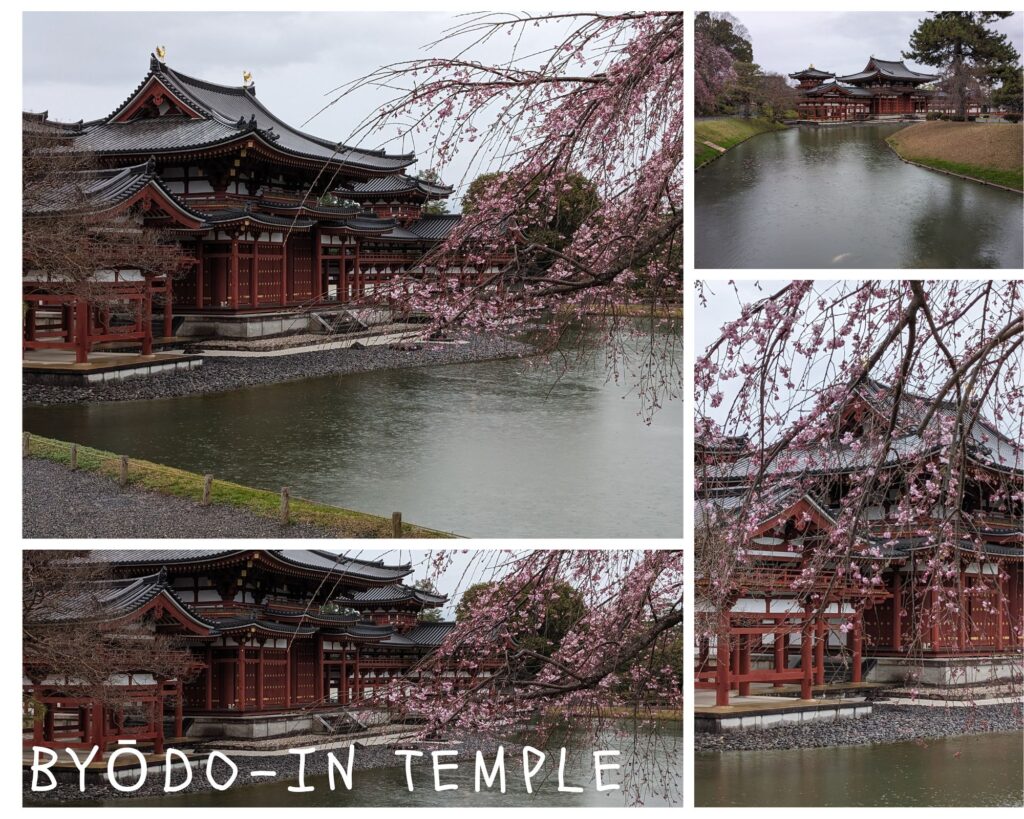
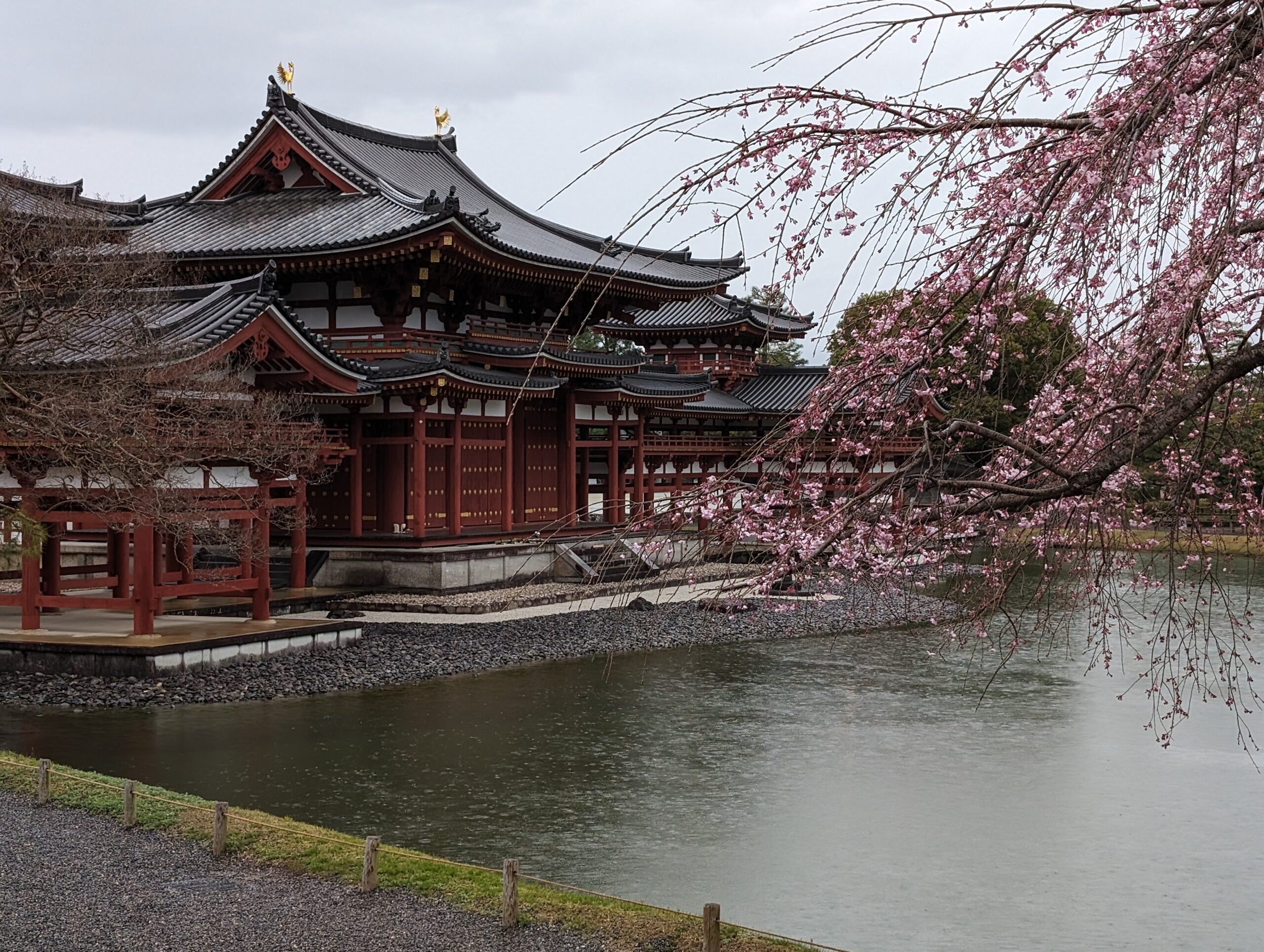
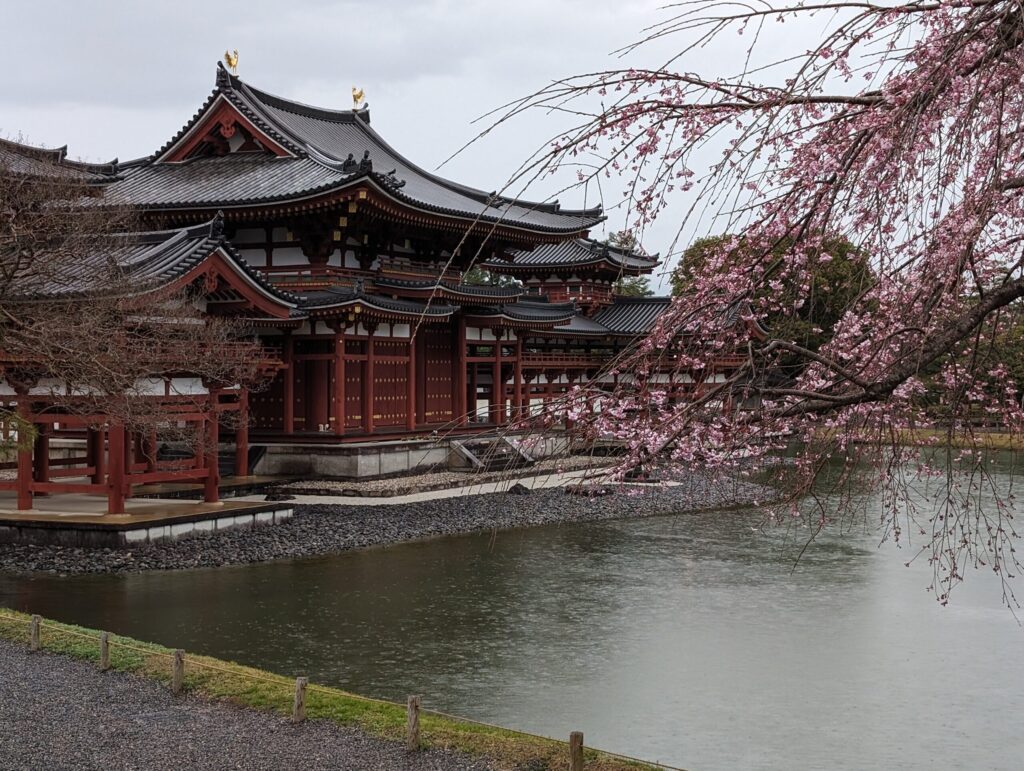
Our next stop was the Byodoin temple. Unlike the hustle of Senso-ji in Tokyo, Byodoin felt like a hidden gem. Its classic temple structure reflected perfectly in a still pond, framed by cherry blossoms just beginning to bloom. Byodoin is also one of UNESCO’s World Heritage sites. Japan actually has 26 such designations, and we have managed to visit five during this trip: Himeji Castle, Todaiji Temple in Nara, the Hiroshima Peace Memorial, Kinkakuji Temple (more on the last two later), and now Byodoin. Compared to the crowds at Senso-ji in Tokyo, Byodoin felt peaceful and almost contemplative.
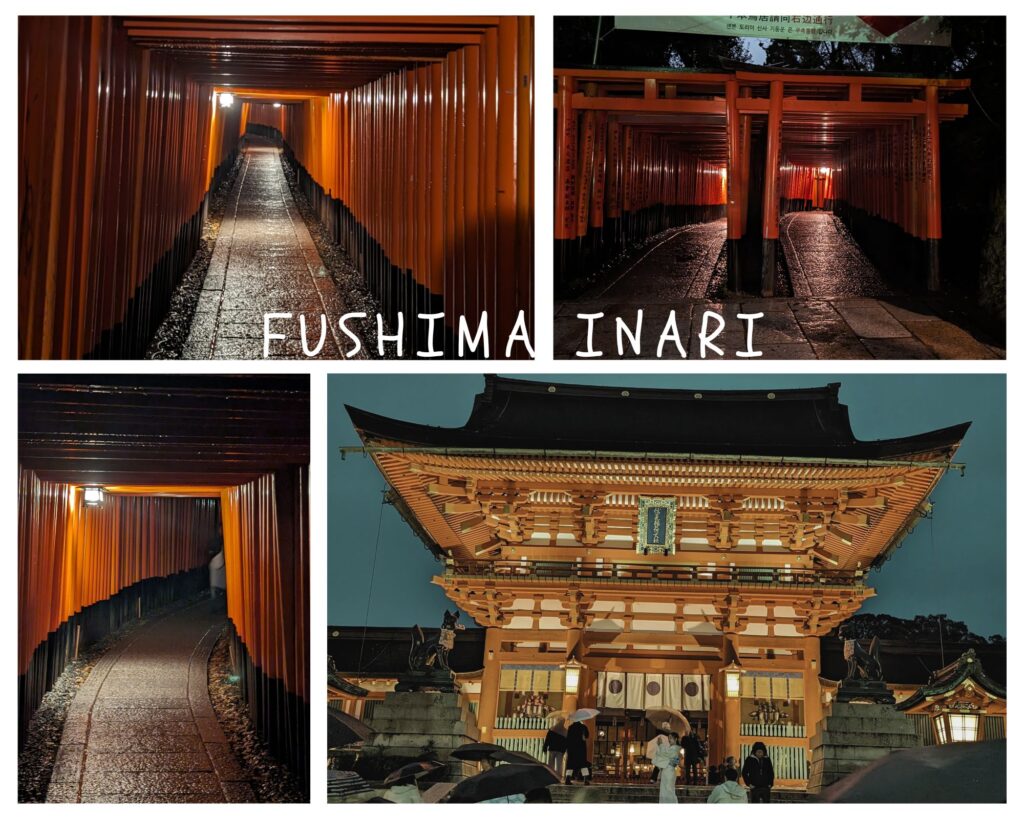
We ended our epic day at Fushimi Inari Shinto Shrine just as dusk fell. The famous vermilion torii gates stretched endlessly up the mountain, forming a glowing tunnel. A light drizzle meant we were lucky enough to have the path nearly to ourselves. Each gate bore inscriptions. They were not spiritual verses as we first thought, but something more practical. Each gate is donated and bears the names of donors and the dates of their donations. It was a small reminder of the balance between tradition and modernity that defines so much of Japan.