

Some trips are planned months in advance. Others happen because life unexpectedly leaves a small gap in the calendar. Many years ago, Seejo was traveling through Europe, Israel, and China as part of his MBA program. Between flights, he found himself with four free days in Belgium. This was pre-kids. I booked a ticket, met him in Brussels, and for one long weekend we became one of those couples who rendezvous in Europe before heading off in opposite directions again.
Brussels: Chocolate in the Air
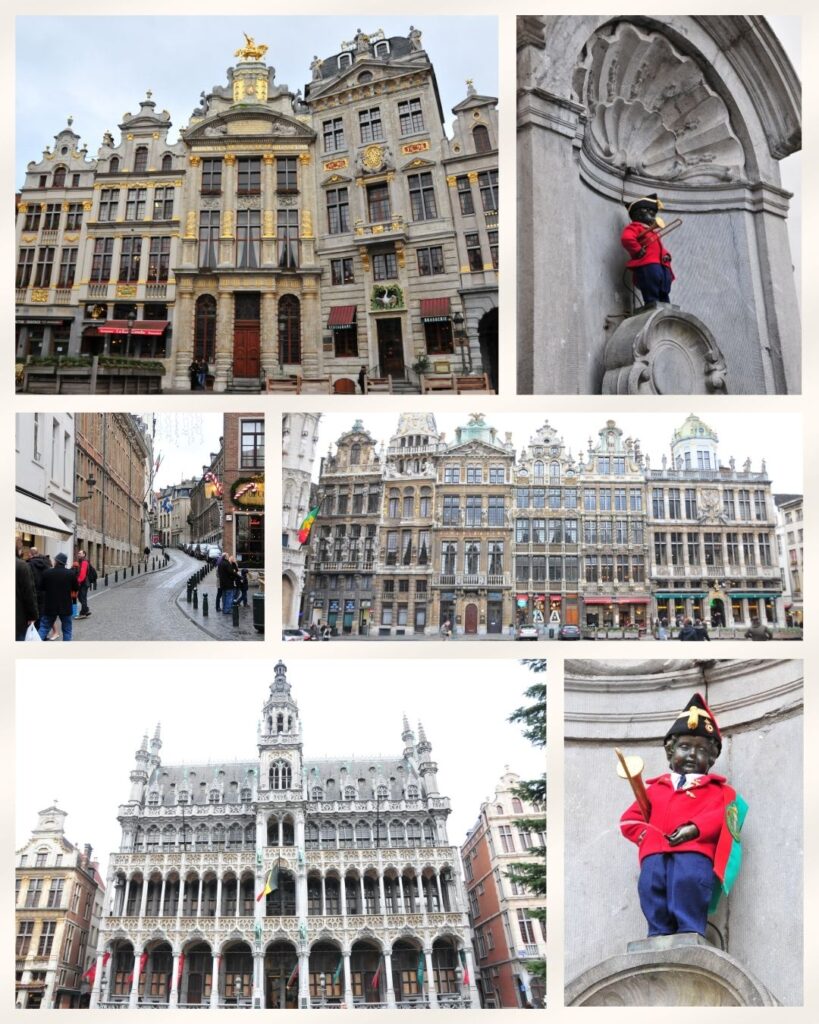
Our first impression of Brussels was the Grand Place. Even after visiting countless European squares over the years, it remains one of the most theatrical. The ornate guild houses gleamed in gold, the Town Hall dominated one side of the square, and narrow streets disappeared in every direction. One of these houses, La Maison du Cygne, was once frequented by Karl Marx and Friedrich Engels , apparently where they collaborated on the Communist Manifesto. Only in Belgium would political revolution begin next to waffle shops. Like every first-time visitor, we followed the crowds to see the famous Manneken Pis. It was much smaller than we expected, and had there not been a cluster of tourists around it, we might have walked right past. Small, irreverent, and completely absurd, he is somehow the national symbol of Belgium. The statue’s clothing is changed regularly, and his wardrobe , stored at the Royal House , includes national costumes from various countries as well as uniforms from different professions and military groups.
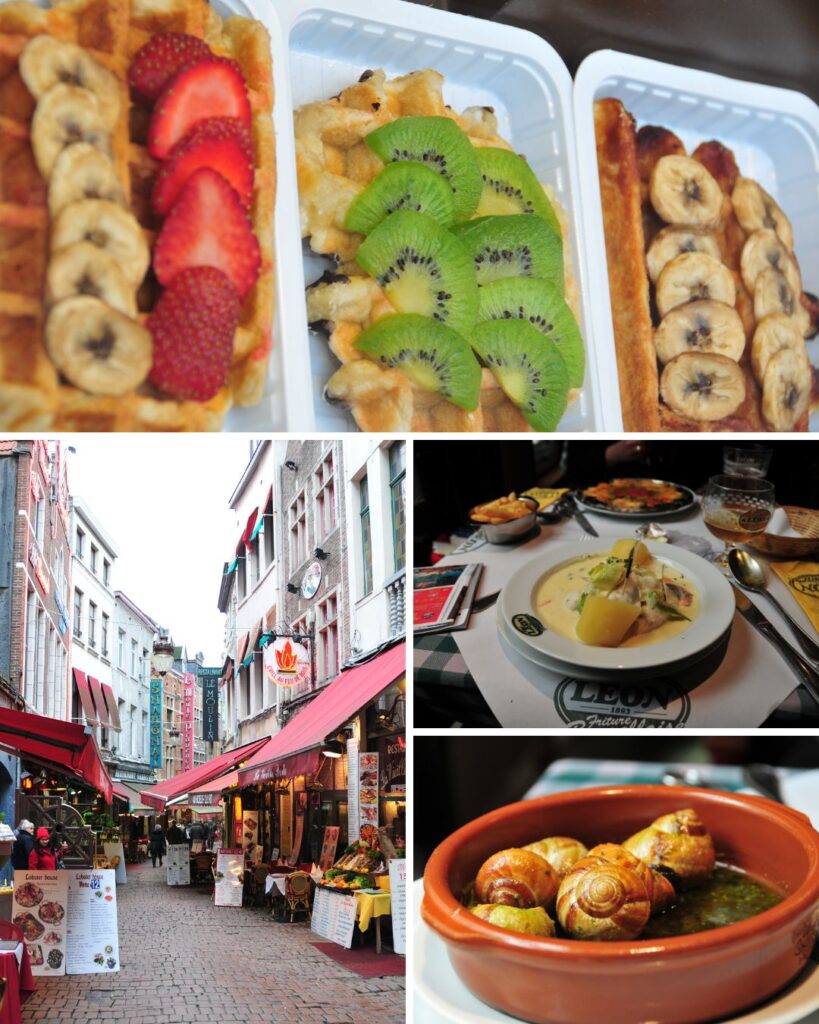
Brussels smelled exactly as you would hope it would: chocolate. Chocolate shops, waffle shops, and beer cafés seemed to occupy every corner. For our first Belgian meal, we did the classic tourist thing and went to Chez Léon, famous for moules-frites (mussels and fries). Since it was the off-season, the Rue des Bouchers, Brussels’ version of a khau gully (food street) , wasn’t crowded, and we got a table easily. The mussels were excellent, the fries deserved their reputation, and the sweet framboise beer converted at least one non-beer drinker. We also tried waterzooi, a creamy stew of chicken or fish. Rich, heavy, and unfortunately a bit too bland for us. Belgium’s culinary influence is surprisingly outsized for such a small country. Waffles, chocolates, beer, endives, and even Brussels sprouts all trace their roots here. Belgians also claim to have invented “French” fries.
To walk off our extremely heavy lunch, we strolled toward the Royal Museum of Fine Arts. Parts of the walk took us through gritty stretches with broken glass, litter, and gypsy beggars, but even there the smell of chocolate floated through the air. Old Flemish buildings sat side-by-side with sleek modern ones. We admired the ornate Old England Building, a classic example of Art Nouveau, and paused at the Mont des Arts for a beautiful overlook. By the time we reached the museum, jet lag was catching up. We did a very abbreviated visit, pausing only at the major highlights. Even in our foggy state, the artwork was impressive
.
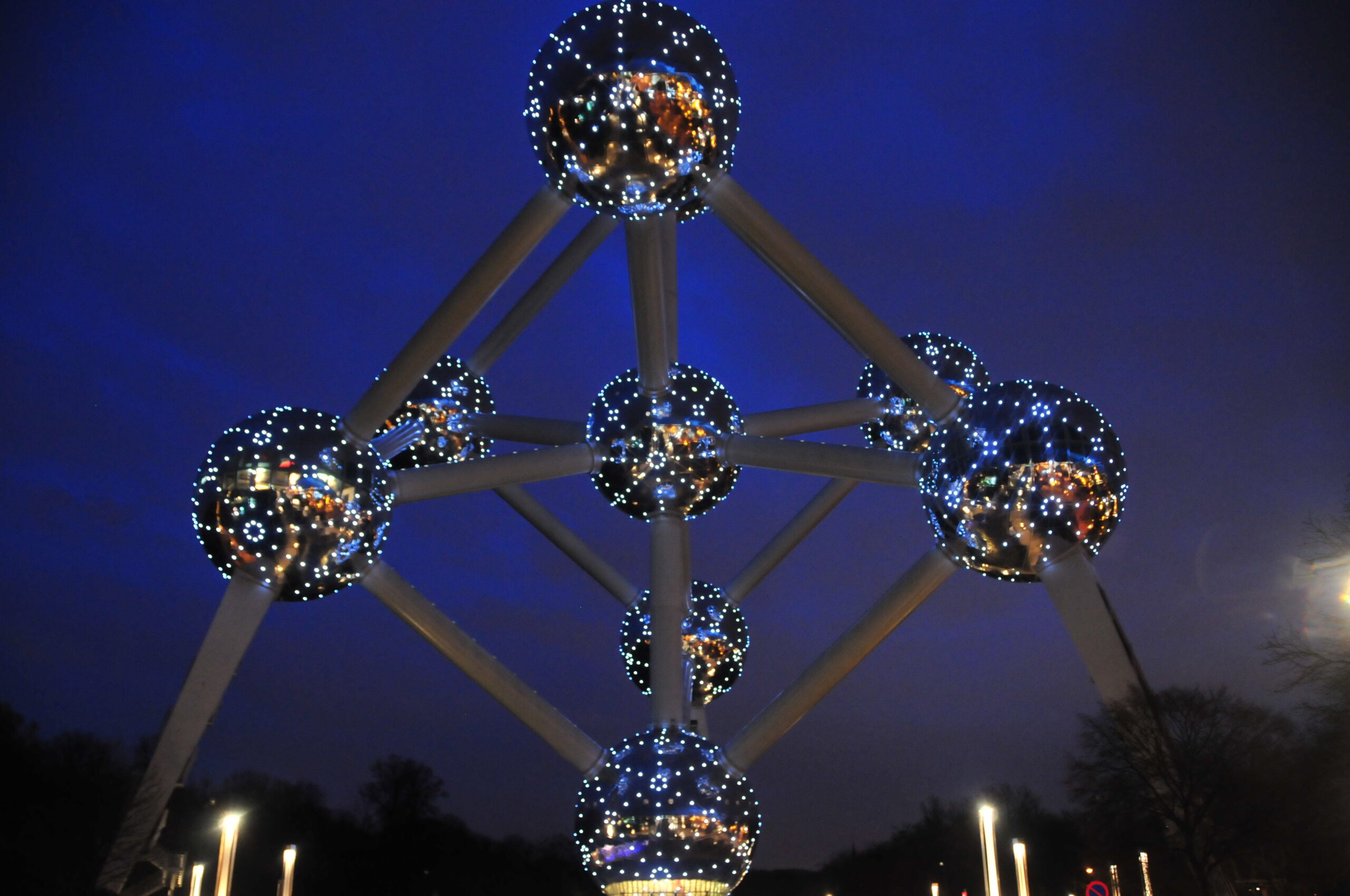
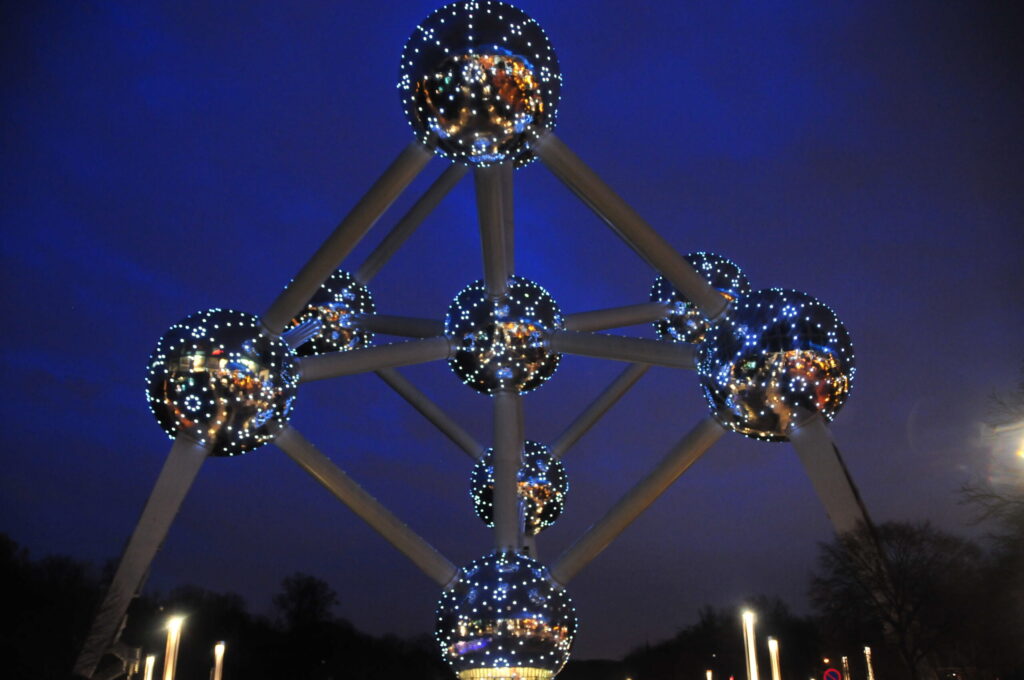
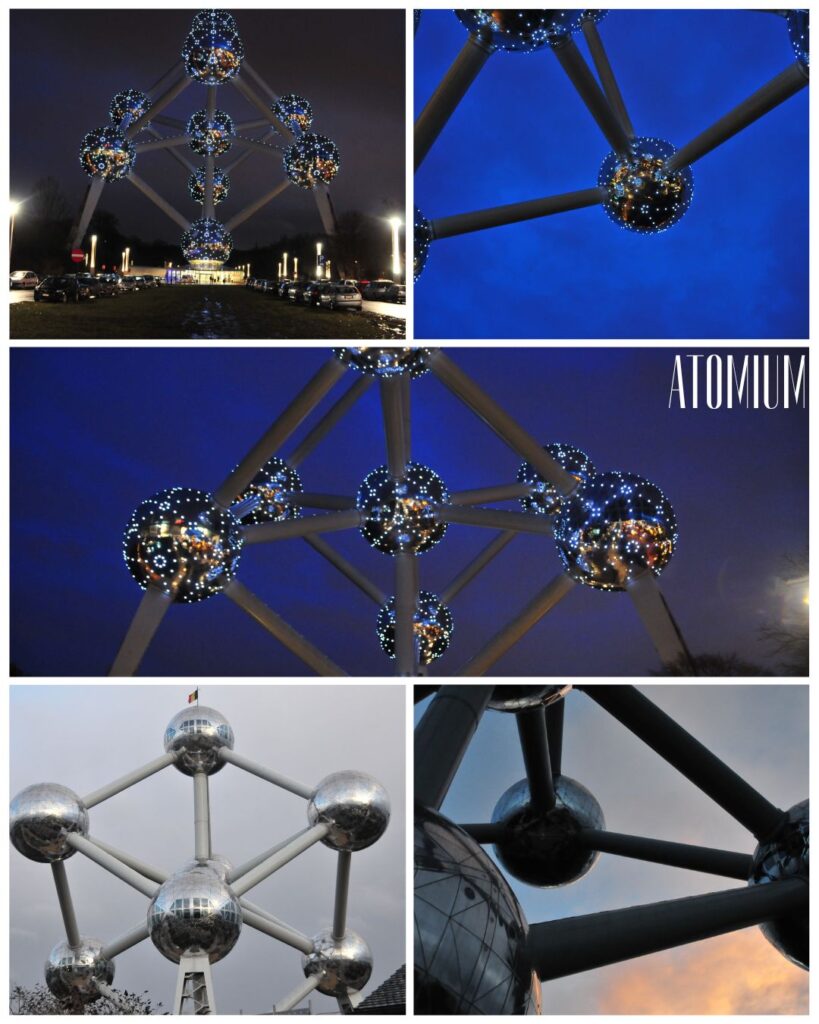
Our day ended at the Atomium. By daylight, the giant steel spheres looked unusual. Nine giant spheres arranged in the shape of an iron crystal magnified 165 billion times. Escalators inside the tubes transported us from sphere to sphere, each housing different exhibits. After dark, illuminated by blue lights against the night sky, the structure felt almost futuristic. It remains one of the most memorable city landmarks we’ve encountered. That evening we boarded a train for Bruges.
Bruges: A Postcard Come to Life
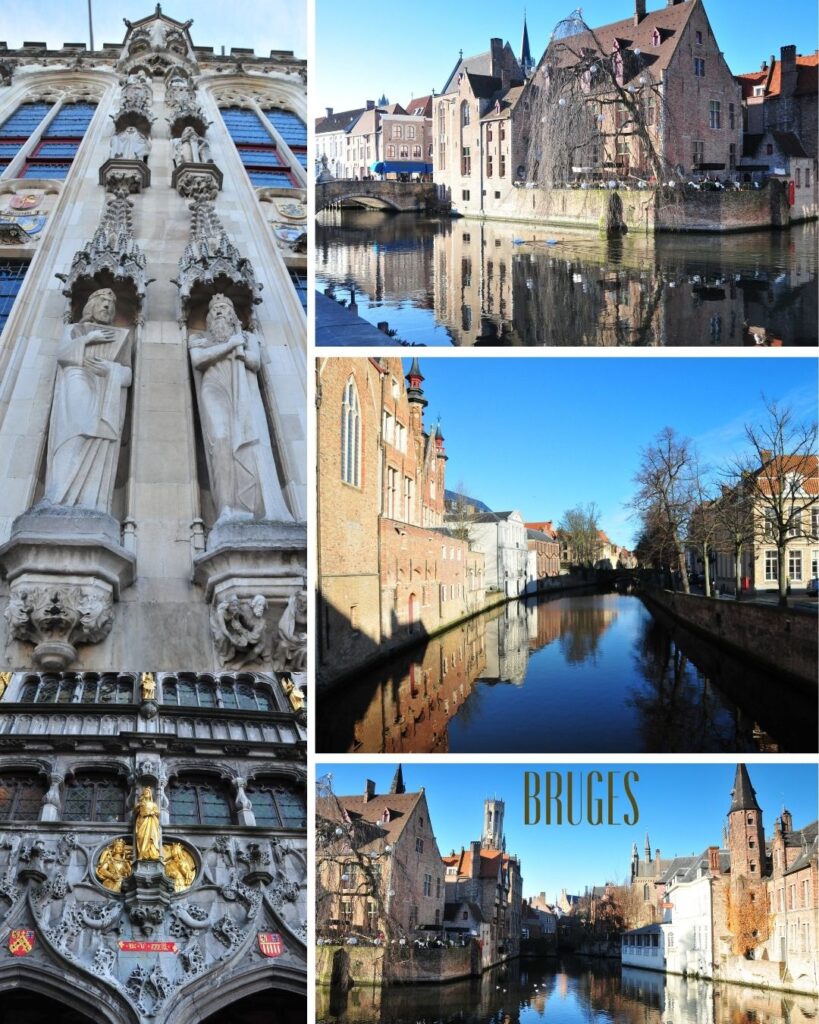
If Brussels felt like a working capital city, Bruges felt like stepping into a painting. We stayed directly beside the main square and spent the day with no agenda, something that was rare for us then and perhaps even rarer now. Canals reflected medieval buildings with near-perfect symmetry.
With no fixed agenda, we spent the day wandering. We admired mirror-like canals where the still water reflected medieval gables perfectly. We browsed a charming tapestry shop for souvenirs. We stepped into quiet centuries-old churches with soaring interiors. At the Basilica of the Holy Blood, we saw a tiny glass vial said to contain the blood of Christ, brought from the Holy Land by a crusading knight.
We sampled Belgian waffles and spent far too much time in The Chocolate Line, a chocolatier known for inventive flavors. Alongside traditional offerings were combinations involving tea, spices, herbs, and ingredients I never expected to encounter inside chocolate. As evening approached, we sat near the square eating fries and watching skaters circle the ice rink while the city lights slowly came on around us. Bruges felt timeless.
Waterloo and an Unexpected Detour
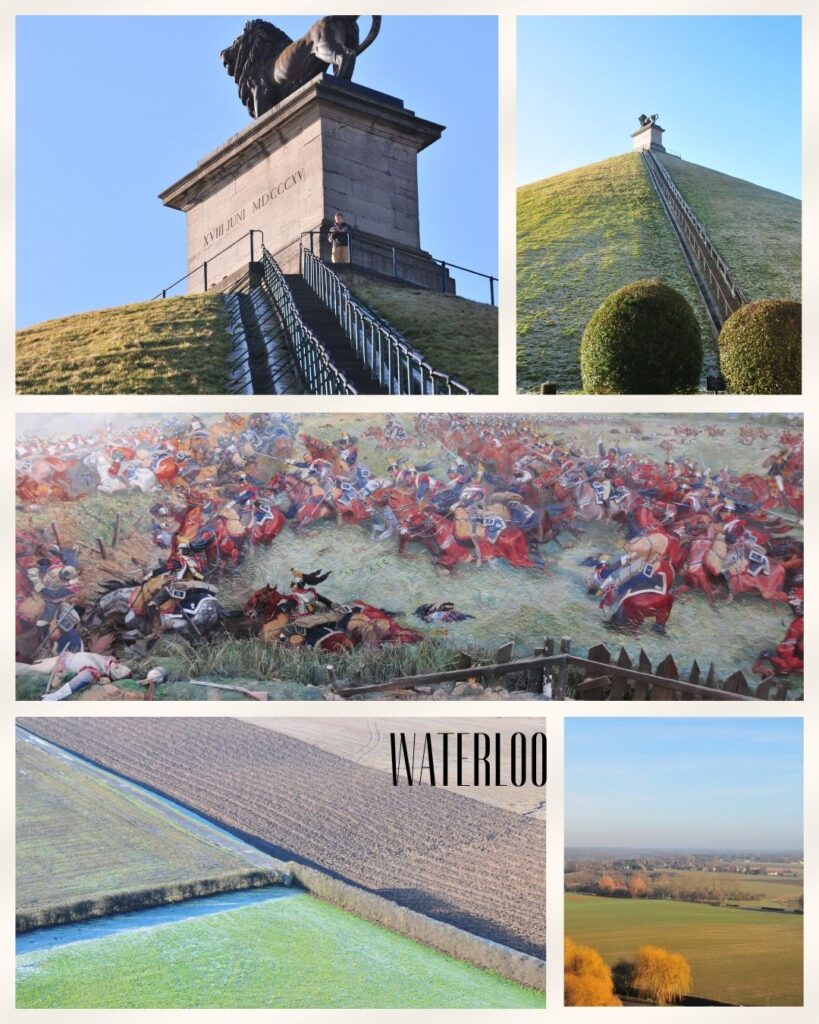
Our final day began under gray skies and colder temperatures. We picked up a rental car and drove to Waterloo. Standing on the battlefield where Napoleon’s fate was decided was one of those moments that makes history feel tangible. What appears today as peaceful farmland once altered the course of Europe. From the Lion’s Mound, the battlefield stretched quietly into the distance. We climbed the Lion’s Mound — huffing and puffing — for a sweeping view of the battlefield. The adjacent 360-degree panorama painting recreated the scene with dramatic sound effects. It was difficult to reconcile the calm landscape with the events that unfolded there two centuries ago.
Afterward, we did one of our favorite travel activities: grocery shopping. There is something endlessly fascinating about wandering through a local supermarket. The products, the snacks, the prepared foods, even the packaging offer small glimpses into everyday life that guidebooks never capture. Next, we set off for the town of Monschau in Germany’s Aachen region, giving Seejo the perfect excuse to take his rental BMW for a spin on the famed German roads.
Monschau – A Fairy Tale Come to Life
One of our favorite travel traditions is to carve out a day to visit a place that sits well outside the main tourist circuit. This time, that place was the charming town of Monschau.
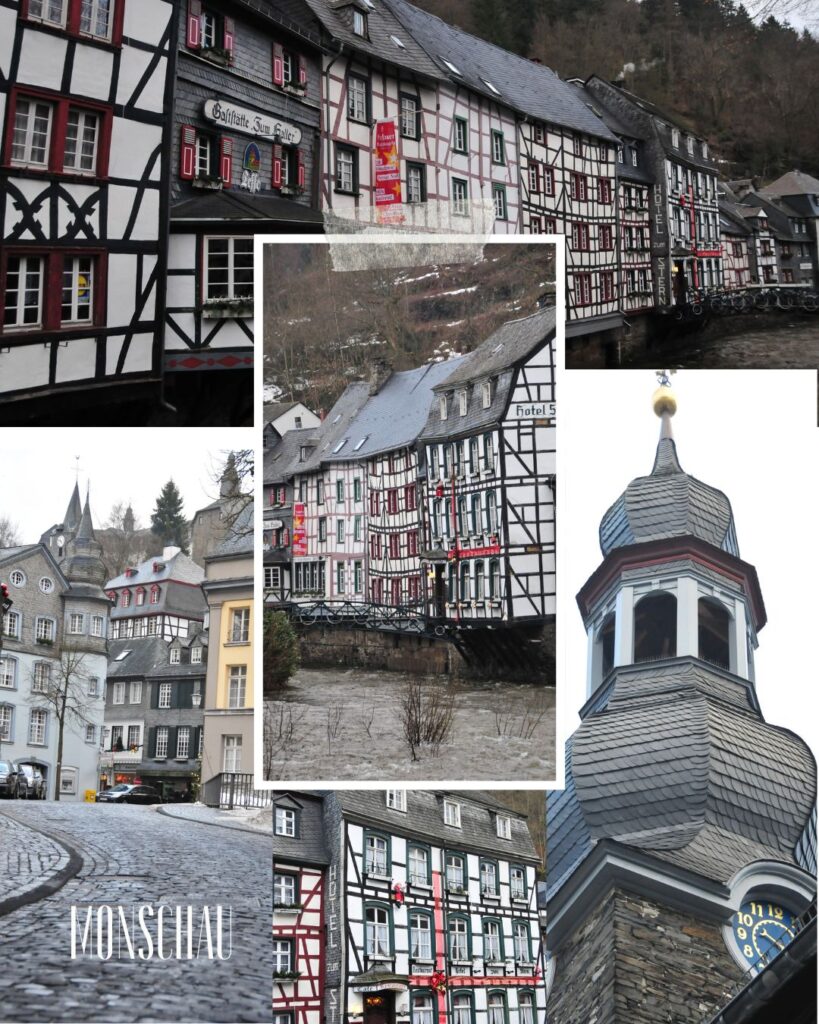
Nestled in the foothills of the Eifel Hills, Monschau looked as though it had been lifted straight from the pages of a fairy tale. A recent snowfall, combined with a blanket of mist, softened the landscape and transformed the town into something almost magical. Winter had nearly closed the town down for the season, and with very few visitors around, we felt as though we had the entire place to ourselves.
What struck us most were the distinctive half-timbered houses lining the canal. Their white facades crisscrossed with thick black wooden beams looked almost like giant jigsaw puzzles assembled along the water’s edge. With the mist hanging low over the canal, the quiet streets, and these storybook houses reflected in the water, it was easy to imagine ourselves wandering through the world of Hansel and Gretel.
By late evening, we arrived back in Brussels and packed our bags for the journeys ahead, mine back to the United States and Seejo’s to Israel the following day. It had been a short trip, just three days plus a travel day, but sometimes that is all it takes.
As I have learned over the years, if it’s the weekend, there is no place quite like Belgium.