My fascination with Corfu began long before we planned this trip – courtesy of Gerald Durrell’s famous book : My Family and Other Animals. His hilarious world of sun-drenched olive groves, eccentric locals, and island teeming with wildlife and dotted with ramshackle villas left an indelible image in my imagination. Perhaps not the most accurate portrayal of Greek life, but enough to position Corfu at the top of my must-visit list.
We started the day in Syvota, a serene coastal village where we stayed the night in a spacious villa, surprisingly affordable thanks to the off-season. Breakfast was a simple but delicious – something that we had come to expect in Greece: omelets fresh from the stove, warm bread, thick Greek yogurt with fruit preserves, and, of course, the inevitable feline company. Local cats wandered around our legs, as we enjoyed the view of bright blue Ionian sea.
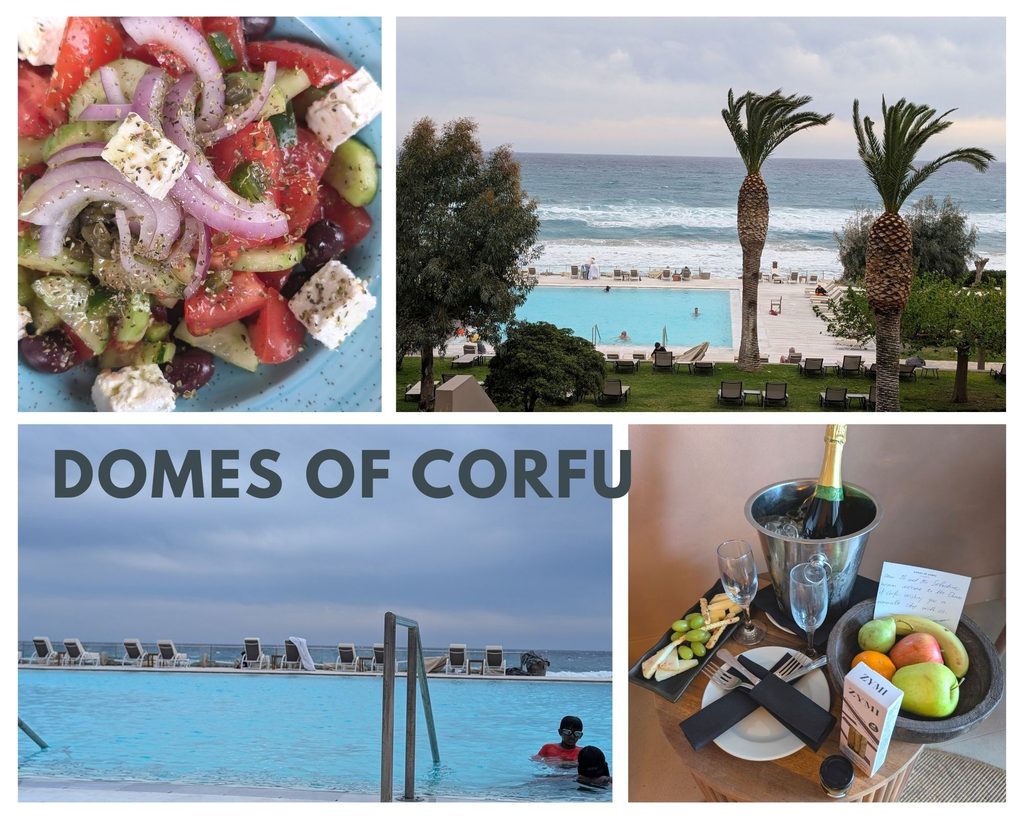
From Igoumenitsa, we boarded a car ferry to Corfu and drove straight to our hotel – the elegant Domes of Corfu, Autograph Collection by Marriott. The welcome was overwhelming in the best way: a refreshing drink, a personal tour of the property, a complimentary lunch by the sea, and a suite stocked with champagne and charcuterie. We promptly abandoned our plans for exploring Corfu for the day and switched to relaxation mode. Our room opened to a stunning view of the pool that led directly to the beach and the blue sea beyond. Although it was windy and the weather was still a bit cool, the heated pool was irresistible to the kids and me.
Dinner that evening was a lavish buffet celebrating traditional Greek flavors – from savory stews and fresh seafood to a dizzying array of desserts that immediately lit up the kids eyes. We shared the experience with a live band… and a few very bold cats who had no compunction in hopping on to our chairs. It’s an odd sensation, trying to eat moussaka while being scrutinized by two plump tabbies seated beside you.
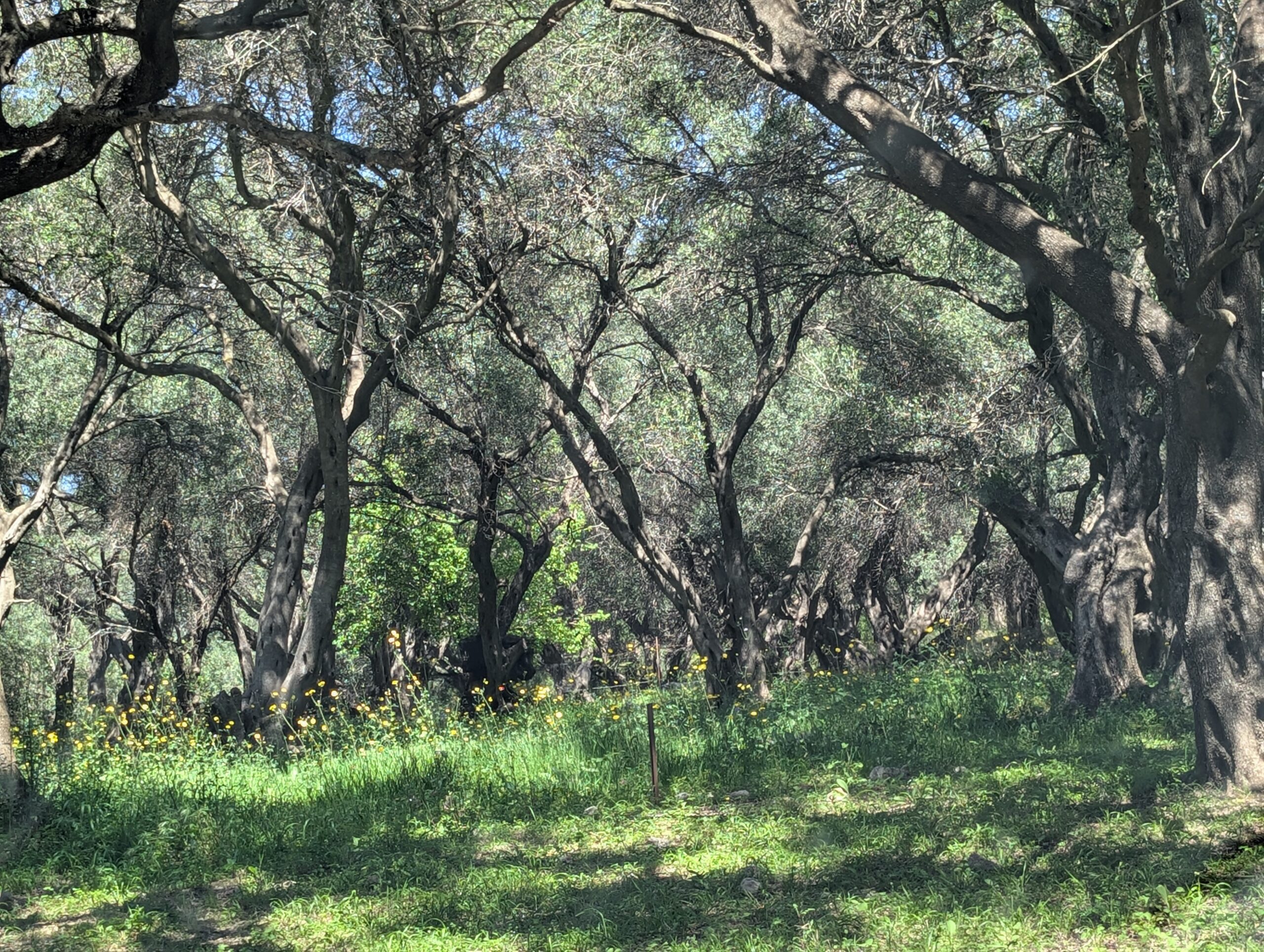
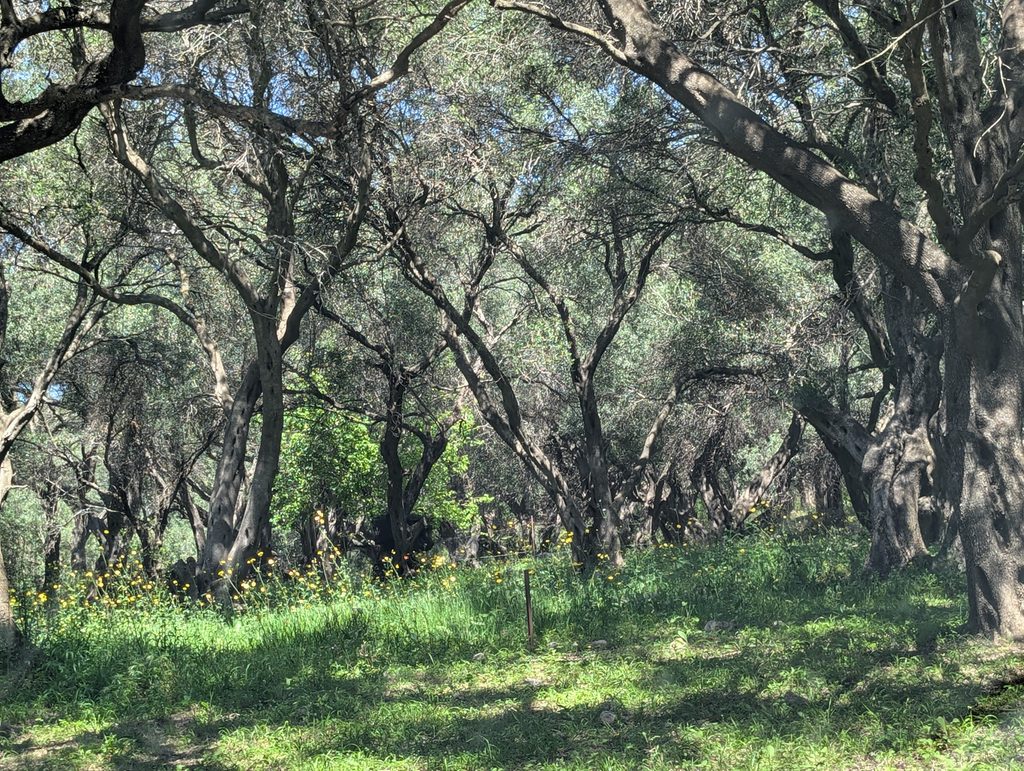
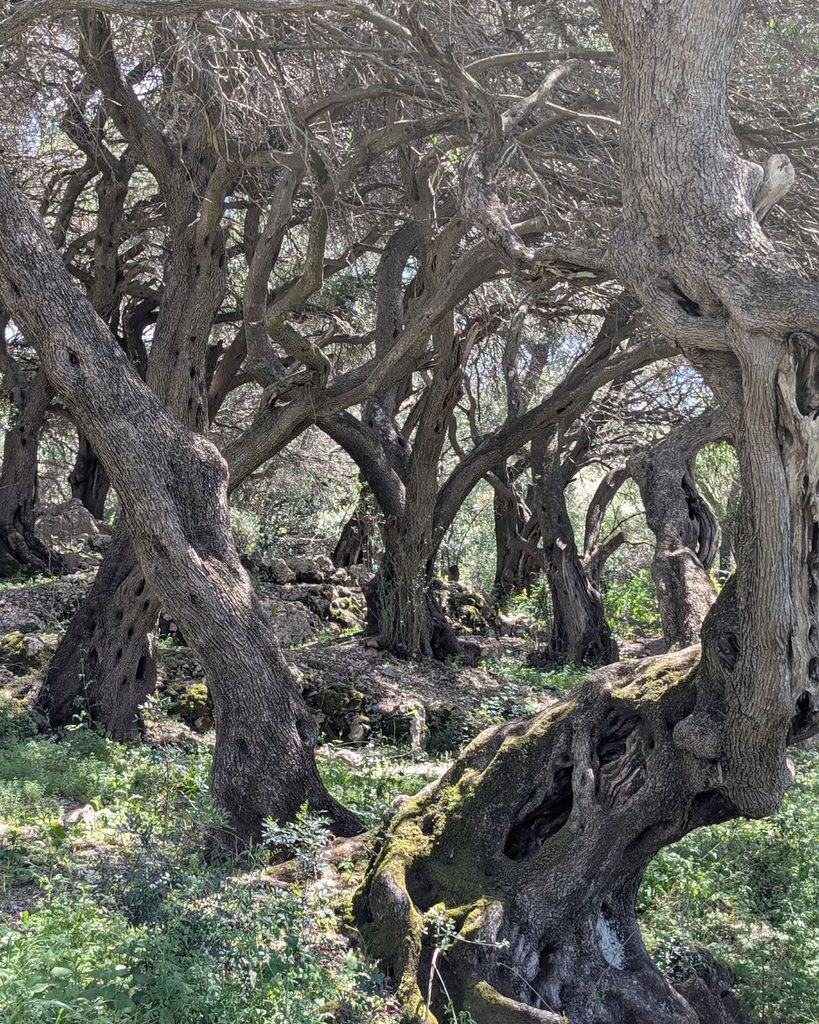
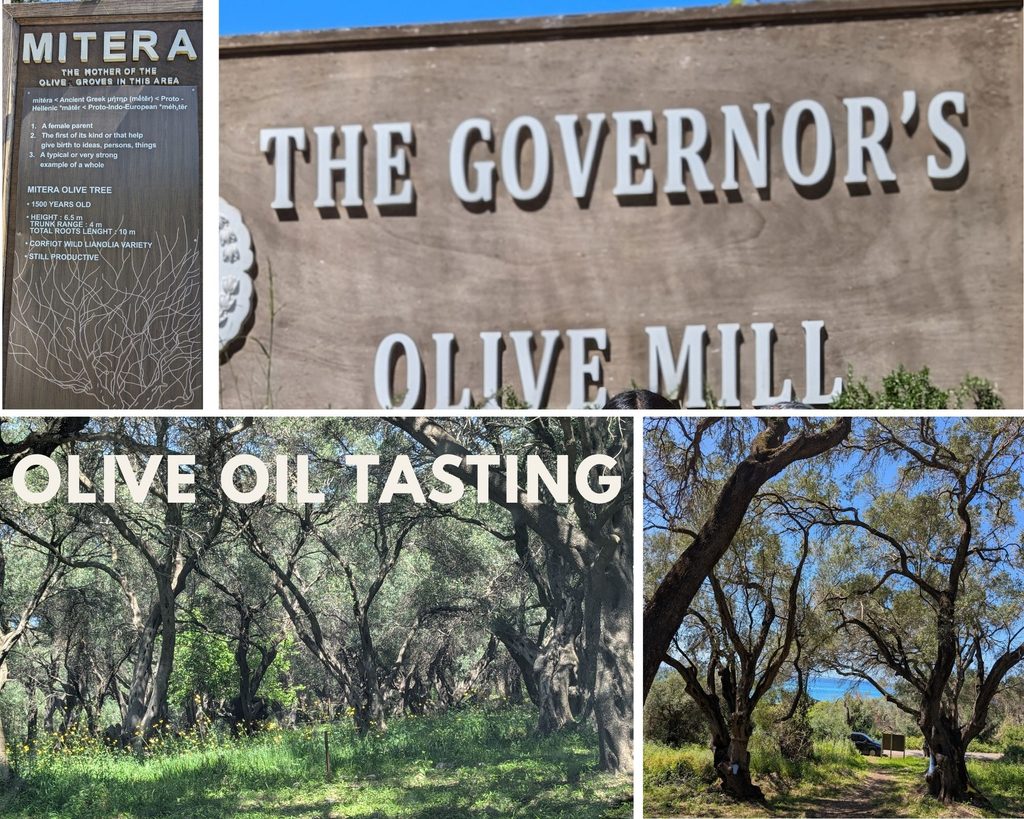
The next morning, we packed up and checked out, ready for our first stop: The Governor’s Olive Oil Tour, tucked away in the island’s south. We learnt that olive trees brought over during Venetian rule take 50–60 years to begin bearing fruit, yet live for over 1000 years. The crown jewel of the grove was the Mitera Tree – aptly named so since it was considered the mother of most of the local olive trees. It is also believed to be around 1,500 years old but was still producing olives. The guide led us through the entire olive oil journey from picking in September-December, the necessity of extracting oil within 24 hours to capture its essence , the machines used in cleaning, pressing and bottling the oil. We were suitably rewarded with the taste of the best olive oil I had ever tasted. It was rich, spicy, complex and you could taste the concentrated essence of the olives. We tasted it every which way : drizzled over bread, paired with feta and tomatoes, mixed into yogurt, even hidden in sesame bars. Each bite was a revelation.
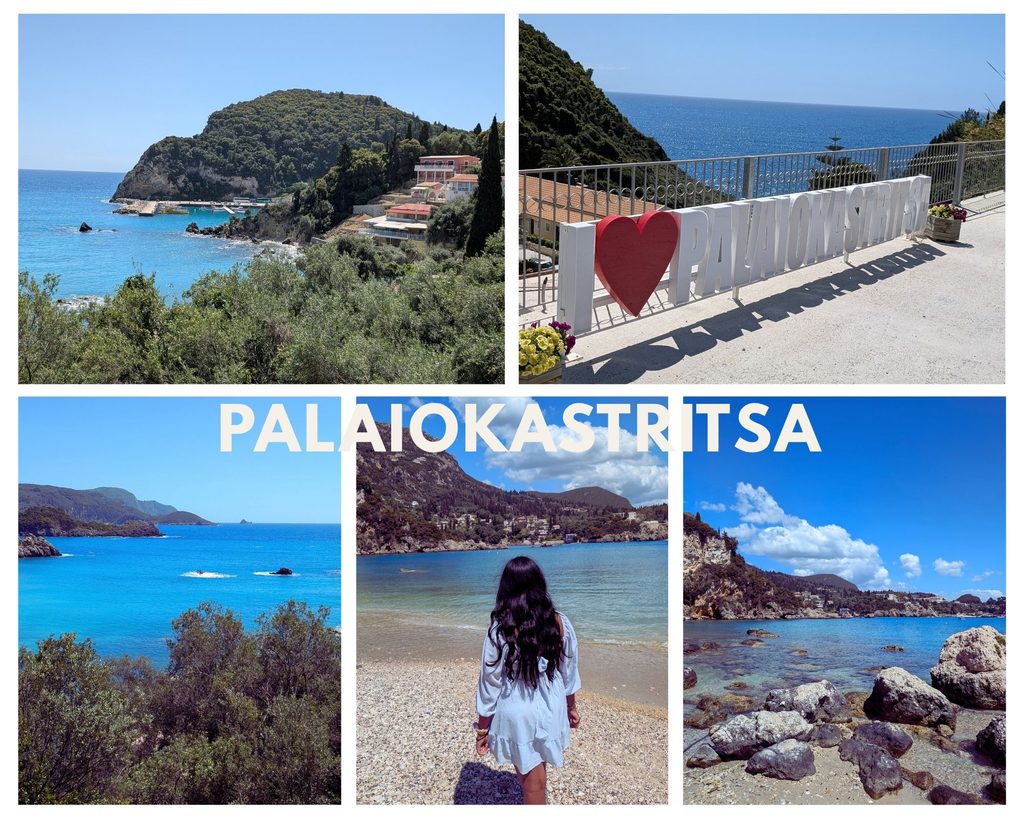
From there, we journeyed across the island, from south to north through winding coastal roads, large olive groves, tiny villages with trees laden with golden kumquat , and the kind of scenery that makes you want to pull over every five minutes. Eventually, we arrived at Paleokastritsa, a jewel of a beach where green-blue waters lapped gently on either side of a narrow isthmus. I wish we had more time to spend there, but Good Friday processions awaited us in Corfu’s Old Town.
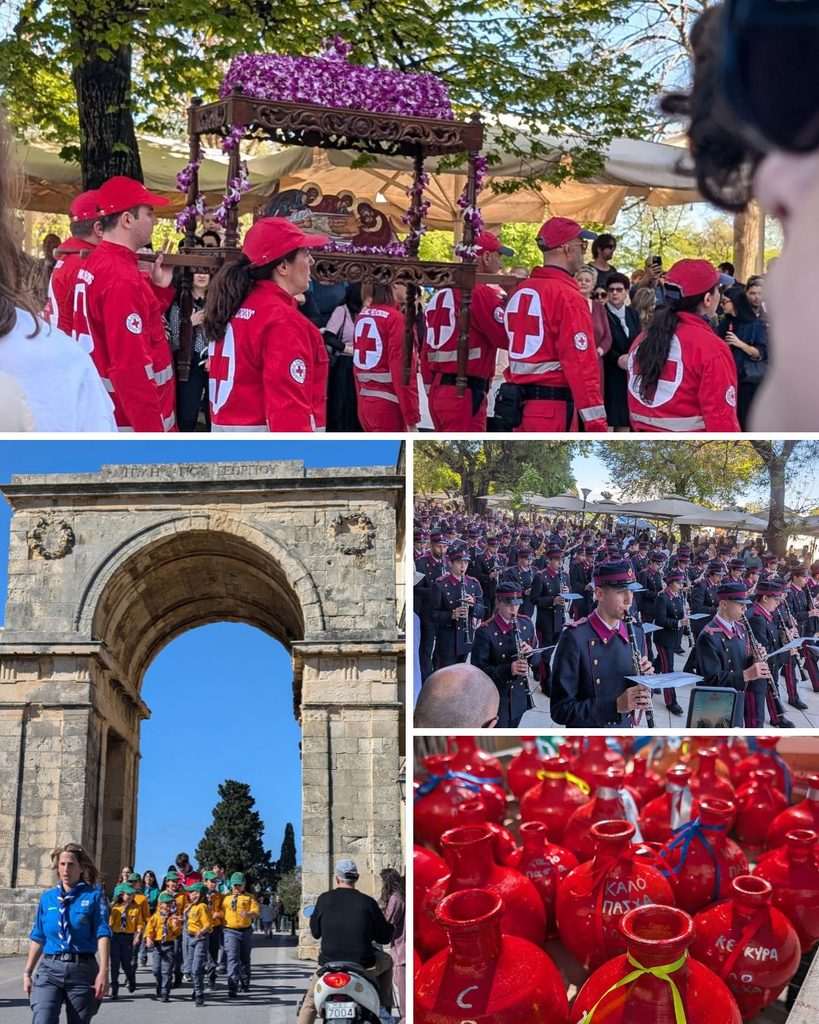
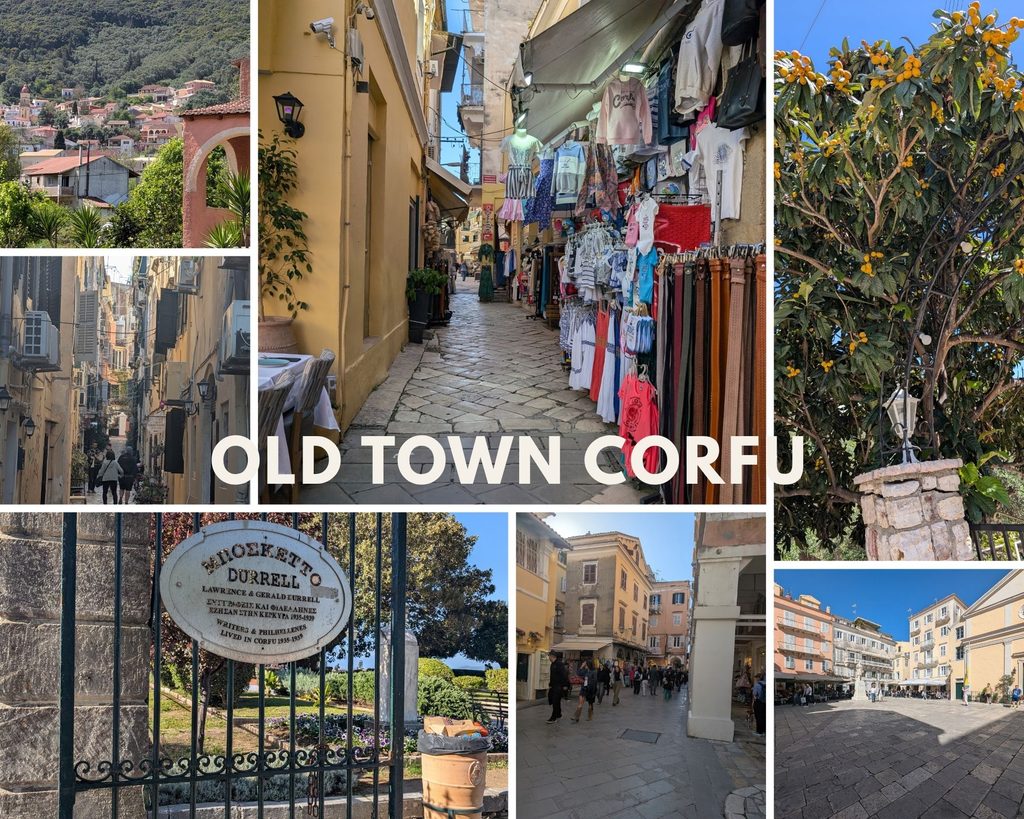
The holy week is a kind of big deal in Greece but it is even more of a spectacle in Corfu. By the time we arrived, the old town was closed to traffic and rapidly filling with crowds. Every church hosts its own Epitaphios procession – floral biers representing Christ’s tomb, carried solemnly through cobbled streets, accompanied by Corfu’s famed philharmonic bands. The atmosphere was buzzing: vendors weaving through the crowd selling balloons and candied nuts, families picnicking on grassy squares, children chasing each other between ancient columns and locals and tourists alike thronging the streets to photograph the procession. A special item for sale were clay pots for one of Corfu’s unique Holy Saturday customs. On Saturday morning, locals (and now enthusiastic tourists too) smash these clay pots from balconies to invite good luck.
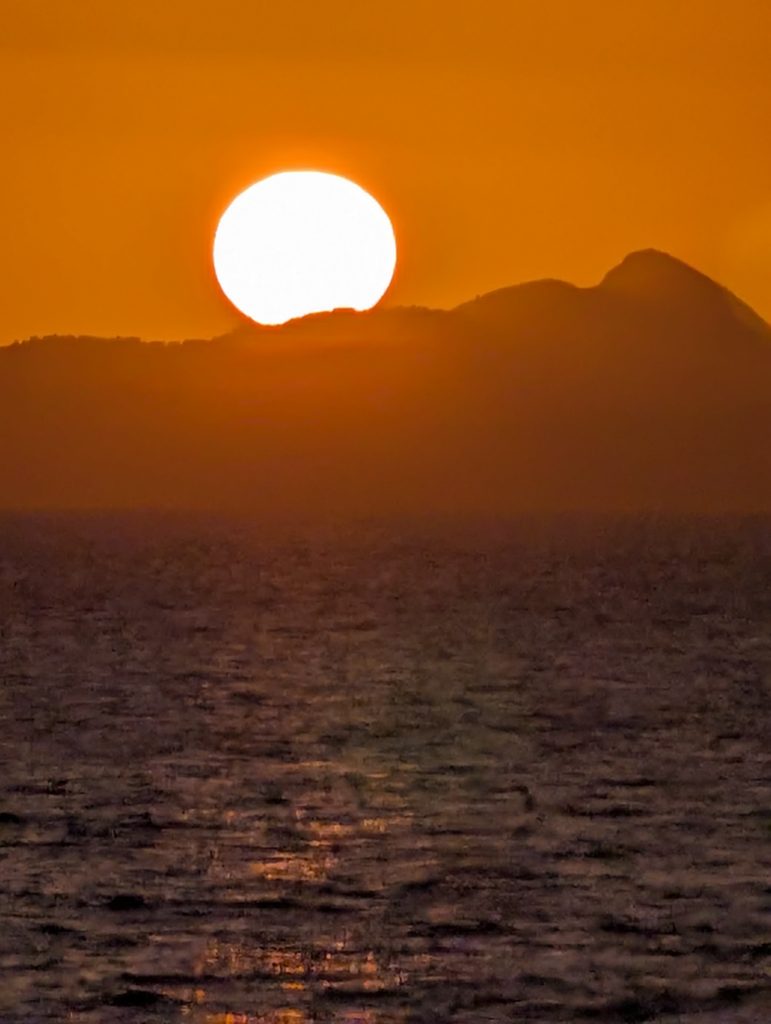
I wished we had more time to spend and revel in the madness but we left before sunset to catch the ferry back to the mainland. Seejo managed to get a few spectacular pictures of the sunset on the ferry. If I had one regret, it’s that we simply did not spend enough time in Syvota or Corfu or even in the picturesque little town called Parga where we spent that night. I wish we had more time to see more of villages in Northern Corfu, spend some more time people watching in the cafes in Old town Corfu, and may be even take a day trip to Albania. There was so much to do in this area that we simply would need to come back and explore.