
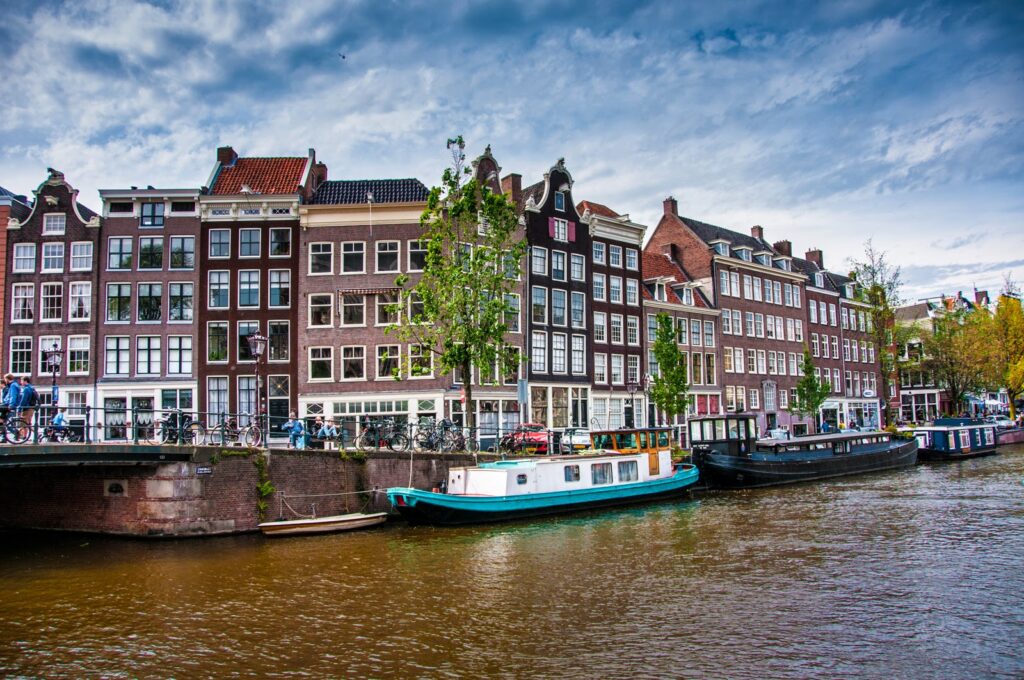
Our Pakistani cab driver dropped us off at our rental apartment in Amsterdam with one solemn warning. Pointing to a pale pink strip cutting through the sidewalk, he said, “That is the cycle lane. Stay away from the bicyclists. They will not stop for anyone.” We soon learned he wasn’t exaggerating. The cyclists of Amsterdam are a force unto themselves – fast, focused, and completely unapologetic. Everyone, it seemed, owned a bike. Frail grandmothers pedaled home with groceries, professionals in suits balanced briefcases and blackberries, parents ferried babies in tiny carriers strapped to handlebars, school children merrily chattering away and stunned tourists wobbling uncertainly through it all. The locals know that this is an attraction in itself. In fact, the bicycle parking station near Amsterdam’s Central station was a tourist attraction pointed our by the tour guide when we took the canal cruise that evening. Thousands of bikes stacked together in a four-story bike parking garage. What fascinated me most was that none of these bikes looked fancy. These were not the spanking new sports bikes with several gears and multiple cup holders that I was used to seeing in the US. These bikes were scuffed, rusty, and quite ordinary. There’s something quite unique about a man in a three-piece suit riding the same kind of bike as my neighborhood milkman in Mumbai.
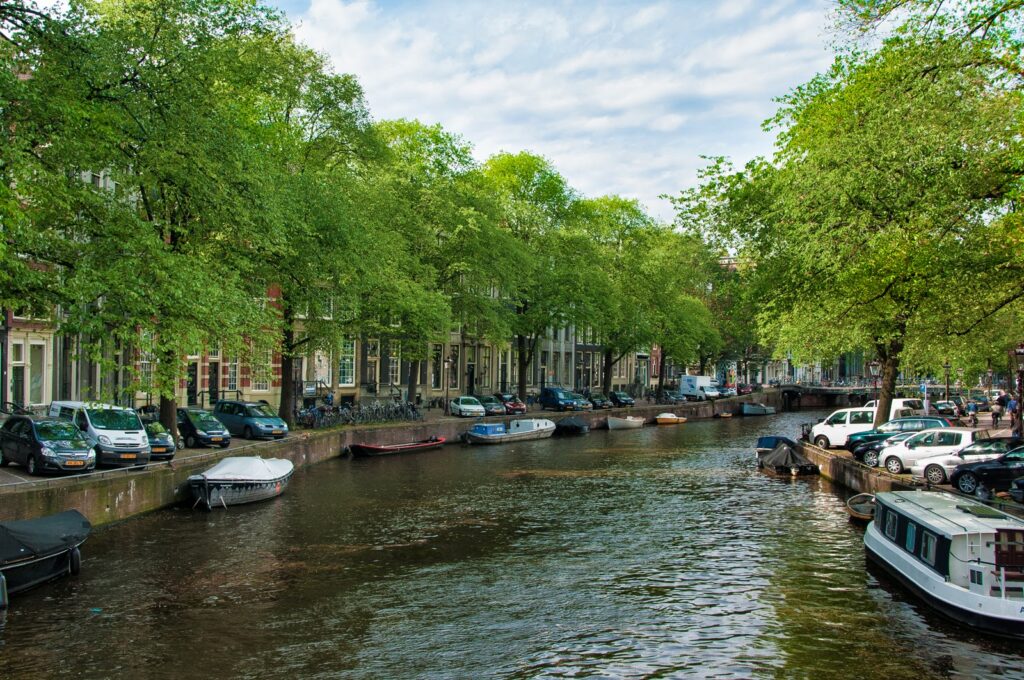
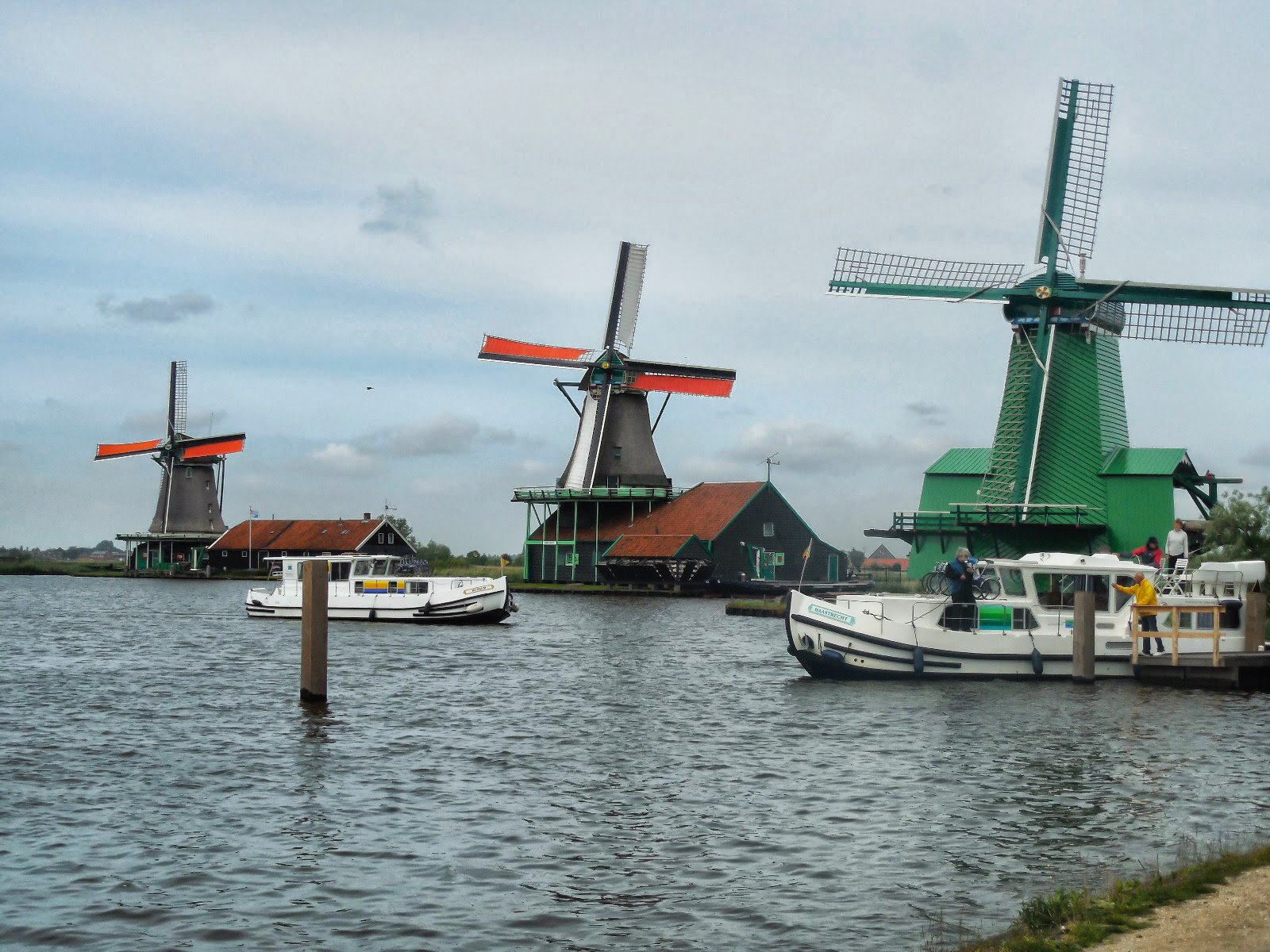
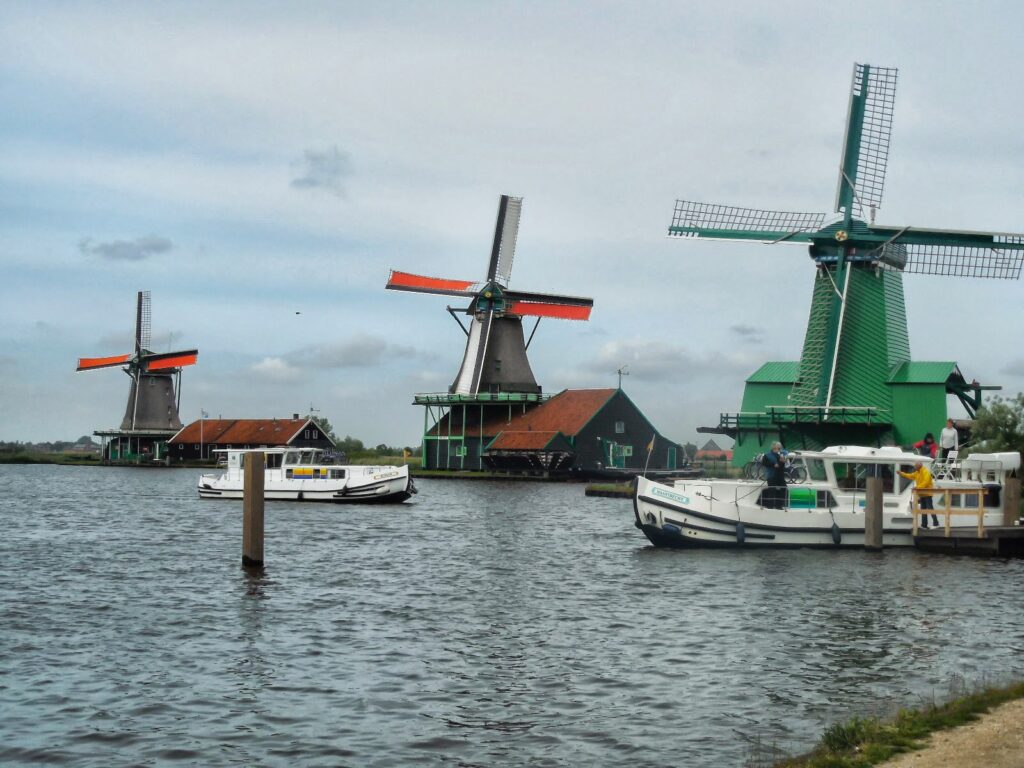
Amsterdam turned out to be one of the most walkable cities we’d visited. With its seamless mix of trams, buses, boats, and trains — in fact we could see all of these from one intersection — it was surprisingly easy to get around, even with two one-year-olds in strollers. Amsterdam has three semi-circular canals running right through the middle of the city. As I mentioned before, we took a canal cruise just to get ourselves oriented and to fight a losing battle with jet lag. The next morning, we took a bus to **Zaanse Schans**, a charming albeit tourist-trap village about 40 minutes away. It looked like someone had recreated the Netherlands from a children’s storybook — complete with working windmills, clog workshops, cheese tastings, and a goat happily licking an ice cream cone. Authentic or not, we loved it. Theere were 41 windmills – all supposedly “working” windmills. One of them powered a spice mill where wind power was still used to grind tiny pouches that were available for sale. There were also tiny museums exhibiting the various tings that Amsterdam is famous for: clogs, cheese, pewter books, and pottery. We spent a pleasant day there and returned via bus to the city. Unfortunately, we didn’t have the fairy tale ending that we were hoping for. Somewhere between the bus and the souvenir shops, Seejo’s expensive SLR camera bag was missing. The loss of the camera and all those photos hit hard.
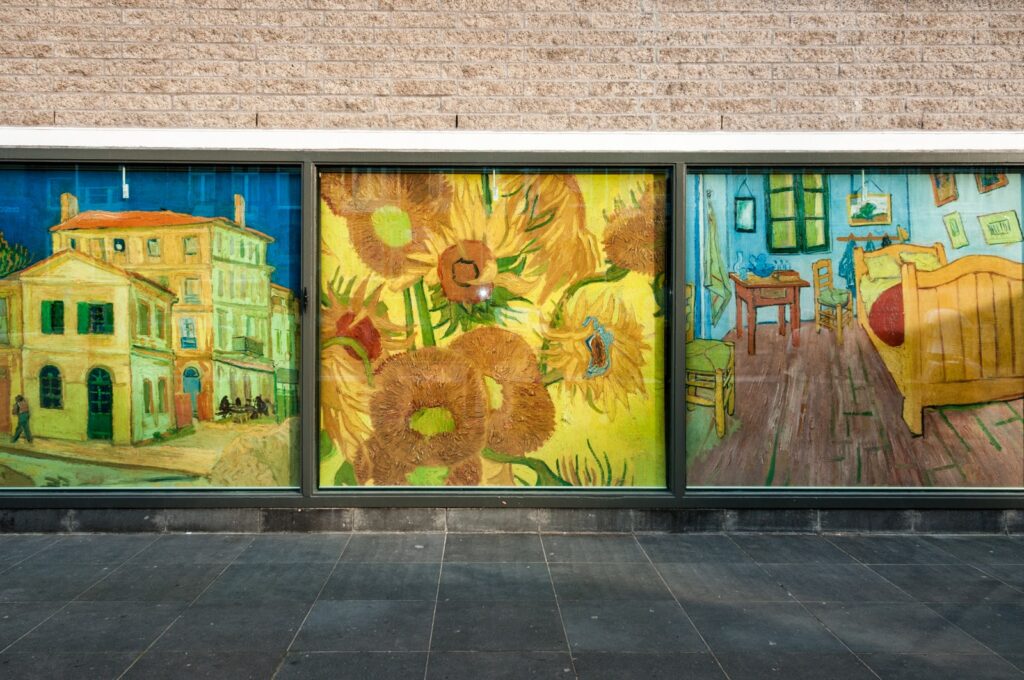
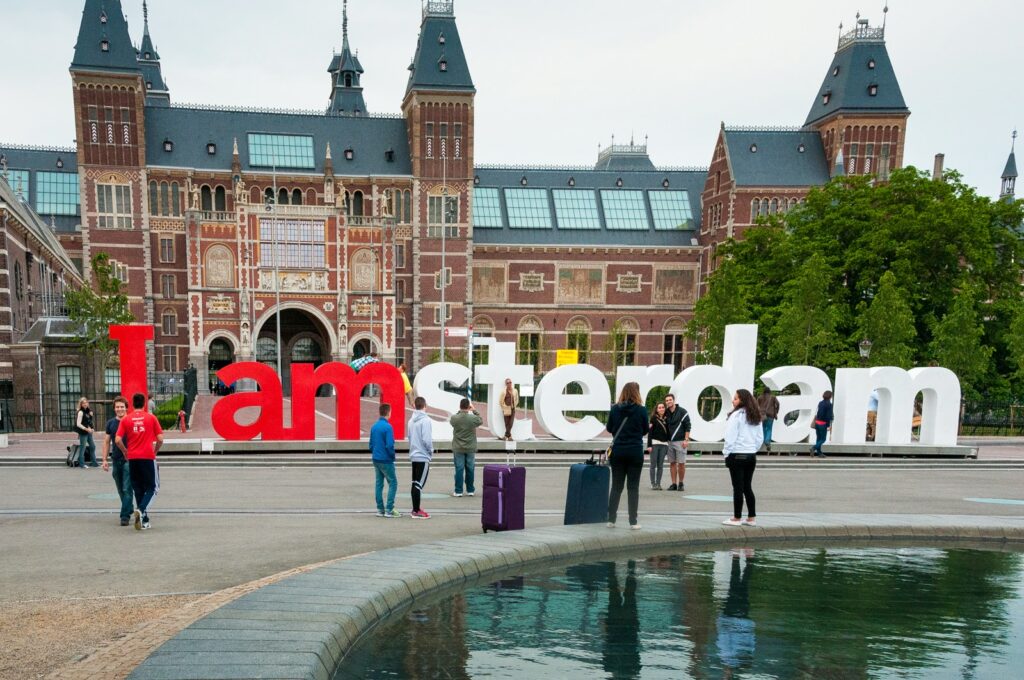
While Seejo spent the next morning hunting for a replacement camera, the rest of us wandered through the Van Gogh Museum. Our collective knowledge of art didn’t extend much beyond “Van Gogh was a painter,” but we dutifully admired his work. Of all this paintings, my favorite pieces were the sunflower paintings — so cheerful and upbeat despite the turmoil of the man who painted them. That afternoon, we relaxed in the Museumplein, people-watching and listening to live music before heading to the Anne Frank House. Nothing prepares you for the weight of standing in that narrow hidden space. I’d always imagined the Secret Annex as a room above the main office, but it was actually right behind it on the same floor— just a bookcase separating the family from the outside world. Its remarkable to think that they were hiding in the middle of the city, in a busy office building, just one closed door away from an office that had employees walk in and out every day. And they managed to hide for over two years.
By evening, we found ourselves in Dam Square – in the historical center for Amsterdam. It was a fairly unremarkable square – especially when you compare to other European town square. The kids, Asif and my mother stayed back in a little cafe, eating stroopwafels, while Seejo, Dwiti, and I ventured into the **Red Light District**. I’d read about it, of course, but seeing it in person was surreal — lingerie clad women posing as window decorations in front of large neon window displays, while people strolled by as if it were the most normal thing in the world. There was even a kindergarten next door. Amsterdam wears its contradictions proudly.
Dinner that night was at **Sama Sebo**, a cozy Indonesian restaurant serving the famous *rijsttafel* ,an elaborate spread of rice and small curries. Surprisingly, the most popular cuisine in Amsterdam was Indonesian rice-plates or “rijsttafel” (Rice-tables). Just like The British brought curry back to the England, the Dutch brought Indonesian curries to Netherland. After days of bread and cheese, Amma and Asif were visibly thrilled to see rice again. Then while Asif and Amma proceeded home, Seejo, Dwiti and I stopped at the Leidseplein to check out the nightlife at Amsterdam. And it was a bustling nightlife. Although it was nearly 11 pm, restaurants were full, it was crowded and noisy and there was a nice party vibe to the place. The next morning, we boarded the 9am Thalys train to Paris. In just two and a half days, Amsterdam had given us everything : canals, art, windmills, rice tables, and one harsh truth: no matter how charming the city seems, the cyclists really will not stop for you.
June 2013