

It is surprising that after 25 years in the United States, I had never crossed the border into Mexico. Nevertheless, it was time to correct that mistake. So my husband and I slipped away for four days to visit Mexico City, our first couple trip in 15 years.
First Impressions
The capital of Mexico – Mexico City or Ciudad de México (CDMX) – is a sprawling metropolis, second only to Sao Paulo, Brazil, in population across all of the Americas. Several guides pointed out that with 22M people, it was more populated than even New York City, which lagged with a mere 20M. As a city, CDMX is immediately familiar, just like other large cities in a developing country. We immediately drew parallels to India, the crowds, the smog, the potholes in the street, the tiny corner shops spilling onto the sidewalks, the subtle whiff of sewer that assaults you sporadically, the beggars, and street vendors with irresistible food, all of it made us feel instantly at home. But what was unique was the altitude. At about 2,240 meters (7,350 feet) above sea level, CDMX is a mile-and-a-half-high city. The air is rarer, the tequila hits harder, and a flight of stairs demands more energy than you think. Many visitors are prone to altitude sickness, but being forewarned, we guzzled water like we were in a desert and acclimatized quickly enough.
The Food (because nothing is more important)
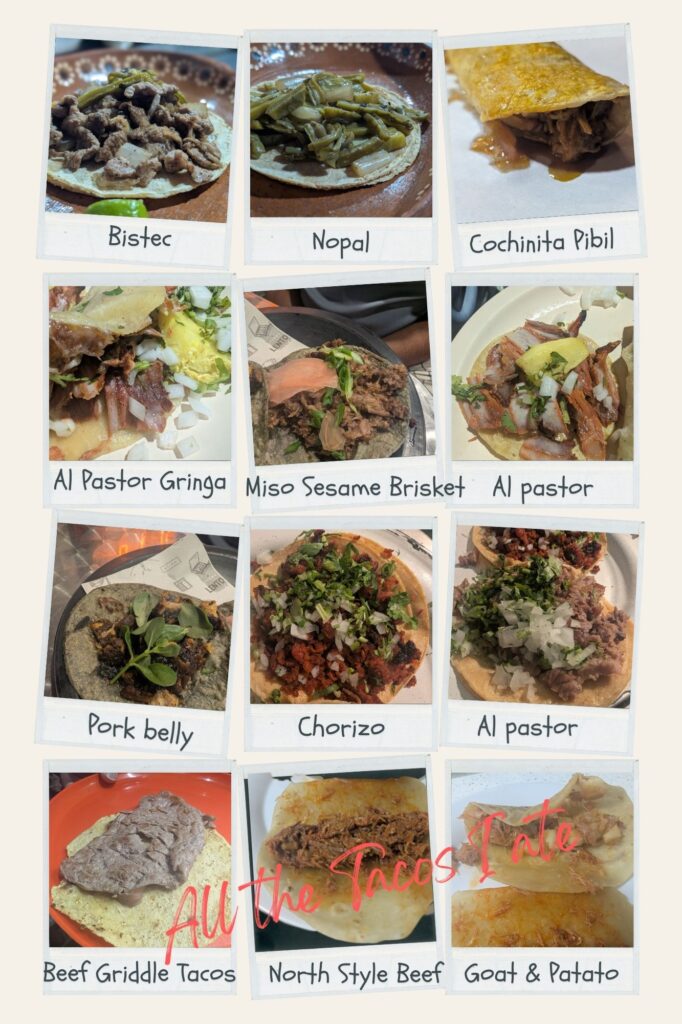
The best part of Mexico City was undoubtedly the food. Whether it was at a street vendor or a Michelin-star restaurant (CDMX has tons of both!), the food never disappointed. The sauces were bright and bursting with flavor. Each morsel was sweet and sour and spicy and tangy all at once. We went on a Tacos and Mezcal tasting tour with Sabores Mexico Food Tours, nine different tacos. Several mezcals. Al pastor shaved from a vertical spit, paying homage to Mexico’s melting pot heritage, since it was clearly borrowed from Lebanese immigrants. Mexico made it their own by switching the lamb to pork and then adding a slice of pineapple. The late-night favorite of the working class, the suadero, slow-cooked and crisped with a variety of salsas. And the only street taco stand that has earned a Michelin star, El Califa de León, where we had the thinly sliced fillet of beef taco with nothing but a squeeze of lemon on top. My favorite taco was not part of the tour, but it was recommended by the tour guide. A citrusy, slow-cooked shredded pork, the cochinita pibil, left me wanting one more immediately. And my favorite drink, the hibiscus mezcalita, smoky, floral, tangy, and sweet. We balanced the street food by having dinners in a couple of upscale eateries, some Michelin-starred ones and some that could very well be. We ate red ants, ant eggs, and grasshoppers. We drank mezcals and cantaritos and pulque and tequila cocktails. We ate the best mole I have ever eaten in my life and one of the best aguachiles too.
The History: An Ancient City Built on a Prophecy
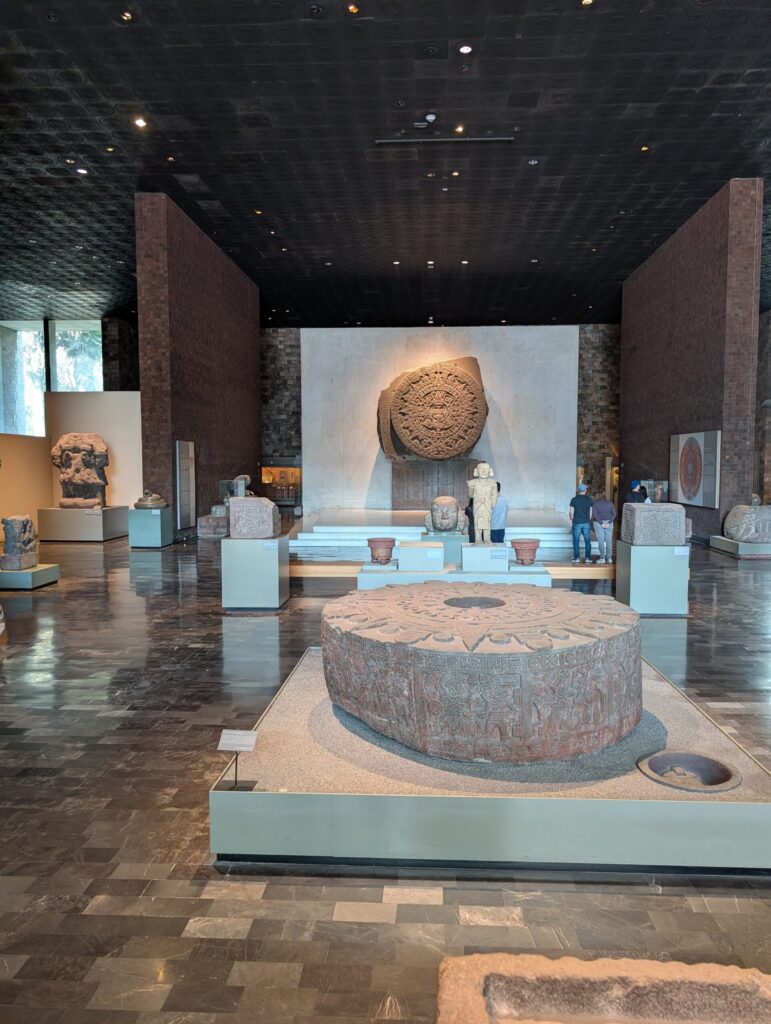
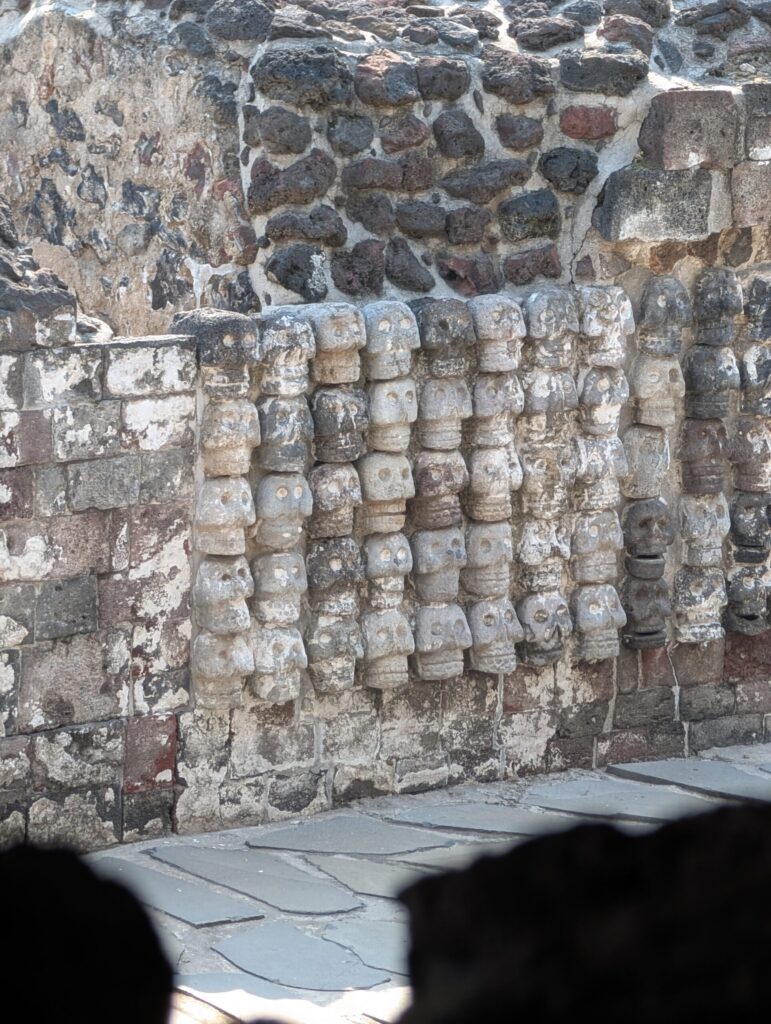
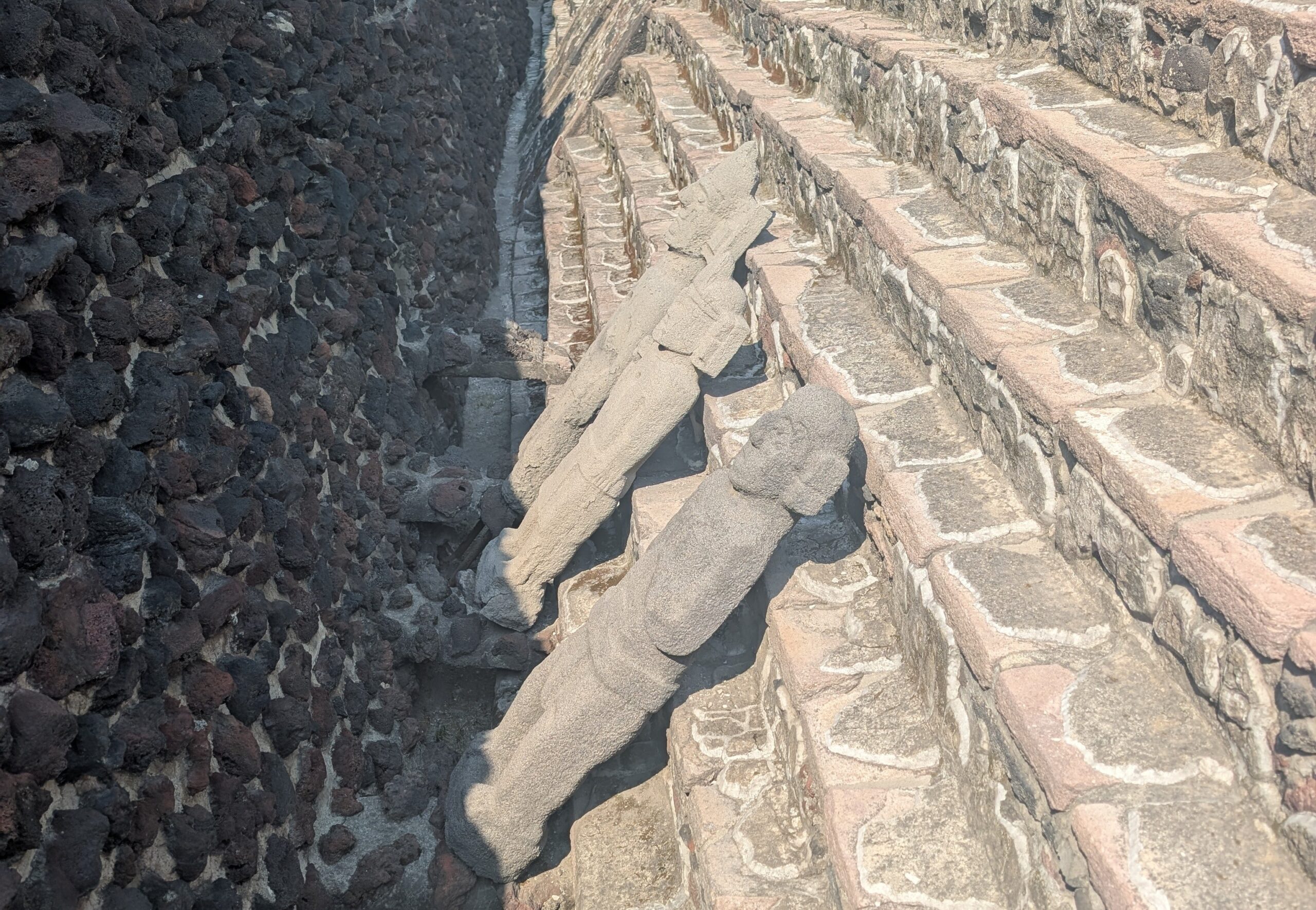
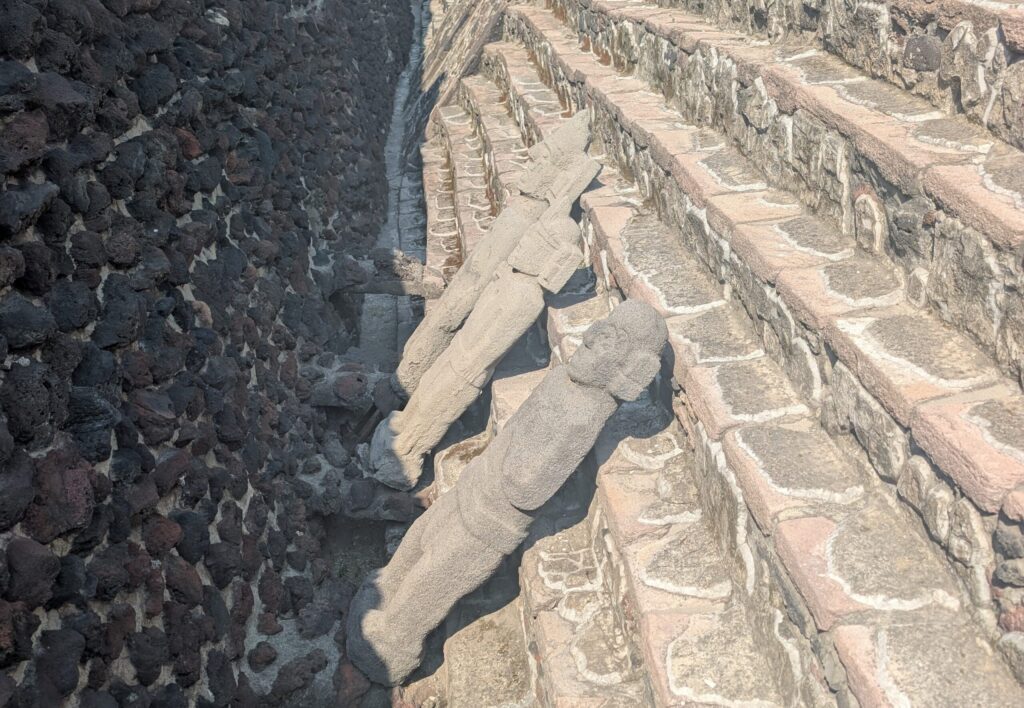
Long before there were taco stands, this place was known as Tenochtitlan, the epicenter of the Aztec empire. The Aztecs arrived here from a mythical land called Aztlan in search of their homeland, which, based on their prophecy, was a location where they could see an eagle perched on top of a cactus, devouring a snake. Lo and behold, they saw this very sight near a swampy lake and built a magnificent civilization around it. The symbol now lives at the center of the Mexican flag. This was the youngest Meso-American civilization, and during the 200 years that they lived in this area, they managed to conquer nature by building land masses and floating islands on the lake, growing crops to sustain and grow a population of nearly 200,000 people. However, they were no match for the Spanish invaders, who subjugated this mighty civilization in a mere two years. Spanish conquistador and adventurer Hernan Cortes managed to ally himself with surrounding tribes and overthrow the Aztec empire, annexing this area and eventually all of Mexico as part of the Spanish Empire. And it would remain so for over 300 more years. Native American heritage would soon be buried, and 80% of Mexicans would become devout Catholics. Mexico eventually gained independence from Spain in 1821 but was soon embroiled in the Mexican-American War (1846 to 1848), which ended with Mexico on the losing side and ceding the areas of California, Texas, and parts of the American Southwest to the United States. Soon after, Mexico was invaded by France, which was trying to establish a base against the United States. Mexicans overthrew the French in the 1860s but were soon under the authoritarian dictatorship of Porfirio Diaz. Tired of inequality, the Mexican Revolution from 1910 to 1920 erupted, a civil war that laid the foundation for modern Mexico. Mexico is now slowly reclaiming its Native American roots and language. The Aztec civilization and its stories are part of every tourist guide’s narrative and are now an acknowledged part of their heritage.
Day 1: Xochimilco at Dawn
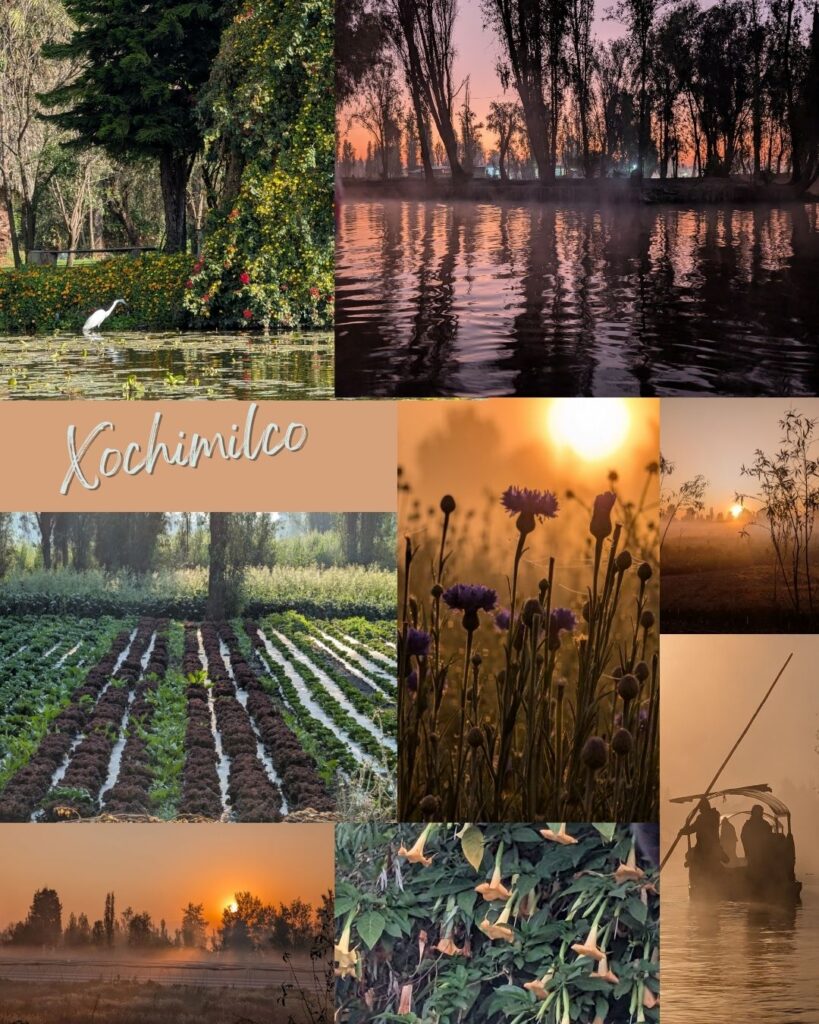
When the Aztecs first settled here, they were surrounded by water. So, they engineered land. These were artificial floating islands called chinampas, and they were brilliant agricultural platforms that fed a massive population, growing crops like corn, beans, squash, and chilies that nourished the soil even as they used its nutrients. This was sustainable farming before the word existed. Today most of these chinampas are abandoned. The canals are now a party zone with mariachi bands, beer and tequila, and crowds of people living it up on boats floating up and down the canals.Not being party people, we chose to visit Xochimilco in the early morning to see the sunrise. This tour, offered by The Curious Mexican, was a partnership between Devoured Foods (who promote local sustainable cuisine) and Arca Tierra, a group dedicated to reviving sustainable agriculture in these chinampas. Over half of the chinampas are now abandoned, but the group at Arca Tierra is working to reclaim these floating islands, reinforce and preserve them with the firm belief that doing so could sustainably feed all of CDMX’s 22M population. While impressed by their lofty goals, we were huddled in the cool mist of the early morning fog as we slowly floated down the canals in traditional, flat-bottomed, gondola-like trajineras, each manned by a poler propelling it forward with long poles. An occasional heron flew by. The slow breaking light of dawn, the fog, and the sound of water splashing gave off an otherworldly vibe. We stopped briefly to watch the sun come up and to see the crops being grown, corn, beans, and squash as a nod to old heritage, but also lettuce, tomatoes, herbs, sunflowers, and castor seeds. The bonus was the partnership with Devoured Foods, who brought in an acclaimed chef to craft a four-course breakfast with locally grown ingredients. After the cold morning ride, the food was incredibly welcome and tasted fresh.
Templo Mayor & Zócalo
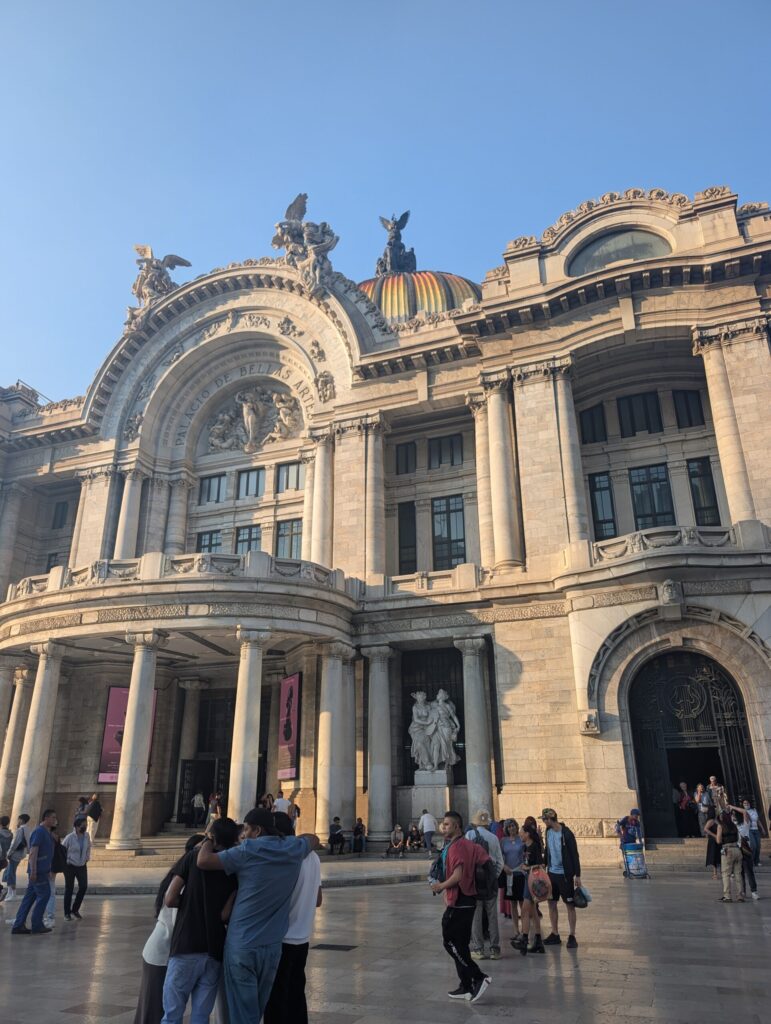
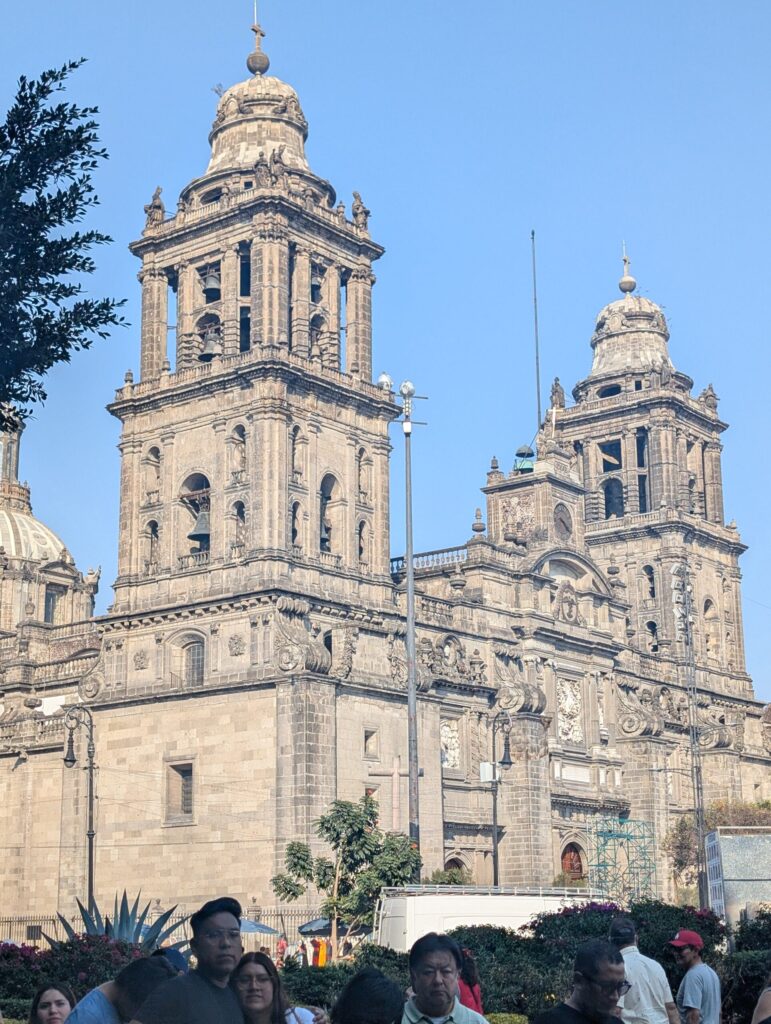
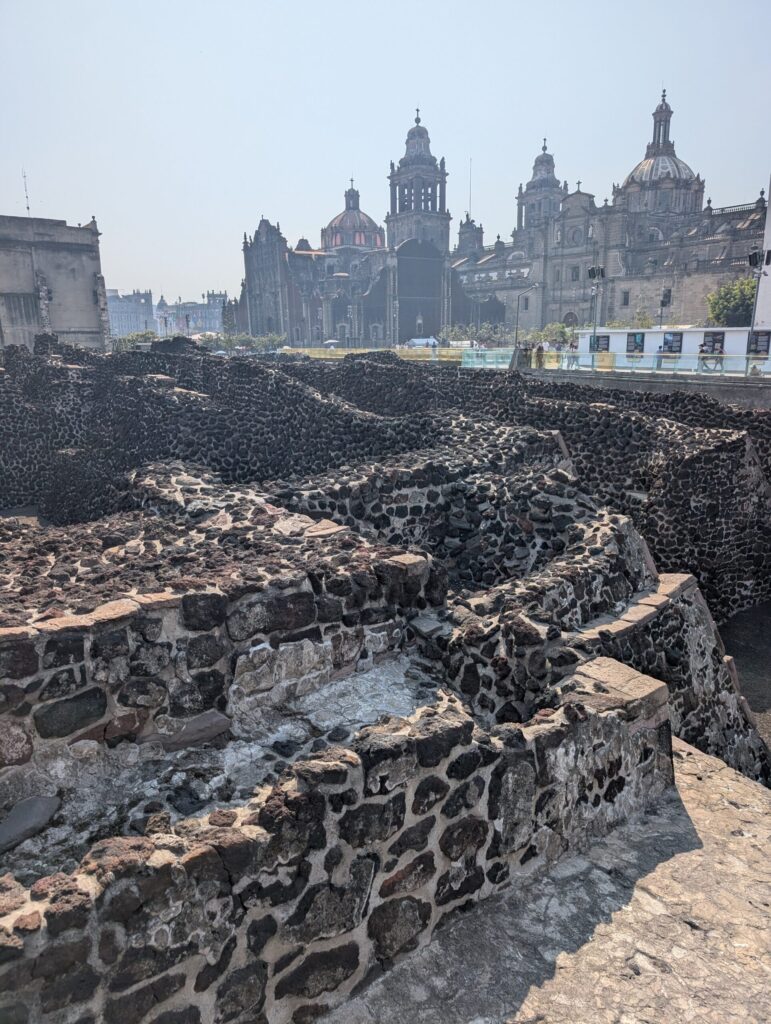
The Zócalo area in Mexico City is the old historic neighborhood. And by old, I mean really old. This was once Tenochtitlan, the beating heart of the Aztec empire in the 1300s. At its peak, nearly 200,000 people lived here. It was a sophisticated, bustling civilization long before the Spanish arrived and Christianity slowly replaced Aztec norms and rituals. Centuries later, construction workers accidentally uncovered an entire buried city in the middle of modern Mexico City. Temples. Marketplaces. Meeting halls. Homes. Sacrificial altars where human sacrifice was the norm. Now tour guides enthrall visitors with stories of how hearts were plucked from living humans and offered routinely to the Sun gods.
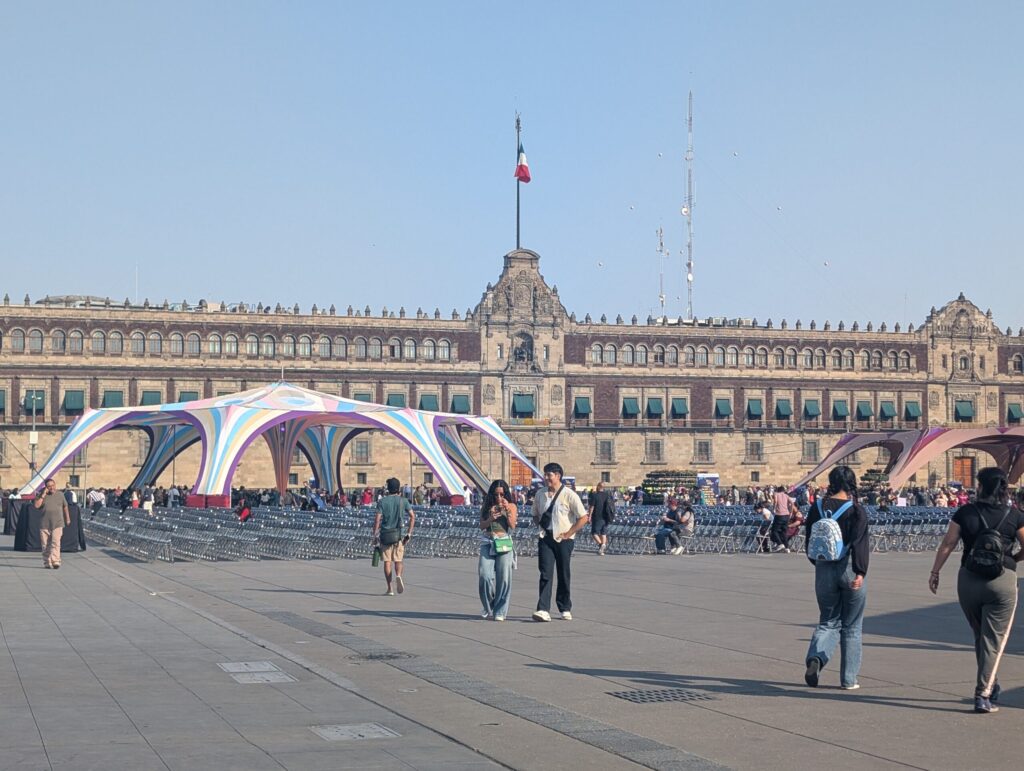
The Zócalo today is the grand public square, enormous and alive. Hawkers line the perimeter. In the center, a massive Mexican flag was rippling quietly. The day we were there, music filled the air and people were setting up makeshift tents and folding chairs for an event that seemed both spontaneous and entirely routine. Bordering the square is the National Palace, home to the Mexican President, and the Metropolitan Cathedral, an imposing Gothic structure commissioned by Hernán Cortés and built over 240 years. The oldest cathedral in the Americas, sitting quite literally on top of an older world. From there we wandered down Avenida Francisco I. Madero, permanently pedestrian-only and blissfully free of cars, with shops on either side, street vendors frying snacks, and toys blinking and squeaking. And then that sound, the unmistakable screech of the rubber “screaming” toy vendors squeeze to get your attention. It’s shrill and sounds like a woman screaming for her life. It may very well be the unofficial soundtrack of CDMX. We made our way to the Torre Latinoamericana and went up to the Skybar. The drink was, without exaggeration, the worst we had in Mexico City. But the view from the top was worth every peso. From above, the Palacio de Bellas Artes rises in white stone with its gold-tipped dome. We stopped briefly to admire the murals inside, wishing we had time for a performance.
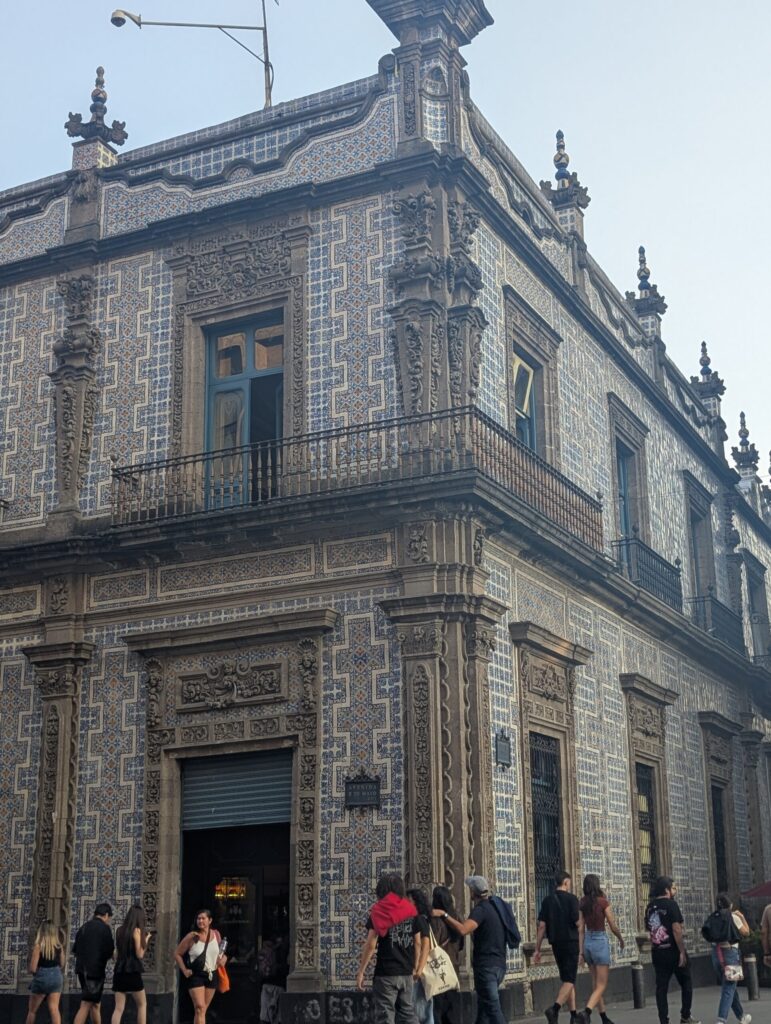
Across from the Torre stand the blue-tiled buildings often nicknamed Casa Azul in this district, striking against the urban backdrop.
Day 2: Teotihuacan and the Basilica of Our Lady of Guadalupe
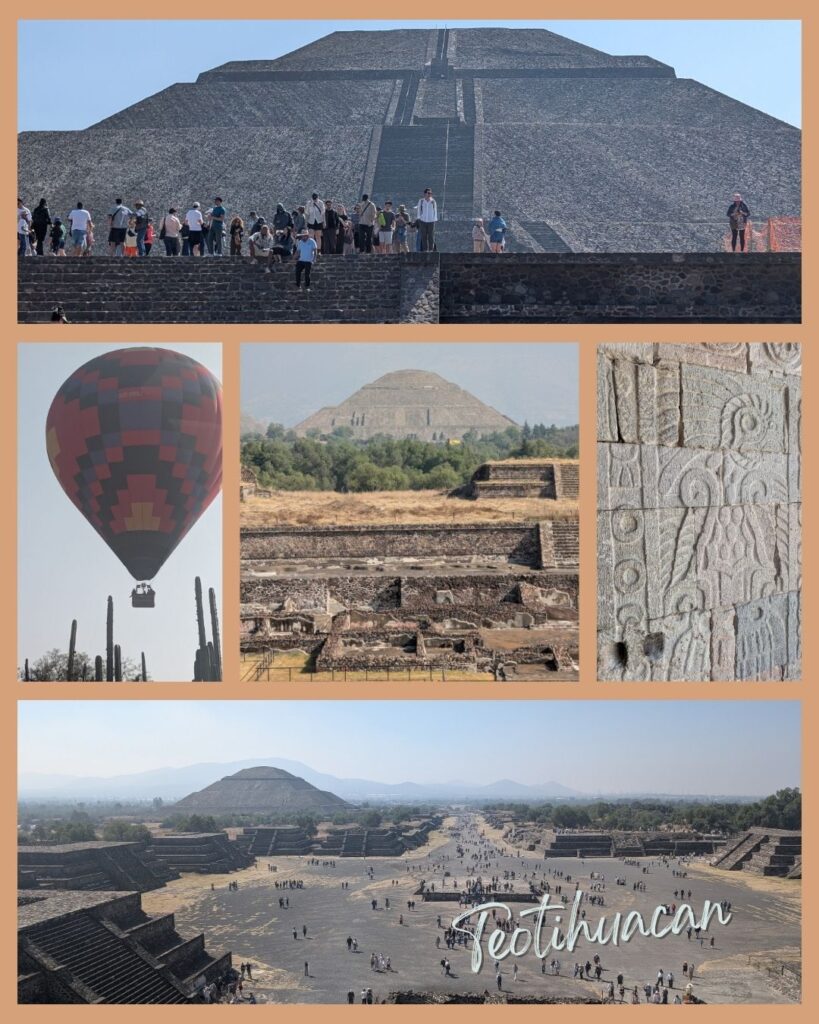
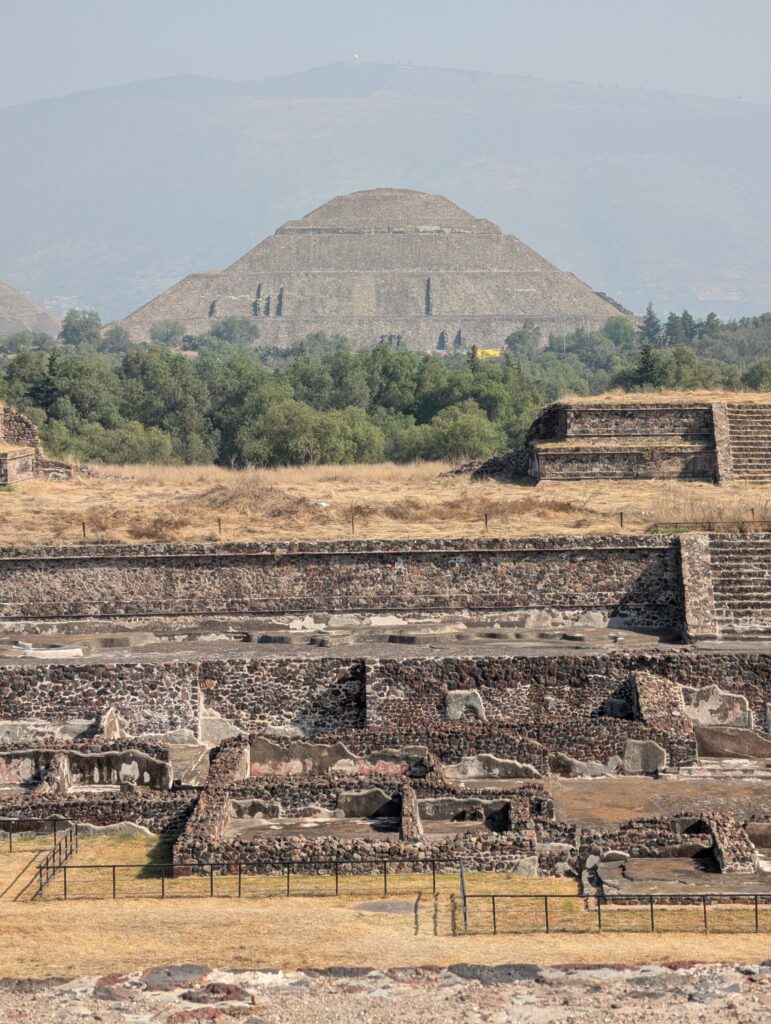
Our day started early when our guide Alejandro (Our day started early when our guide Alejandro (Estigo Tours, highly recommended) picked us up at the hotel with our driver, Luis, and we drove about an hour and a half to Teotihuacan. This is hot air balloon country, and as we arrived, the last of the balloons were descending. A dozen or so still dotted the sky, suspended in that soft early-morning light. It was a magnificent welcome. Teotihuacan predates the Aztecs by centuries. In fact, the Aztecs never met its inhabitants. The city had already been abandoned nearly 200 years before they arrived. Yet many of the traditions we associate with later civilizations, pyramid temples dedicated to the Sun, Wind, and Water, rituals of sacrifice ,were already embedded here. It is fascinating to see how civilizations borrow and inherit traditions from the past. I somehow scrambled up the narrow, uneven stone steps of the Pyramid of the Moon, built more than a thousand years ago and slightly crumbling in places. There were moments I was on all fours, questioning my life choices. But the view from the top was worth every wobbly step: a sweeping bird’s-eye view of the Avenue of the Dead stretching out in geometric precision, the Pyramid of the Sun built to mirror the mountain behind it, and grassy mounds that may still be hiding treasures beneath, if only there were funds to excavate more. Alejandro then took us to taste pulque, made from the fermented sap of the cactus, also called agua miel, honey water. It was considered the nectar of the gods. Priests drank it and claimed to hear divine voices. It is slightly trippy to think that parts of human history were guided by men under the influence of fermented cactus juice.
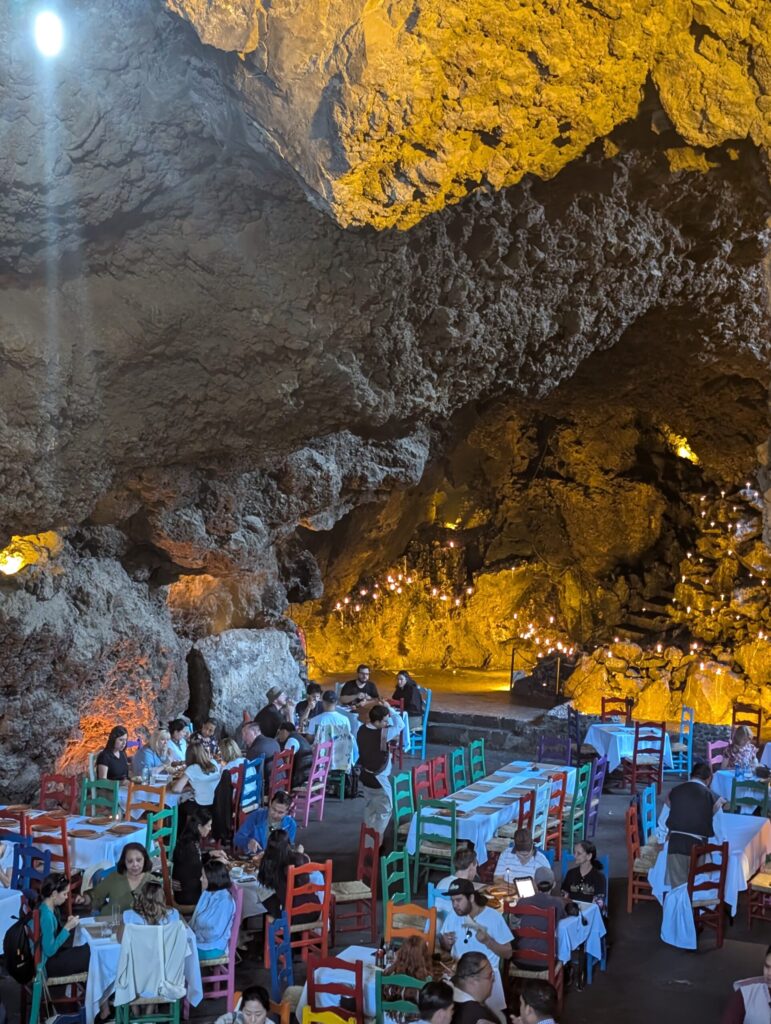
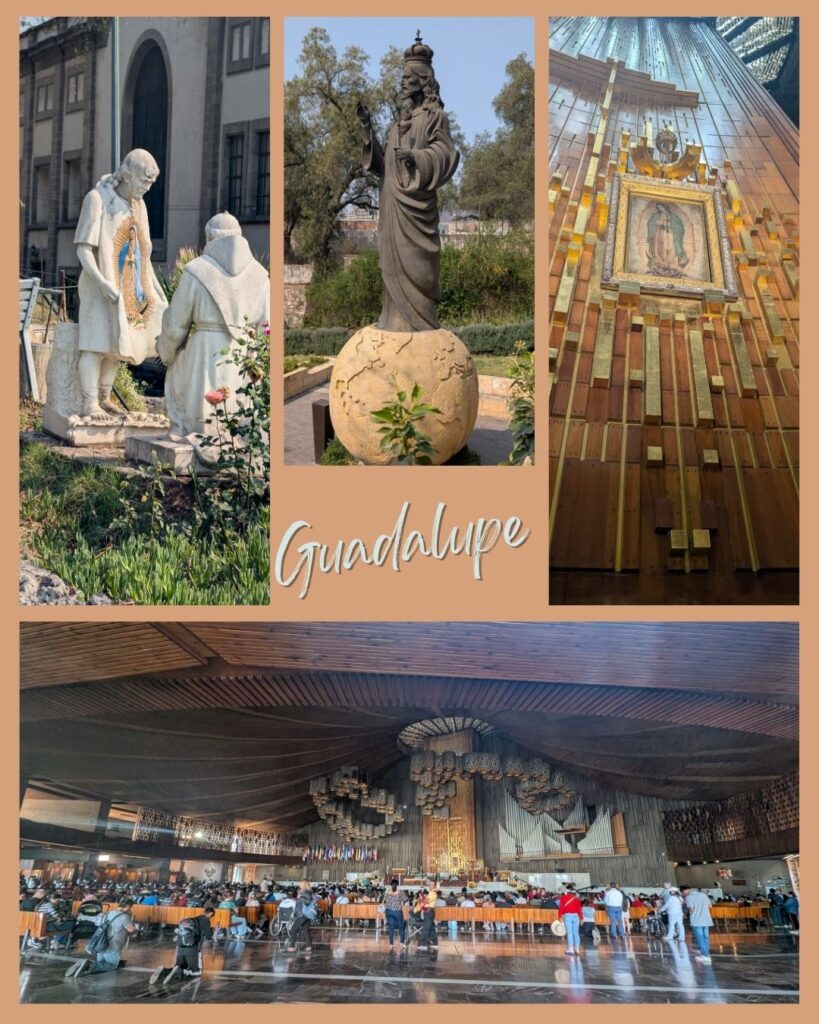
We stopped at La Gruta, the famous cave restaurant near the site. The food and service were honestly subpar, but the ambience was undeniable, candlelit tables tucked into dramatic cavern walls. The drinks were solid, and yes, we tried the grasshopper tacos (still preferred the ones at Oyamel). On the drive over, Alejandro had mentioned that locals sometimes complain that restaurants tone down the spice to suit tourists. At La Gruta, that felt very true. Our final stop was the Basilica of Guadalupe. Legend says the site was once dedicated to an Aztec deity before being transformed after reported visions of the Virgin Mary asking for a church to be built in her honor.
Today, it is one of the most visited Catholic sites in the world, second only to the Vatican. The original modest structure gave way to a grander Gothic church, and now to a vast modern basilica that can hold over 10,000 worshippers. It was designed by the famous Mexican architect Pedro Ramírez Vázquez, who also designed the National Museum of Anthropology and Azteca Stadium.
Day 3: Chapultepec, Coyoacán & Blue Walls of Casa Azul
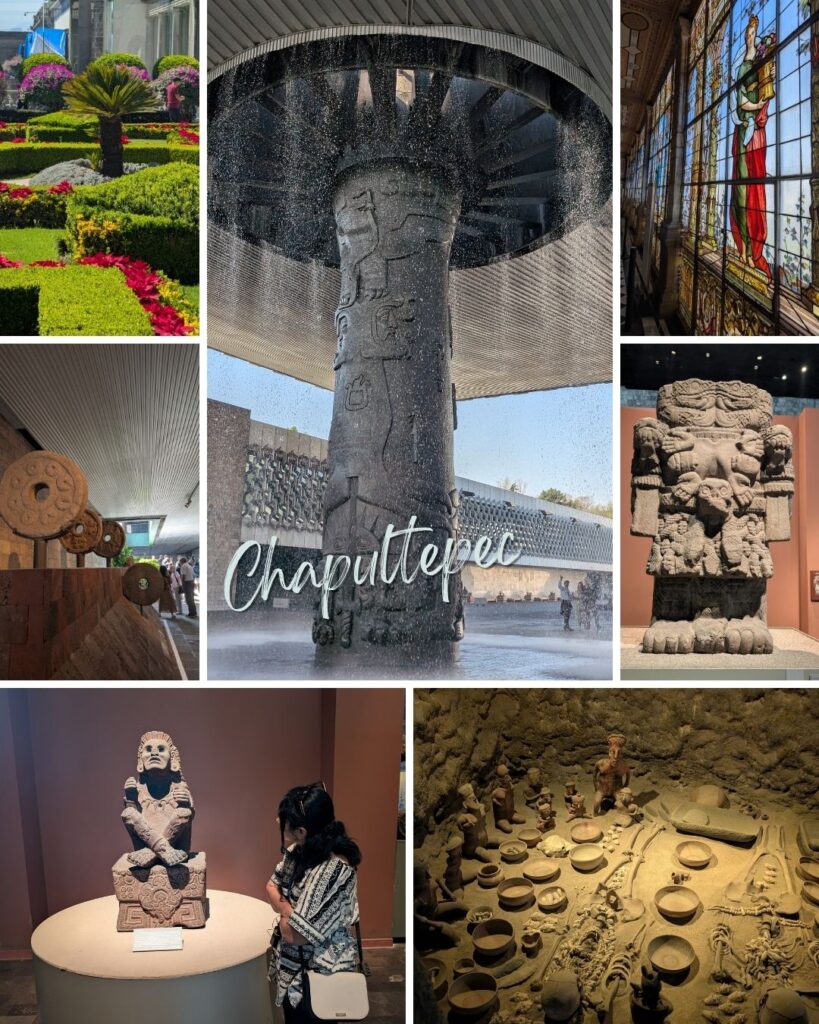
The Chapultepec area near Polanco is a vast green park in the midst of one of the city’s wealthier neighborhoods. The park is expansive and consists of a lake, a castle, botanical gardens, a zoo, and the famed National Museum of Anthropology, all tucked within it. We had another guide here, and I must pause to say that every guide we had in CDMX was excellent: articulate, knowledgeable, and bilingual. The National Museum of Anthropology was a highlight. The construction itself is a wonder. There is a vast central courtyard anchored by a single dramatic pillar that appears to hold up the concrete canopy above, an ingenious piece of architecture that makes the experience even more impressive.
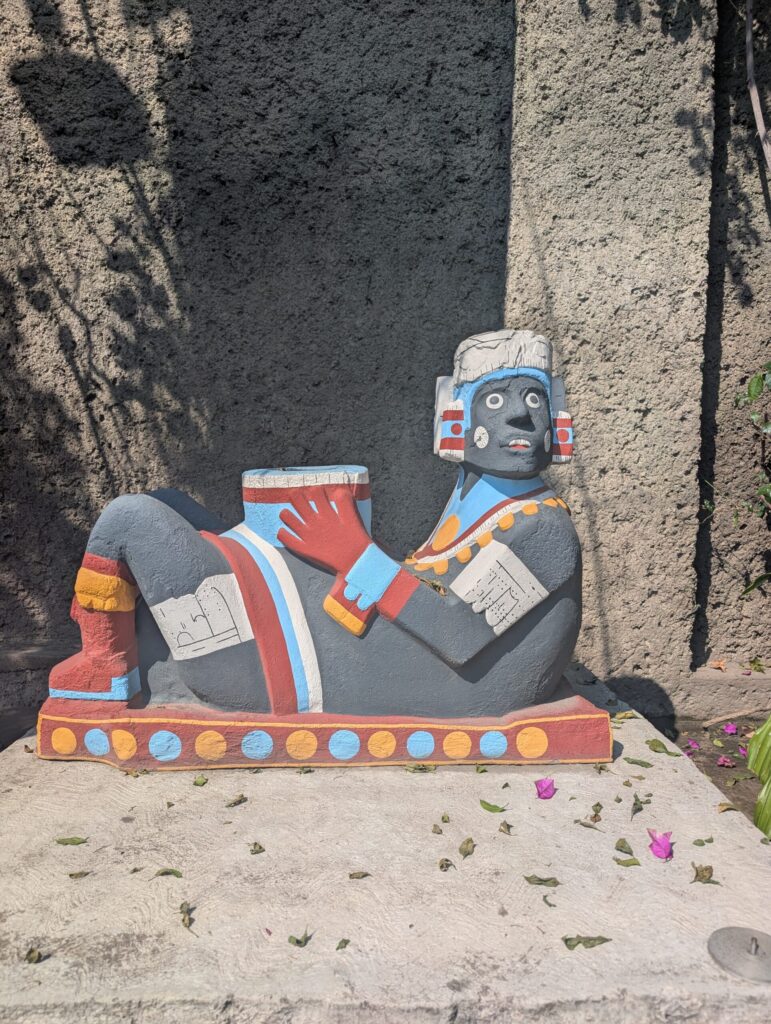
The museum has different halls representing artifacts from the Teotihuacan, Aztec, and Mayan eras. You can see artifacts used in daily life, the games they played (an older version of Quidditch), the rooms they stayed in, and the implements they used. The walk to the castle is longer than you expect. By the time you begin the uphill climb, you feel the altitude again, CDMX reminding you of its position. Chapultepec Castle carries more recent history. It has housed presidents and, briefly, royalty, including the French-backed Austrian Duke Maximilian during France’s short-lived attempt to rule Mexico. It is kind of funny to think that had that gone on for a few more years, Mexicans may very well be speaking French or German.
Coyoacán
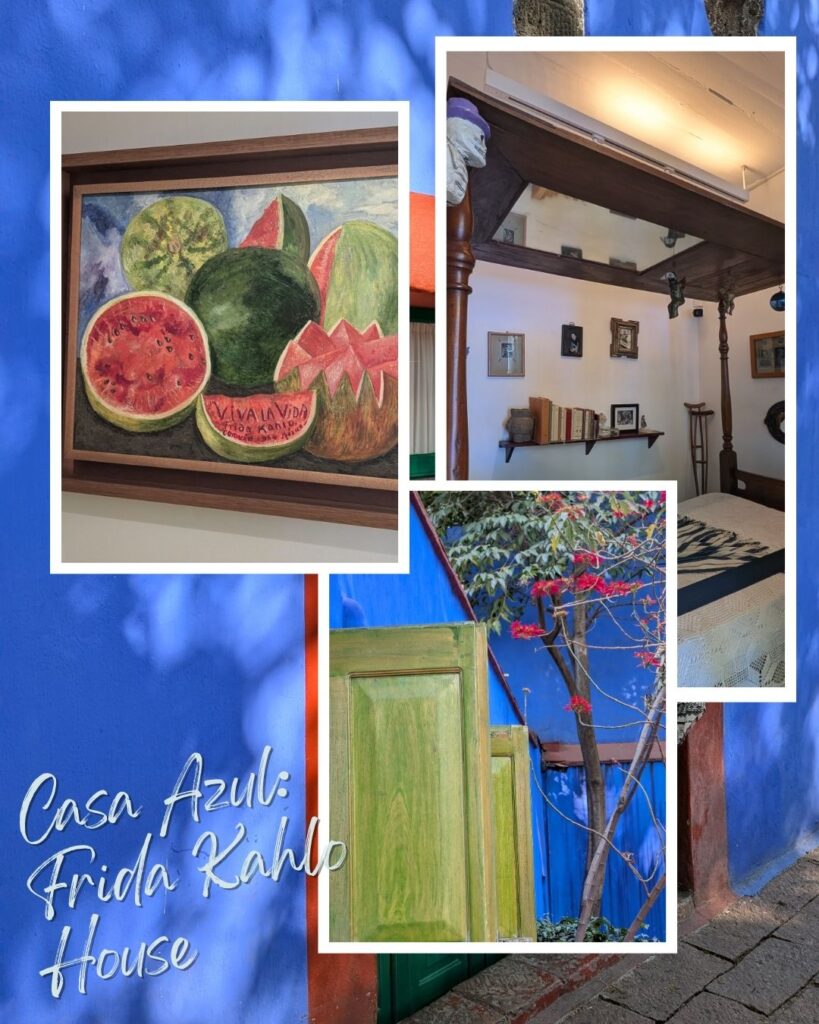
From there we made our way to Coyoacán, which feels clearly like a suburb of CDMX, quieter streets and the bright blue house that famously belonged to Frida Kahlo. It clearly suited her indomitable spirit. Frida’s life was marked by physical adversity: polio as a child, a devastating bus accident in her youth, countless surgeries and long periods of bedrest, and pneumonia in the end. Yet she transformed pain into powerful art, painting herself as a strong symbol in various situations. A short walk away, the Mercado de Coyoacán pulls you back into the everyday. There was fruit piled high, with grapes the size of plums, vegetables spilling from crates, food stalls sizzling, and locals and tourists navigating the alleys. We ended at the Mercado Ciudadela artisan market in the historic district, browsing rows of textiles, ceramics, masks, and handicrafts. We purchased a couple of souvenirs, although they were not as inexpensive as I had expected.