


Spain welcomed us with a very memorable “oops.” After a long-haul flight from DC to London, a six hour layover, and then another flight into Barcelona, we arrived tired but excited. After immigration, baggage claim, an Uber ride and check in process at Marriott’s AC Hotel Irla, we were finally able to collapse on the hotel bed. I unzipped the suitcase, only to discover… baby clothes! Uh oh – We had managed to grab the wrong bag, identical in color and pattern to ours. My heart sank. Did this mix-up happen in London or Barcelona? Where on earth was our stuff? Panic was setting in and I was about to head to the airport when I noticed a phone number and name on the suitcase tag. A U.S. number. When I called, the voice on the other end sounded just as frazzled – they had our suitcase and were staying at a hotel just 15 minutes away and had been wondering about their lost suitcase. A quick Uber ride later, we exchanged bags with sheepish smiles and expressions of gratitude. Crisis averted. But from that moment on, we became the people who obsessively triple-check luggage tags at every airport and train station.
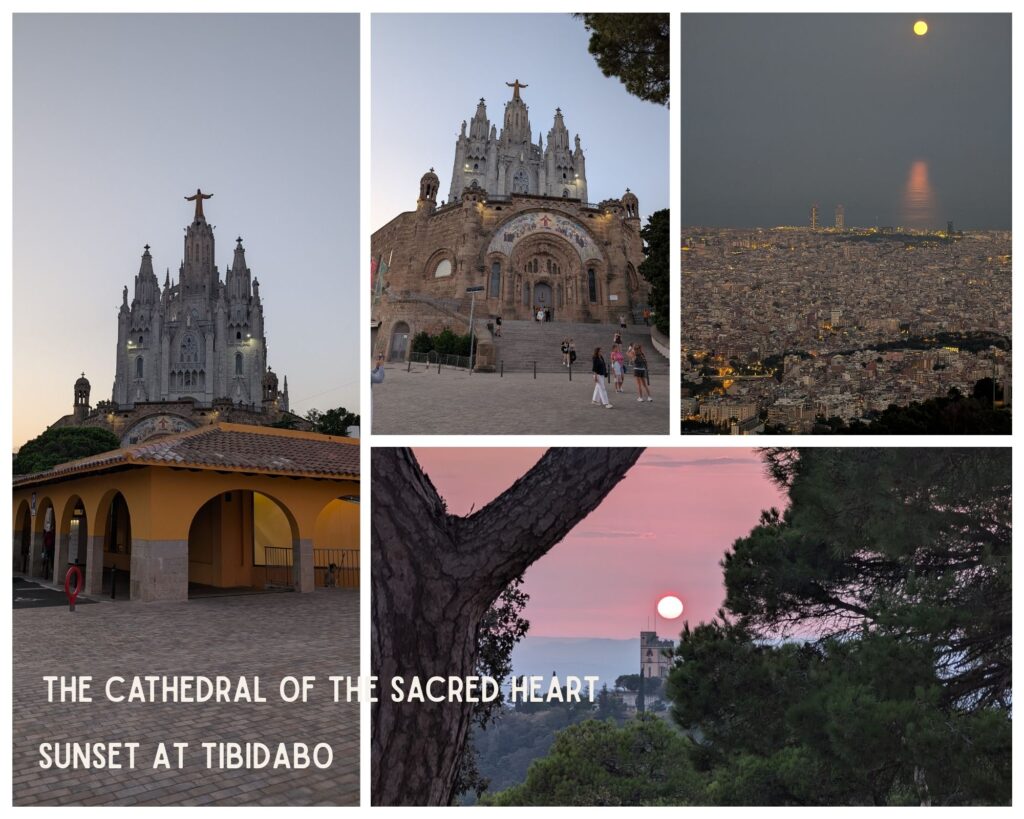
The suitcase drama delayed our first Barcelona adventure. Barcelona is surrounded by the Montjuïc hill and the Collserola range on the north. We had planned on visiting Montjuïc but we redirected to Tibidabo, the highest point in the Collserola range. Our Pakistani Uber driver grew nostalgic as he drove us up, he’d visited Tibidabo’s amusement park on school trips, he said. He had come to Barcelona when he was 5 he said, switching effortlessly between Urdu and English. He said he did the same with Catalan and Spanish, speaking the former with shopkeepers and vendors and the latter with his friends. We skipped the amusement park since it was late in the day but caught a glorious sunset over the city. The Cathedral of the Sacred Heart with Christ’s open armed bronze statue glowing in the golden light was an impressive sight. It was the perfect way to start our Barcelona trip with the whole city spread out beneath us from the sea to the hills waiting to be explored. We capped off day one with one of the best dinners on the trip at La Taberna de Lesseps and can endorse their richly deserved reputation for perfectly grilled meats.
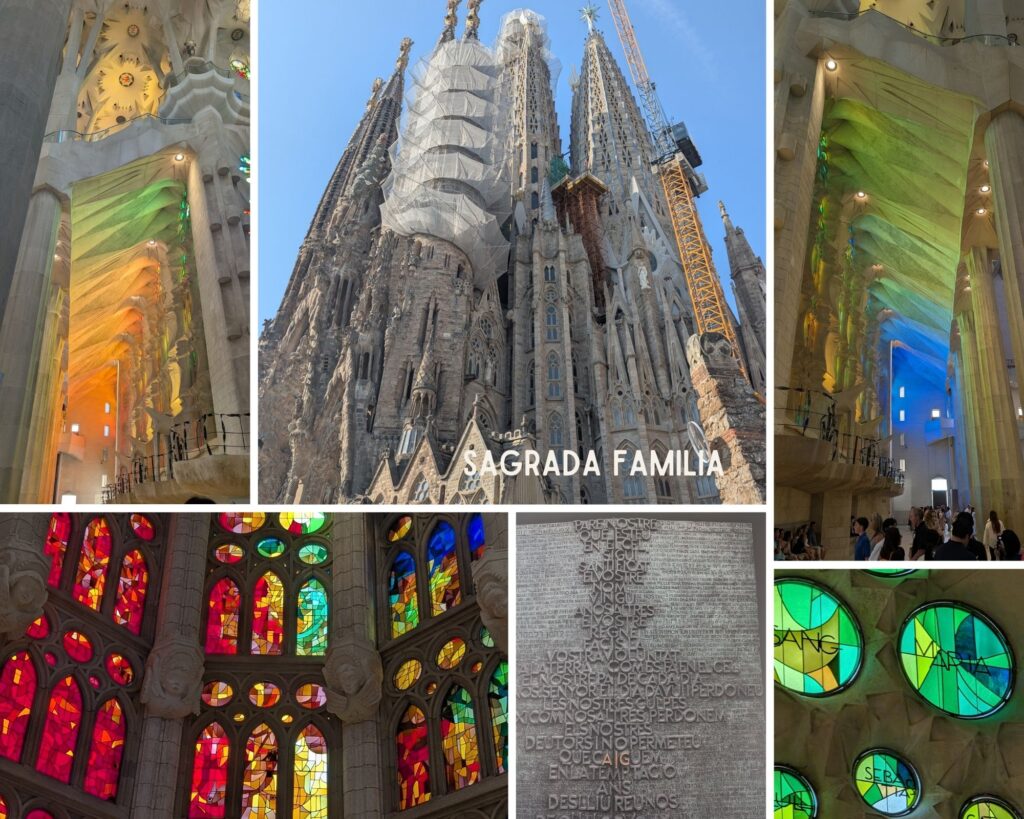
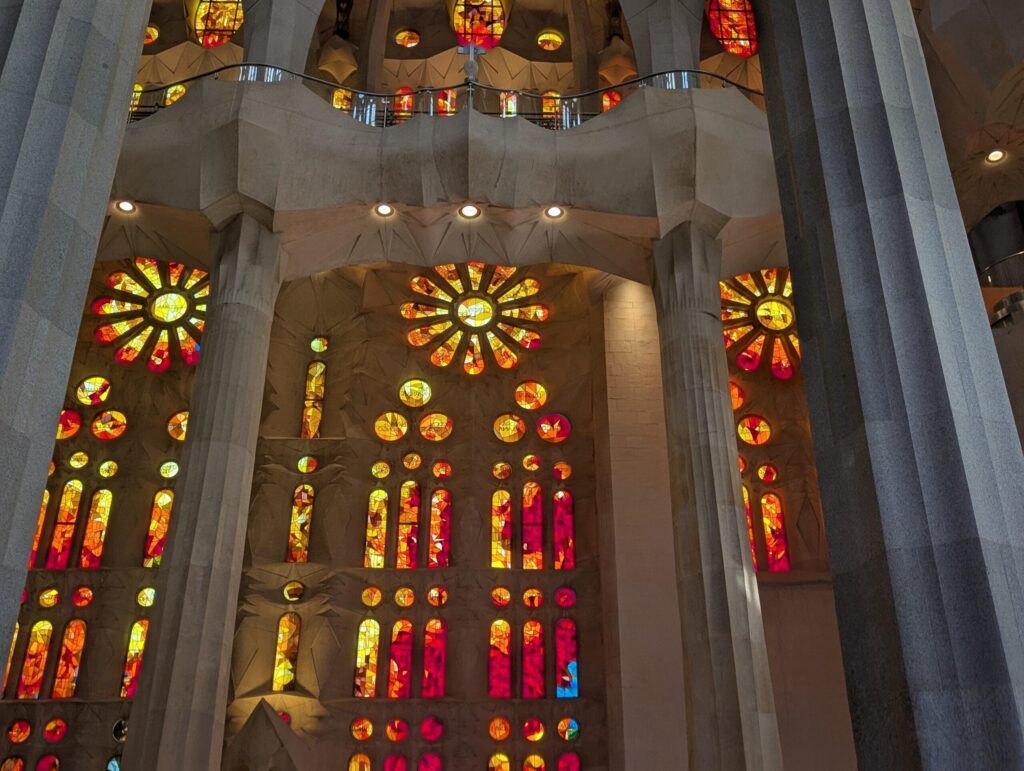
The next day was Gaudí day. We started at La Sagrada Familia, Antoni Gaudi’s ever-unfinished masterpiece that somehow feels alive with light. Gaudi was a Catalan architect and interior designer and a visionary who used light, space and natural shapes to craft architectural masterpieces. Construction at the La Sagrada Familia started in 1883 and it remains incomplete even after 140 years and the unfinished nature is now part of its identity. Funded entirely by public donations and ticket sales the work on the building ebbs and flows as money is available. It puts the delays from our home improvement projects into perspective! We had opted for a guided tour and we were educated about the history of the church, the architectural differences between the three facades (Nativity, Passion and the unfinished Glory), the massive doors inscribed with the Lord’s Prayer, the geometrical precision with which the nave was constructed using local stones but everything faded into the background when you see the light show that the cathedral displays. The stained glass on each side had a variety of colored glasses, bathing the entire cathedral in a kaleidoscope of reds, blues, yellows and oranges. The light changes based on the angle of the sunlight and the time of the day making it is a live show that is simply breathtaking. The kids, usually impatient with history, were just as spellbound as we were.
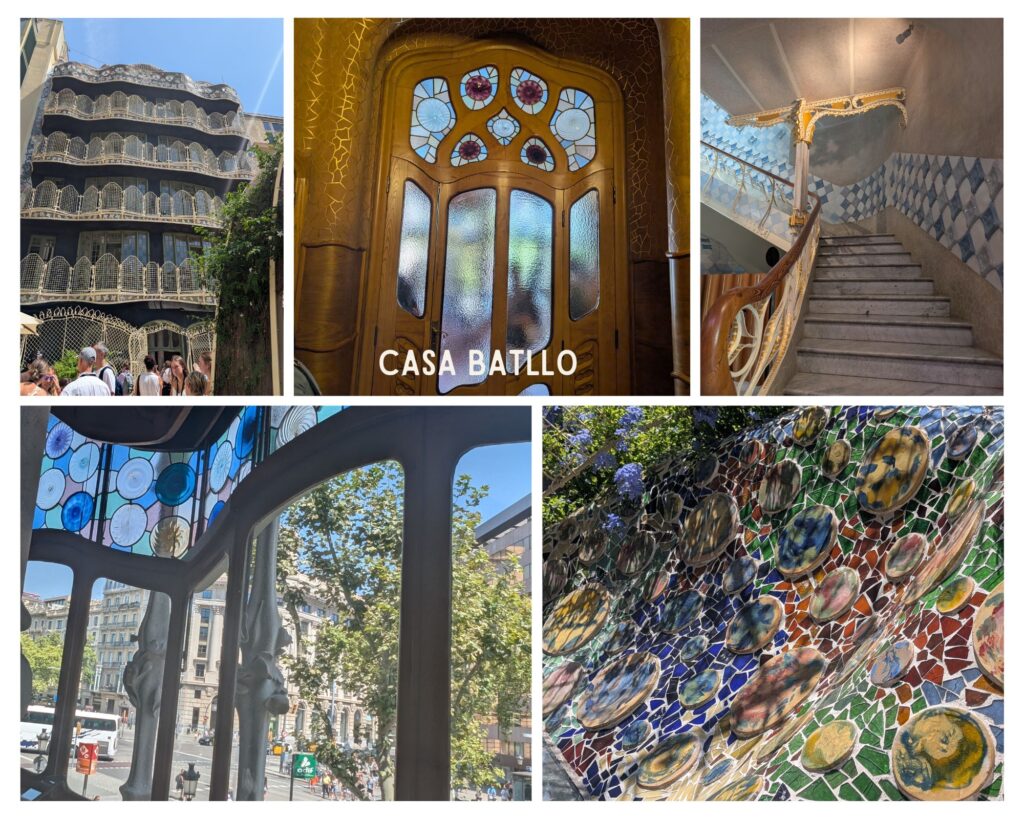
We had planned a quick stop to view Casa Battlo and Casa Mila – two other Gaudi creations from outside but the kids were impressed enough to suggest that we see one of those from the inside. We made an impromptu decision to tour Casa Batlló – his residential masterpiece on Passeig de Gràcia. This house was the actual residence of the Batllo family from 1903 to 1954 – five floors of unparalleled mix of whimsy and practicality. Stained glass windows, decorative ceilings and curved walls gave an illusion of space inside while the curved exterior mask like balconies gave it an otherworldly appearance earning the moniker the House of Bones by the locals. The roof terrace was my favorite with its ceramic tiles and landscape of chimneys and designed so cleverly that we felt cool breezes even when the temperature was a scorching 40 degrees. (or 100F)
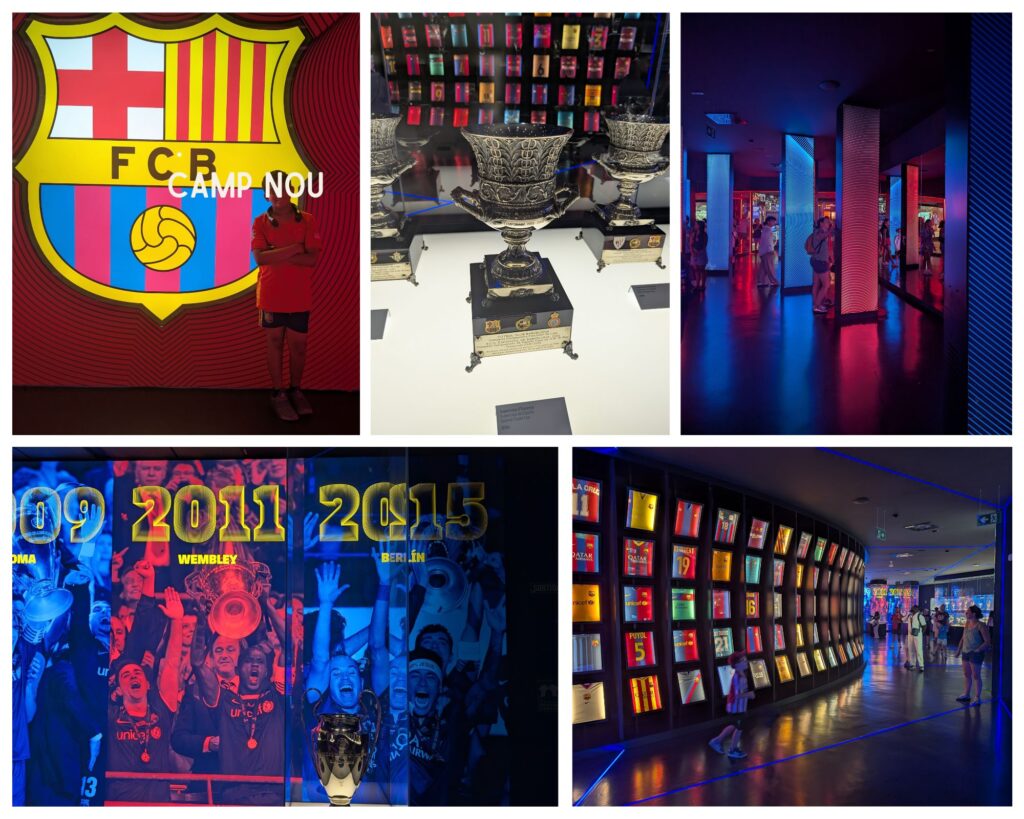
My daughter and I went back to the hotel for a quick siesta while my son had a special pilgrimage of his own: Camp Nou the home of FC Barcelona and the hallowed grounds where Messi once played and achieved greatness. He was in seventh heaven as he got to see the various memorabilia, the Ballon d’Ors, and even shoot a soccer ball or two.
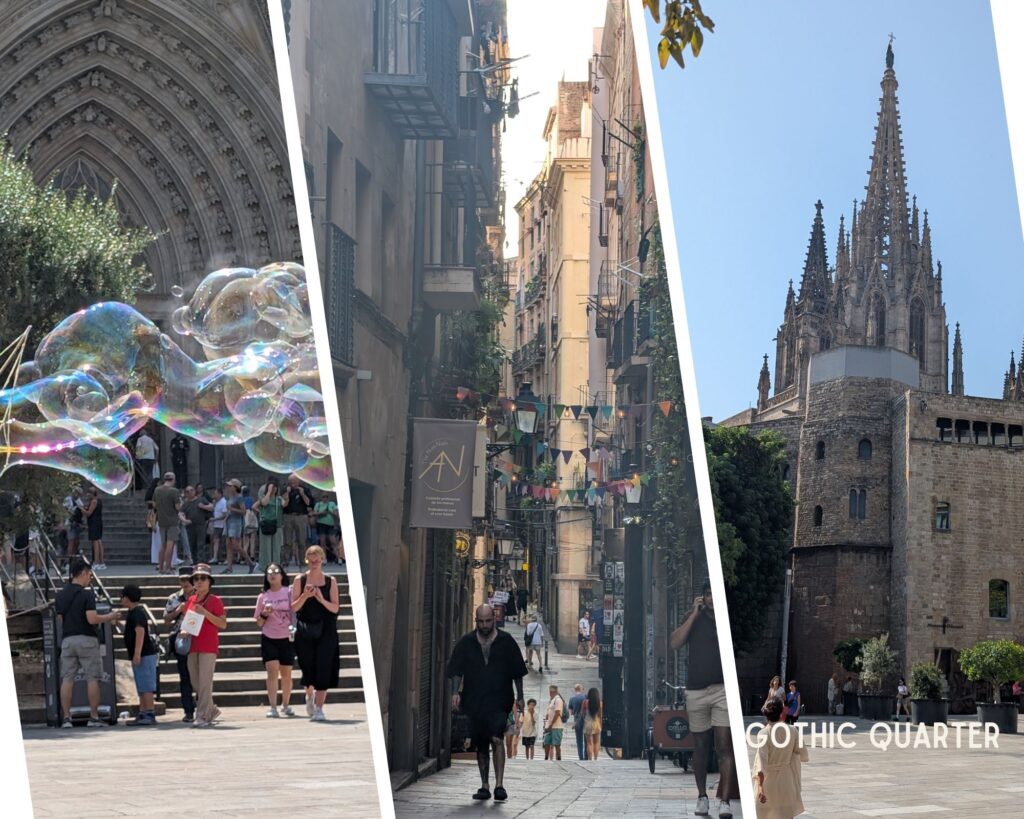
At 6pm, we reunited in Barcelona’s Gothic Quarter, the old heart of the city. It’s a maze of narrow alleyways, medieval buildings and tapa bars spilling on to the streets and the imposing Barcelona cathedral towering above it all. We had prebooked a three-hour guided Tapas tour with Barcelona Local Experiences. Over the course of the evening, we stopped at four different spots across the Gothic quarter and the neighboring El Born area sampling a spread of classics – aged Iberian ham, wedges of Spanish cheeses, fried sardines, patatas bravas, squid ink paella amongst other treats. Our guide explained the origins of some of these dishes and of the culture of tapas themselves. Tapas began as tiny bites served to accompany drinks but over time evolved into a social ritual, a way of barhopping and eating your way across the city. One of the most interesting moments was trying a porrón, a traditional Spanish glass pitcher with a long spout. The idea is to pour wine directly into your mouth without letting the spout touch your lips – easier said than done. For Malayalees, it reminded me of the kindi, though here it was filled with wine instead of water. We laughed our way through the challenge, managing more spills than sips, but it was all part of the fun. From there, we wandered across to the Ribera district, making a quick stop at the Santa Maria del Mar – the so-called “Cathedral by the Sea.” Built in the 14th century by sailors, dockworkers, and ordinary townsfolk, it stood in striking contrast to the grand Barcelona Cathedral, which was reserved for the wealthy elite. Before heading back, we also popped into El Born, where the ruins of the old public market now sit preserved beneath a modern glass roof. It was time for ice-creams and trinket shopping and ending the night watching a troupe of dancers exhibiting their moves and encouraging the tourists to join in a live dance performance on the cathedral grounds.
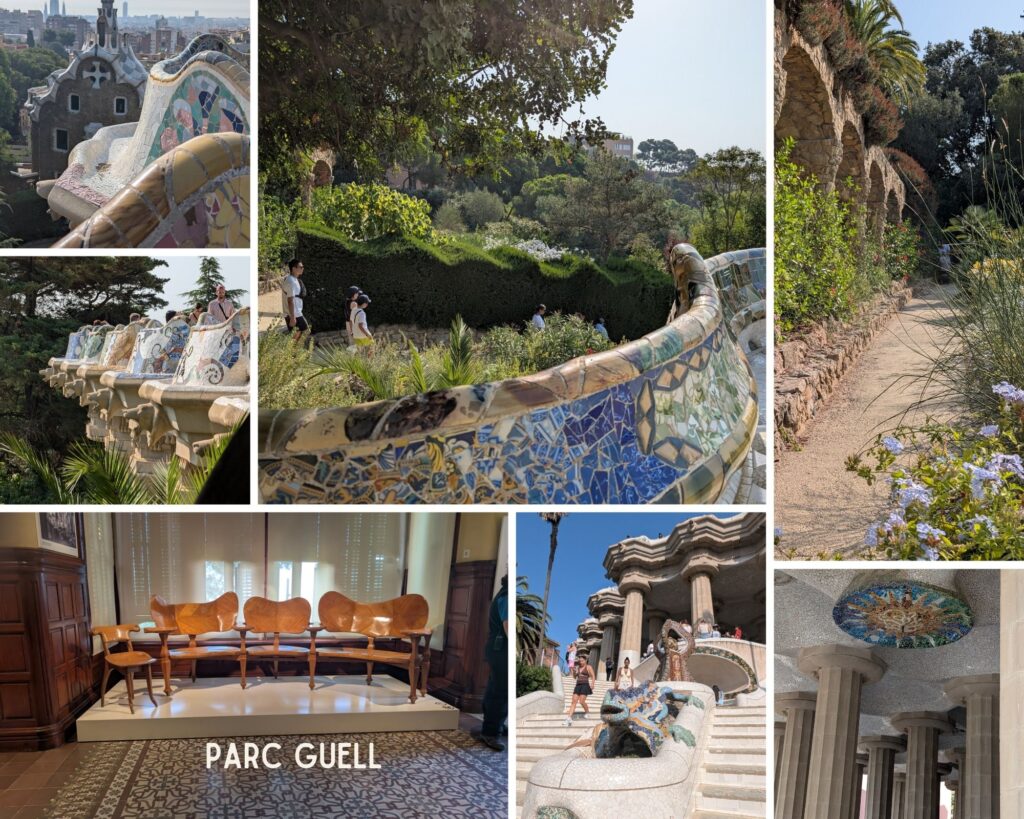
We weren’t done with Gaudí yet. The next morning, we headed to Parc Güell, originally envisioned as a utopian neighborhood by Gaudí and the industrialist Eusebi Güell – a place where shops, schools, and homes would coexist in a self-contained community. The project never quite materialized, but what remains is pure Gaudí: whimsical sculptures, curved benches, colorful mosaics, and terraces overlooking the city. We strolled through the gardens and soaked in the views of La Sagrada Familia in the distance. But by late morning, the heat was relentless. By 11:30, we had surrendered completely, wilted under the Spanish sun.
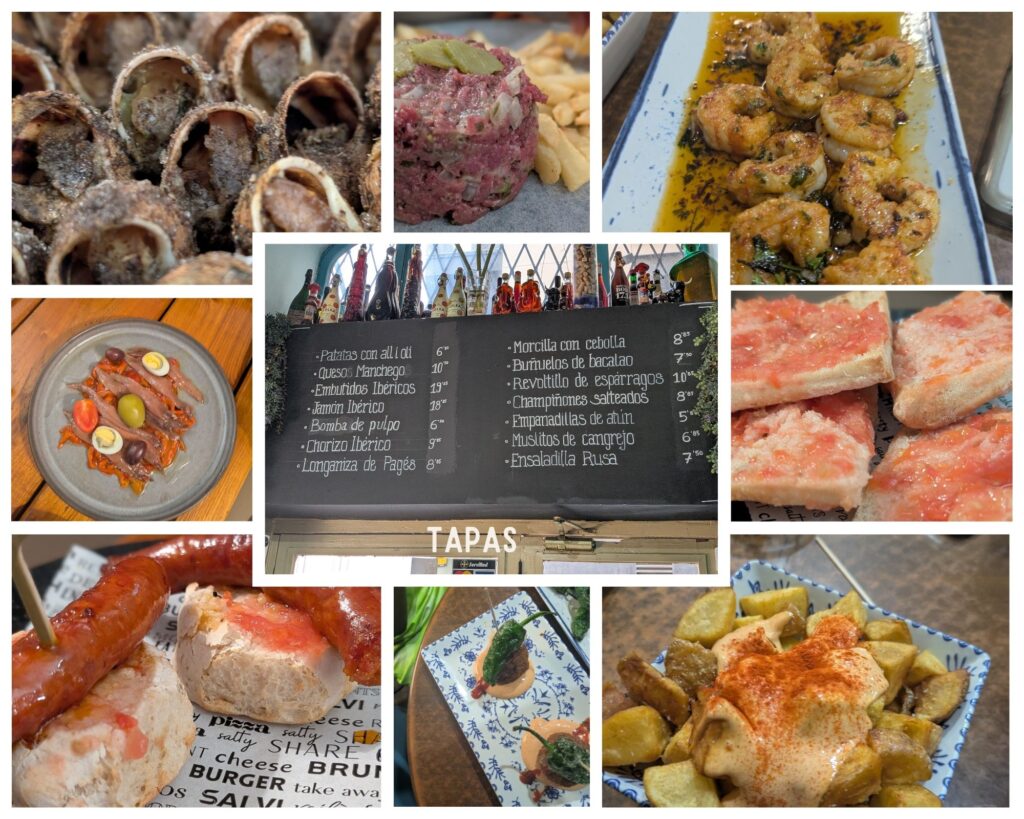
We had heard that the Sardana, a traditional Catalan dance, takes place outside Barcelona Cathedral on Sundays afternoons. We made our way there in hope, but it was likely too hot even for the dancers. Instead, we consoled ourselves with an excellent lunch at Cala del Vermut, a place that will forever remind me of Barcelona with its hearty vermouth, freshly made croquettas and crispy patatas bravas. And just like that, our 48 hours in Barcelona were up. We had crammed in Gaudí, tapas, cathedrals, neighborhoods, and views. At 4 p.m., we boarded our train bound for Granada and for the next chapter in our Spanish story.