

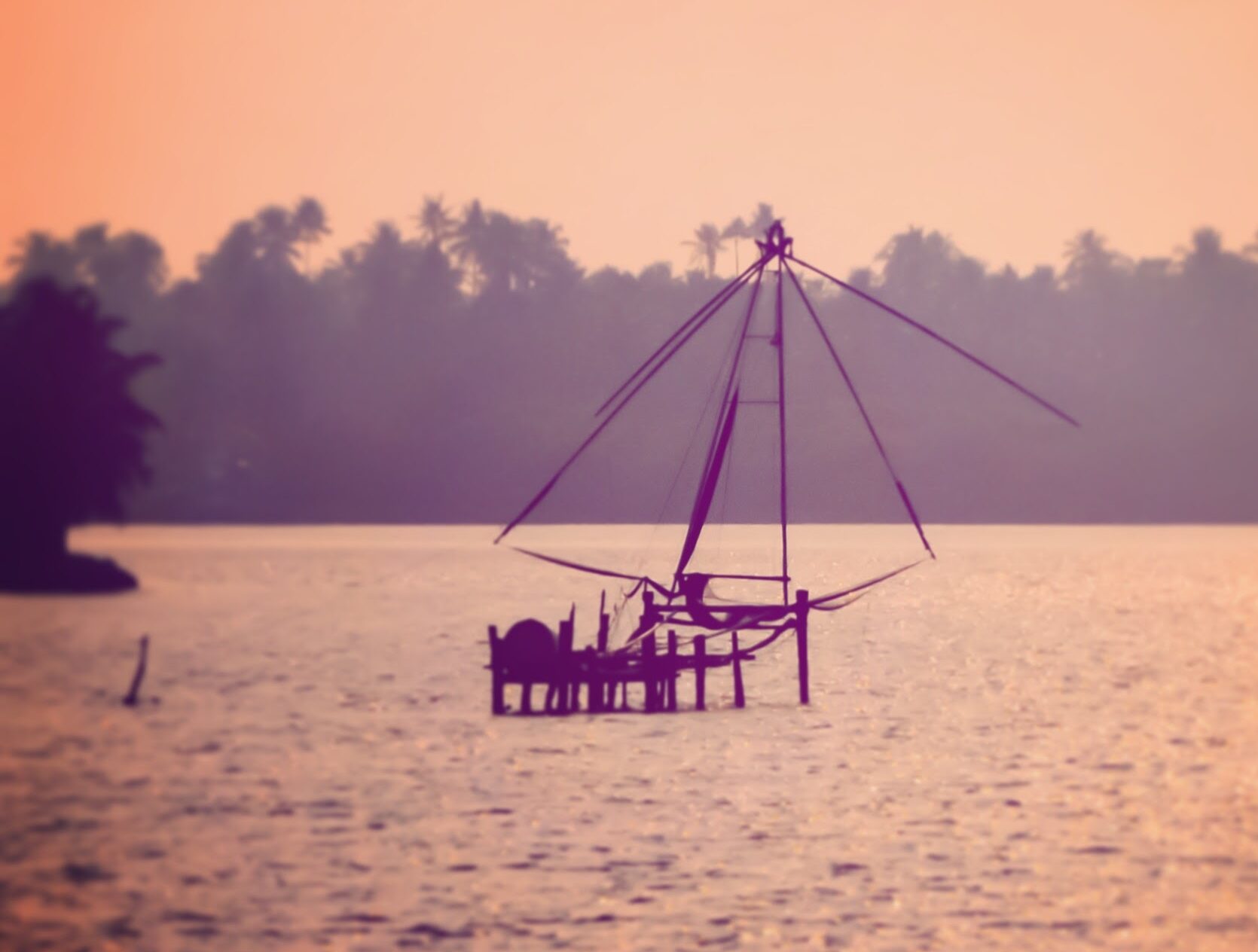
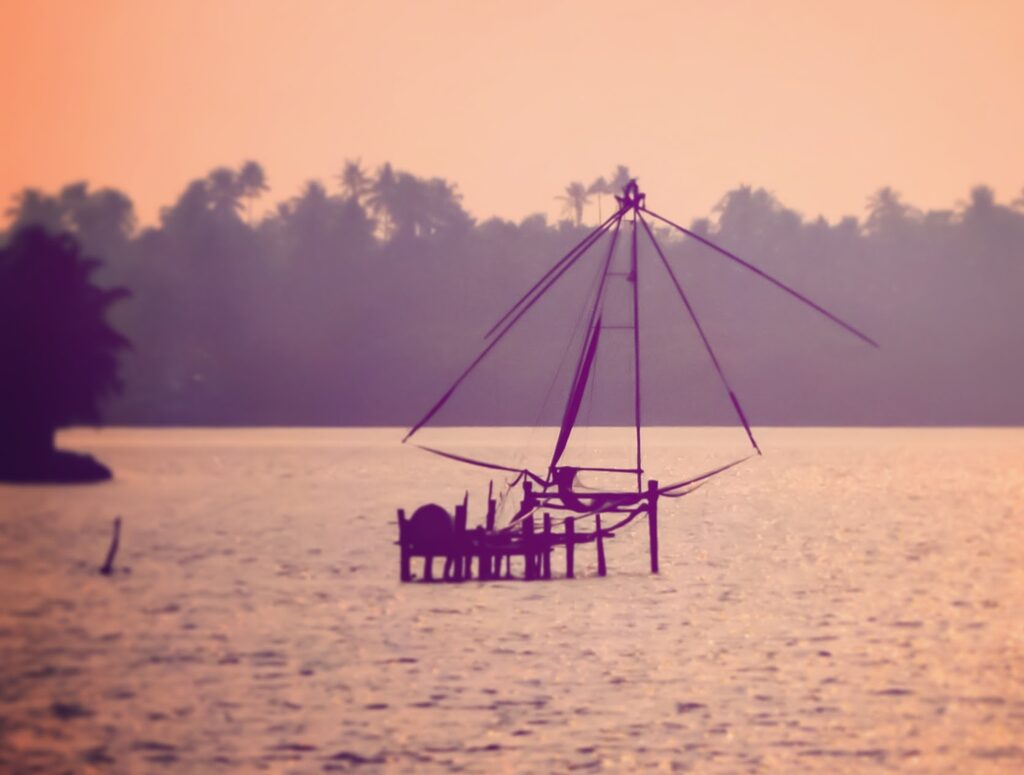
Sometimes it is fun to play tourist in your own hometown.
Every time we visit Kerala for vacation, our days are packed with visiting family, running errands, shopping, and then visiting more family. I estimate that I spend roughly 24 hours of every Kerala vacation sitting inside a bank, government office, or some mysterious institution where I am missing exactly one document or they need another six passport photos of me. And my kids claim they meet an average of 24 new relatives a day over two weeks. This sounds exaggerated, but honestly, with my family, it may be a conservative estimate.
So this time, I decided we were going to do something radical: actually go sightseeing.
I planned a proper tourist day in Kochi with the kids, just as I would if we were visiting another country. There was an itinerary. A list of stops. A schedule and even places for best photo-ops.
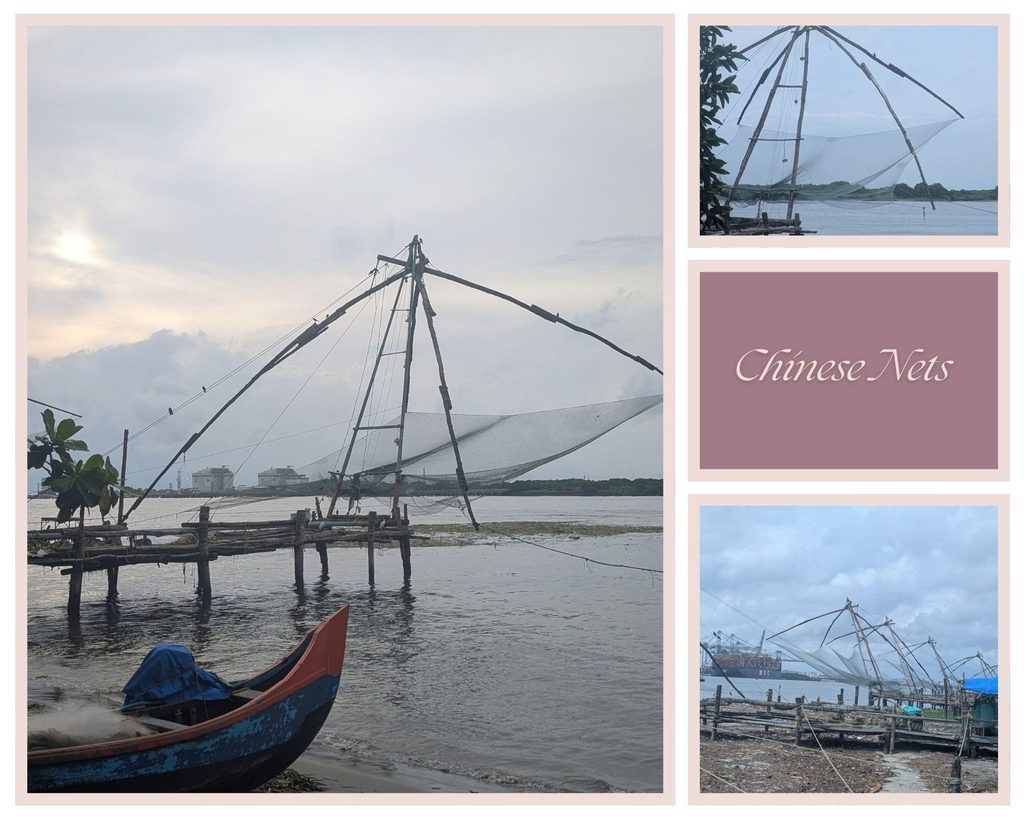
Our first stop was the Fort Kochi waterfront to see the iconic Chinese fishing nets. These enormous cantilevered nets, locally called Cheena vala, were introduced to Kerala in the 1500s by the Chinese and are still used by local fishermen to catch sardines, mackerel, prawns, and other small fish. They are also possibly the most photographed objects in Kochi. We took the required photos.
I do have to admit that I was disappointed by how dirty the waterfront was. Kerala is generally much cleaner than many other parts of India, and this is one of the state’s premier tourist destinations. I expected it to look a little more …nicer.
After admiring the nets and carefully avoiding various things on the ground, we moved on. Fort Kochi has been featured in several movies, so we could see tourists and locals taking photos at locations popularized in various movies.
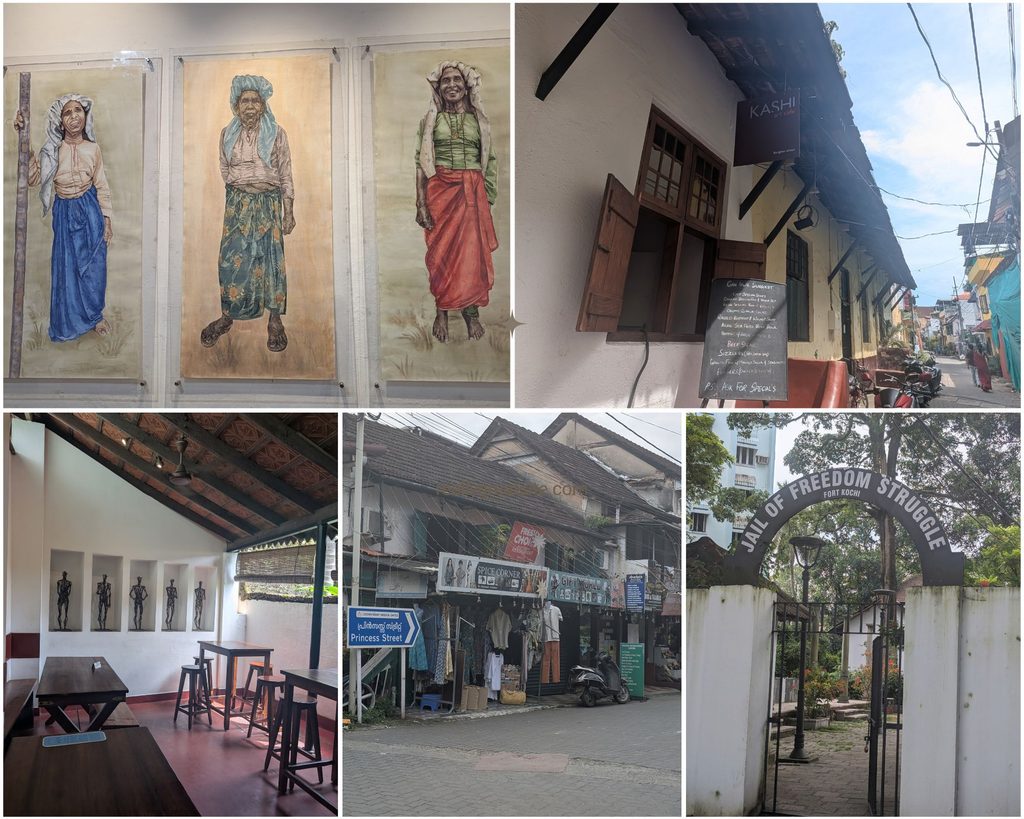
Kochi’s art scene has exploded over the past several years, helped enormously by the Kochi-Muziris Biennale, one of Asia’s largest contemporary art festivals. We weren’t there during the Biennale, but one of its permanent side effects seems to be that Fort Kochi now has a ton of art cafes. We stopped at Kashi Art Café. The café is partly indoors and partly outdoors, with huge paintings near the entrance and sculptures and artwork casually scattered between the tables. It somehow manages to feel like an art gallery where somebody suddenly decided to serve brunch. You can enjoy delicious continental food while trying to understand the underlying meaning of a metal sculpture.
We noticed that every single table appeared to have ordered the chocolate cake. Obviously, we had to taste it too. Sometimes travel is about history and culture. Sometimes it is about peer pressure.
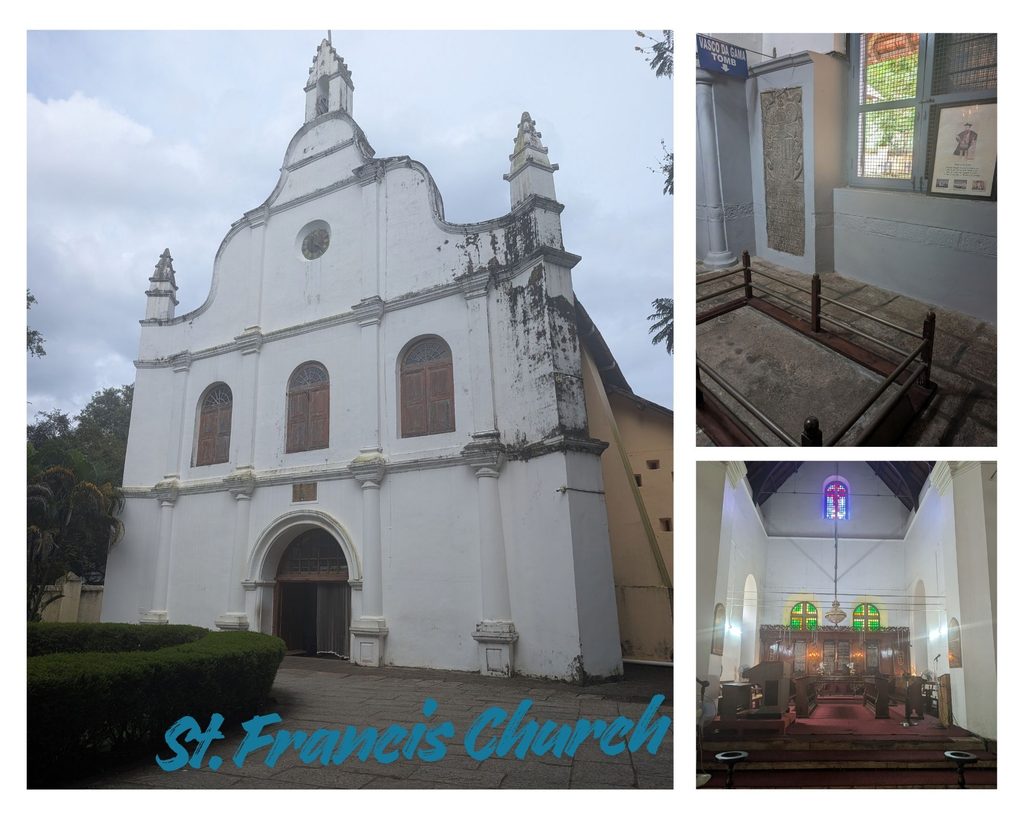
With full stomachs, we walked to St. Francis Church, originally built by the Portuguese in the early 1500s. By this point it had started drizzling, which meant we suddenly became much more interested in church history. Inside is the original burial site of Vasco da Gama. Vasco da Gama reached India in 1498, opening the direct sea route between Europe and India and beginning a chain of events that would eventually lead to centuries of European trade and colonization.
He died in Kochi in 1524 and was buried here before his family later had his remains transported back to Portugal.
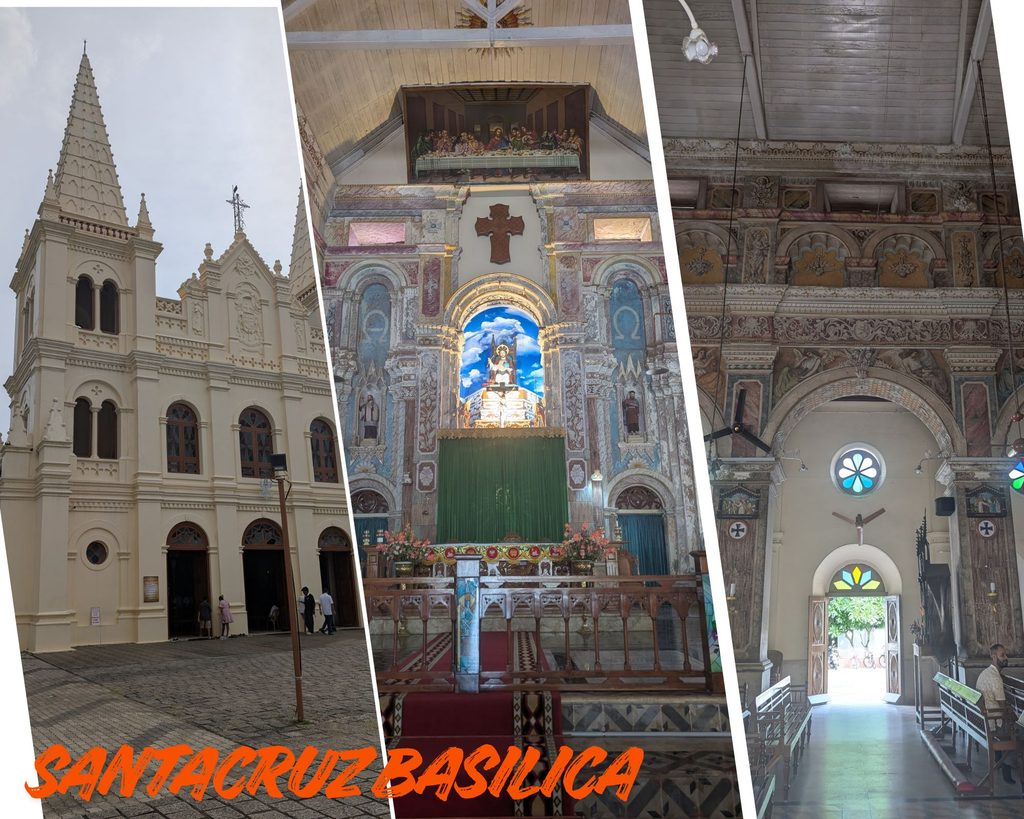
Once the rain slowed down, we walked about 15 minutes to Santa Cruz Cathedral Basilica. One thing that occasionally surprises my American friends is the long history of Christianity in India, especially in Kerala. I usually point out that Kerala had Christian communities long before Europeans had any idea that America existed. Santa Cruz itself dates back to the Portuguese period. The interior is colorful and ornate, with painted ceilings and walls and a very distinctive mix of European and Indian influences. It is also considerably more dramatic than St. Francis Church.
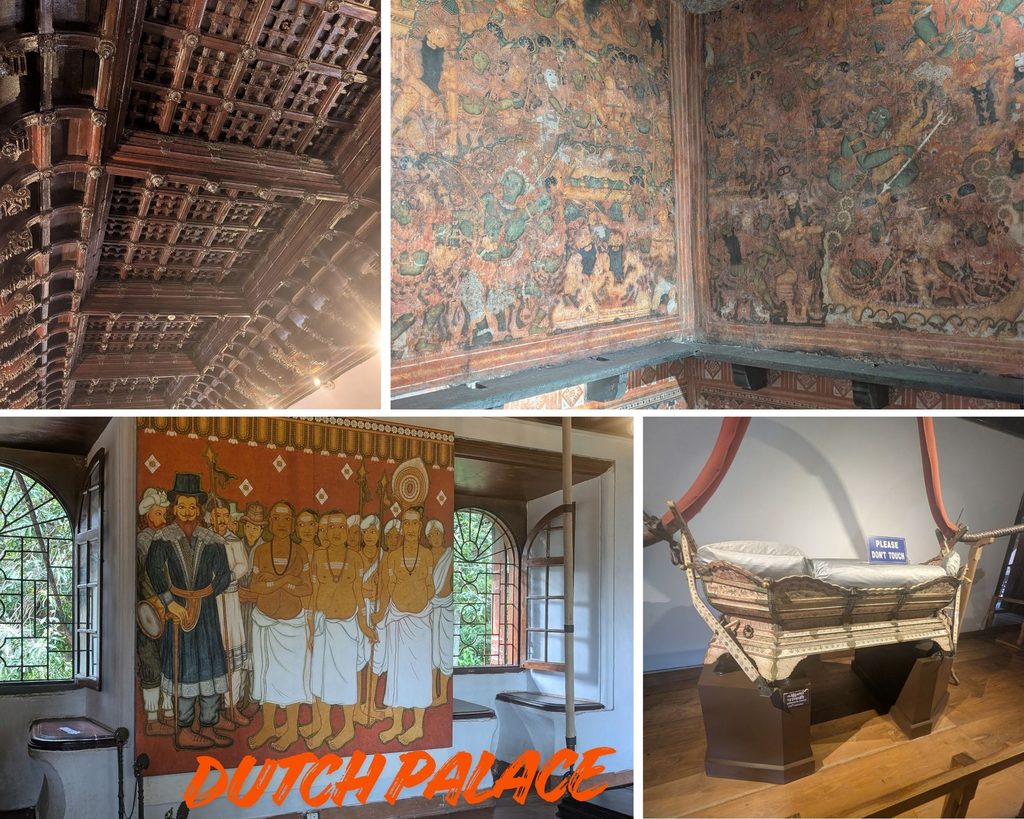
Next, we took an auto-rickshaw to Mattancherry Palace, better known as the Dutch Palace. It was originally built by the Portuguese in the 1500s. Then the Dutch defeated the Portuguese, took over Kochi, renovated the palace, and it became known as the Dutch Palace.
Today, the palace is a museum chronicling the history of the Cochin royal family, with murals, portraits, textiles, palanquins and various royal artifacts. Our family has a distant connection to the Cochin royal family. At one point, two girls from my mother’s family were adopted into the royal family to continue the lineage. This was also the moment when I became significantly more interesting to my children. When your family name appears in royal archives, your children are slightly impressed with you.
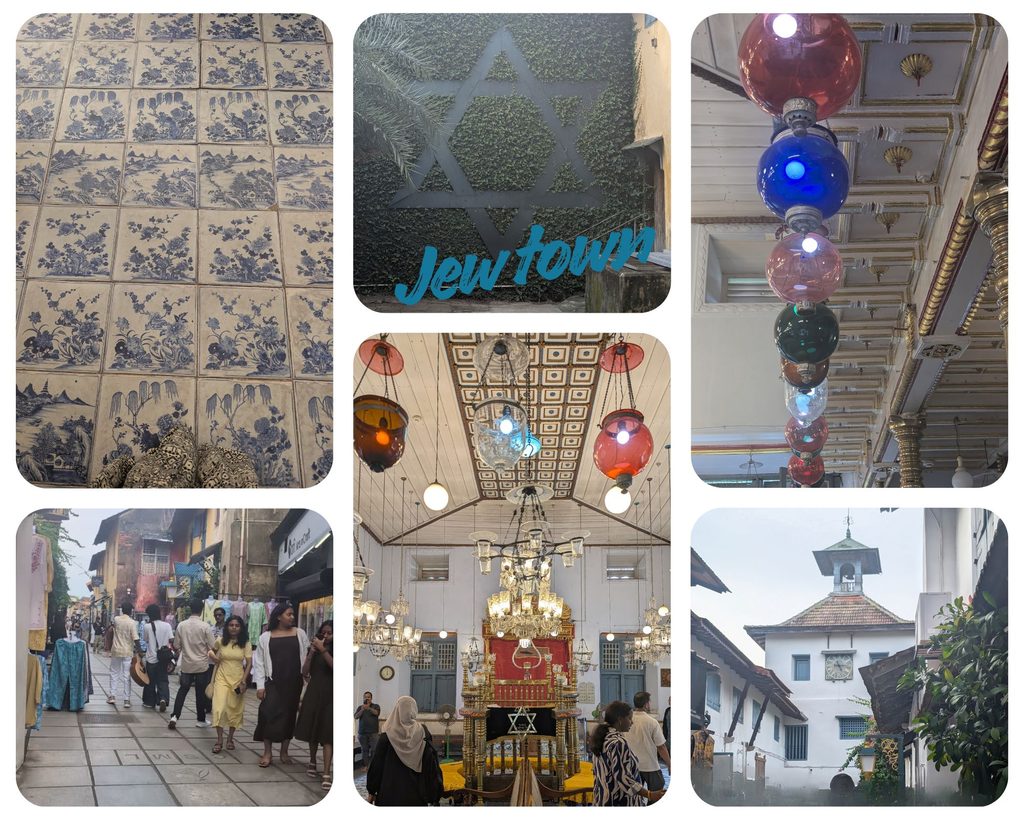
Our next stop was Jew Town in Mattancherry.
This area feels completely different from the rest of Kochi. The narrow streets, colorful buildings, antique shops, spice stores, cafés and old warehouses make it feel as though someone picked up a neighborhood from somewhere else and gently placed it in Kerala.
At the center is the Paradesi Synagogue. Paradesi means “foreign,” referring to the Jewish community that settled here centuries ago. Today, only one or two Jewish residents remain, but the synagogue and the surrounding neighborhood have been beautifully preserved.
Of everything we saw that day, this was probably the cleanest and prettiest area.
It is slightly ironic that an area with almost no Jewish population left is still enthusiastically called “Jew Town,” but the name has stuck.
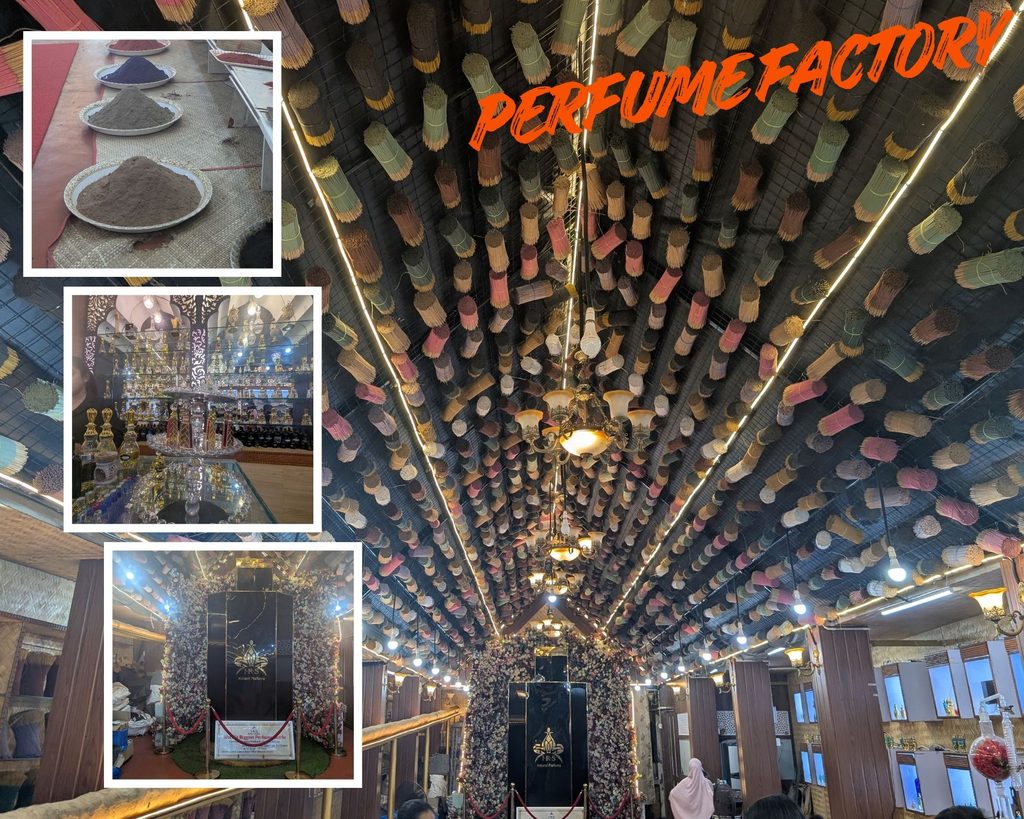
Naturally, no tourist day in India is complete without being shown something described as the world’s largest. We stopped at a fragrance shop and were proudly shown the world’s largest incense stick and the world’s largest perfume bottle. Of course, we took photos commemorating our encounter with these “great” items and then got pressured into buying some perfume.
Eventually, it was time to head back toward Fort Kochi and home. Unfortunately, this happened to be during an Uber strike. Which meant that after spending the day exploring 500 years of Portuguese, Dutch, British, Jewish and Kerala history, the greatest logistical challenge of the day was finding a ride home. Eventually, we found an auto-rickshaw.
And just like that, our highly organized tourist day came to an end. We managed to check off everyone of our must-see list. And apparently discover that your mother has royal connections. Which, according to my children, may have been the most important historical discovery of the day.