

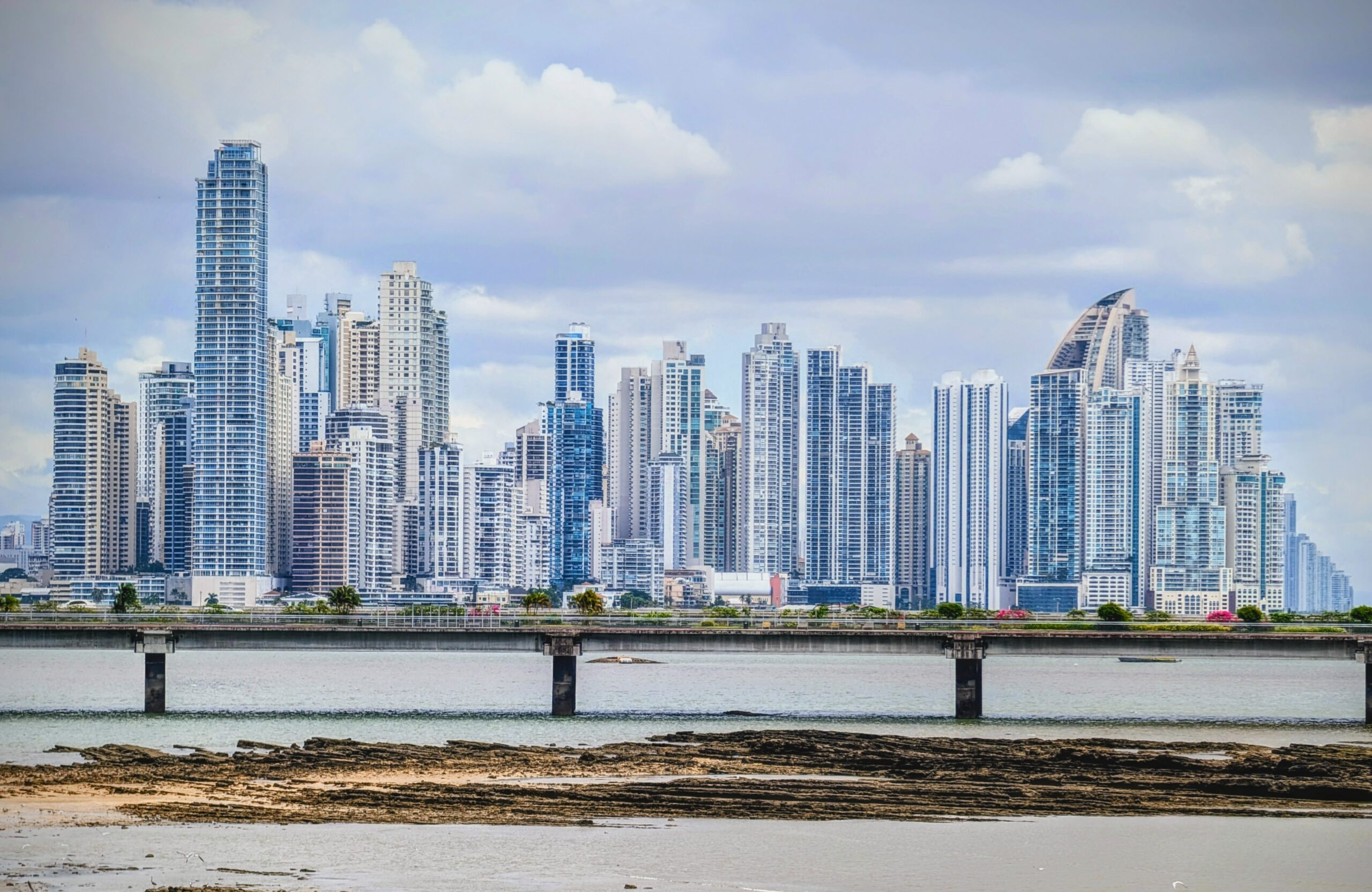
On our way back from Argentina, we had a long layover in Panama City. The length of the layover was by design, and it gave us a good opportunity to see the city. Our flight from Buenos Aires landed at 9 a.m. We had boarded at 3 a.m. for a seven-hour flight, but thankfully we had splurged on a premium economy upgrade, so we all managed some quick naps. We had also prepared the kids for a long day ahead, which helped.
After landing and a quick freshen-up, we found our driver and tour guide, booked through Viator. We had planned to store our carry-on luggage, but that was in another terminal. Since we only had two bags, we left them in his car and moved on. I had tried to plan our itinerary, but our driver clearly had his own ideas. He whisked us off immediately toward Casco Viejo. It was about an hour’s drive, and he talked nonstop the entire way—about the cost of living, expats in the high-rise buildings, drug busts, how much he liked Indians, his mother’s teachings, and more. At some point, I tuned him out and started looking out the window.
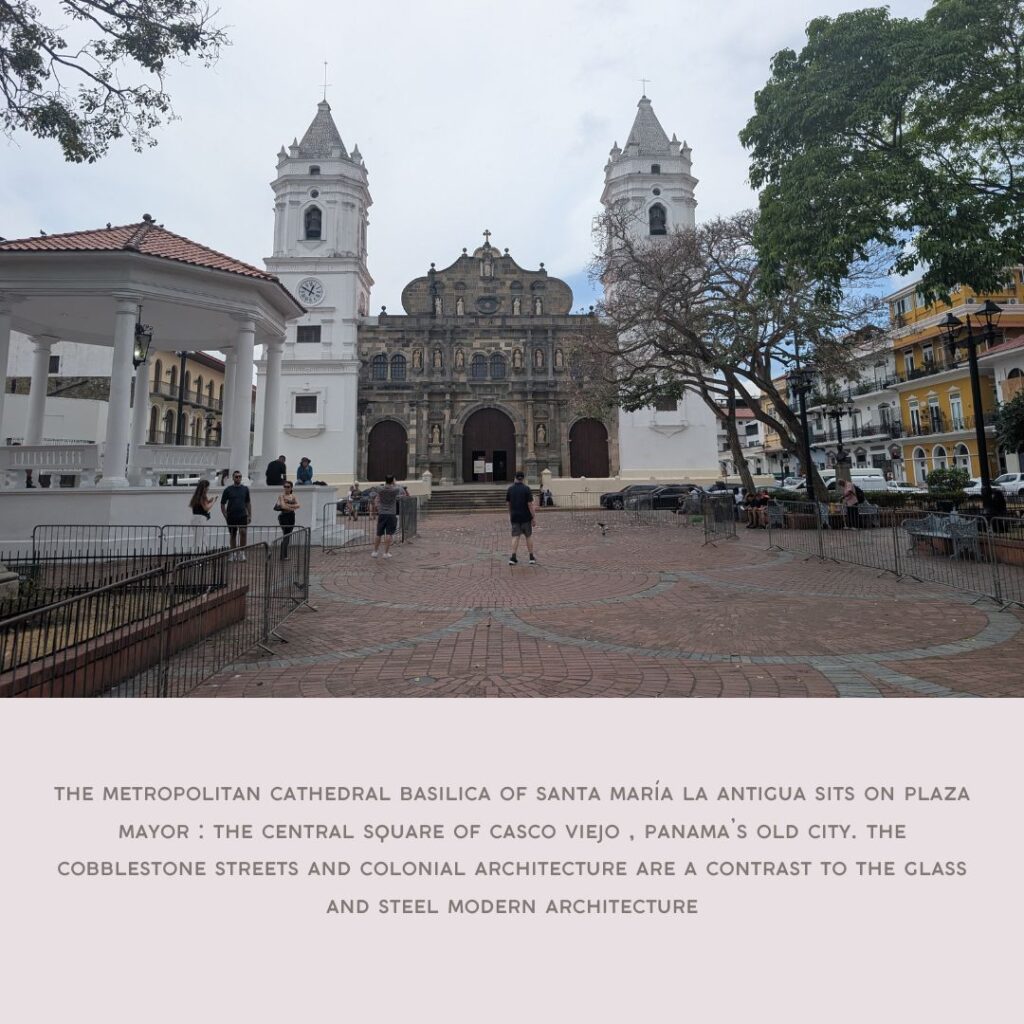
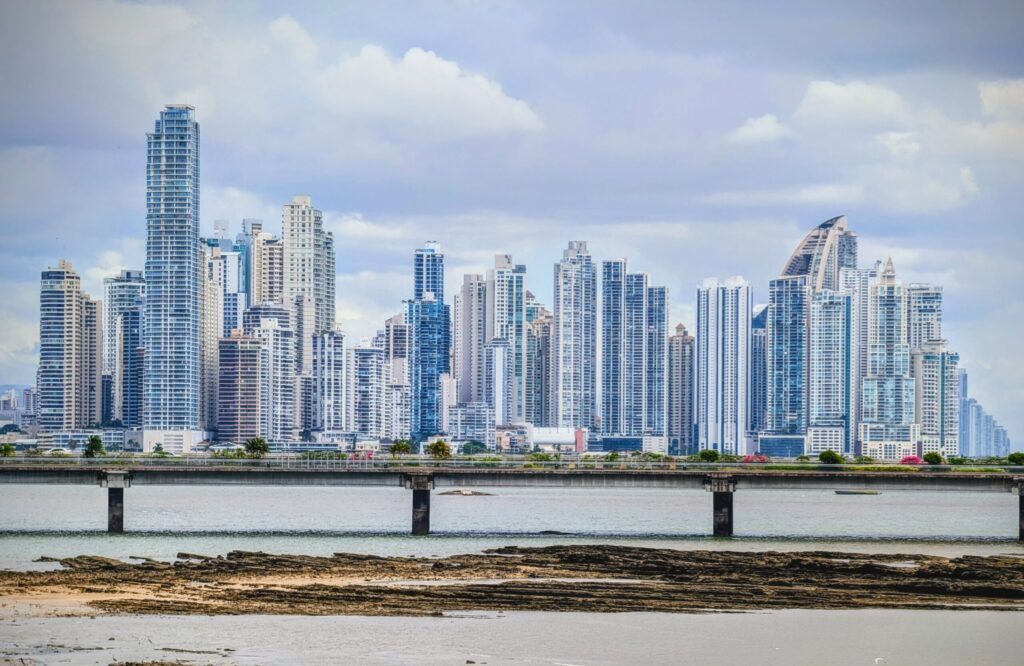
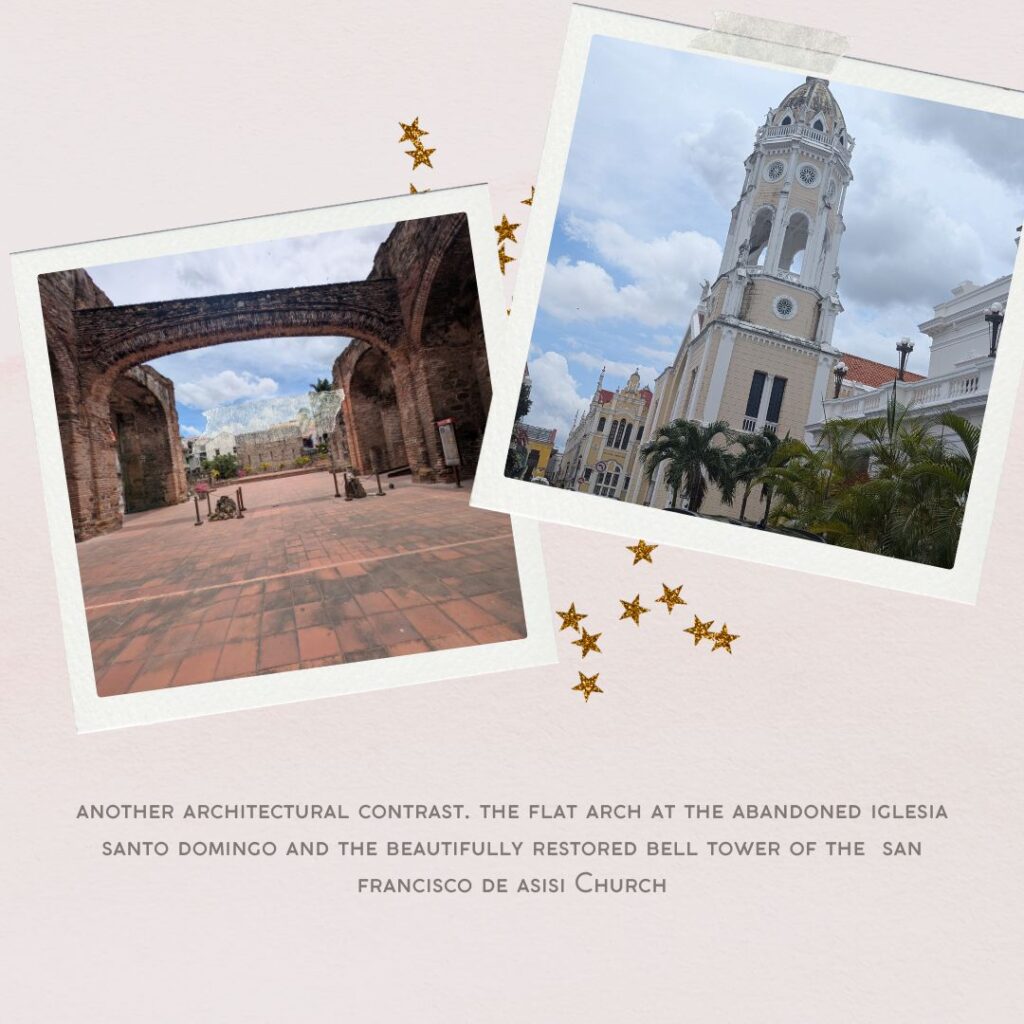
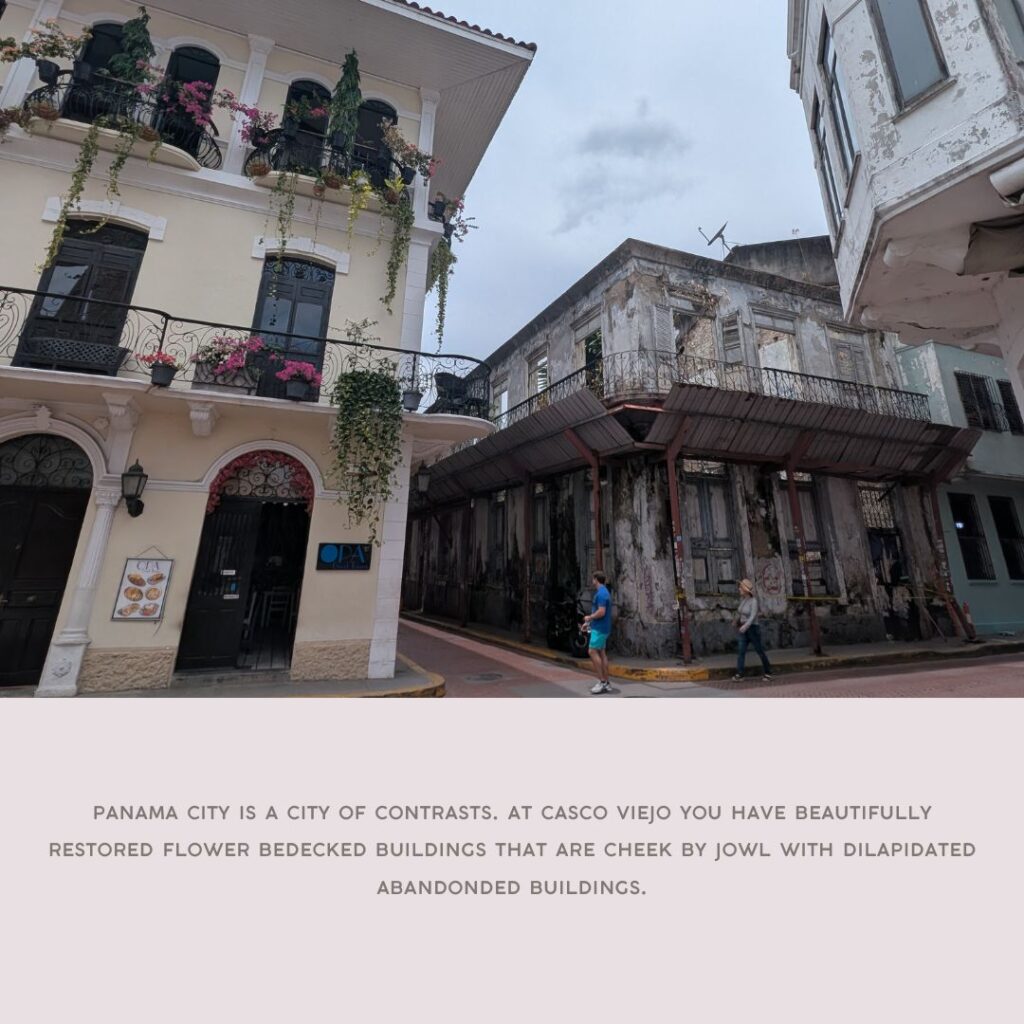
The skyline was full of tall, glassy buildings. The tide was out, but the city still looked polished and modern. And then, almost suddenly, it gave way to the old town. Panama City is a city of contrasts. You have gleaming high-rises, and then you have the colorful, historic streets of Casco Viejo. Even within the old town, the contrast continues. One house is beautifully restored, and the one next to it is crumbling. Some buildings were so abandoned that trees were growing inside them, while others had been refurbished into stylish homes or cafés. We saw several in the process of being restored. The old town has a few plazas with that familiar, classic square feel. The one with a church, a school, a government building, and a few cafés all around a town square.
Seejo and the kids were in a café having sandwiches and coffee, and I stepped out to take pictures. I was leaning against a car trying to take a photo when the owner of that gleaming car stopped by. He was a well-dressed man in a classic suit. I apologized and was about to move on when he asked me if I was Indian. When I said yes, he mentioned he had visited India recently as part of an official government delegation to meet with Modi’s team. The Panama Papers briefly crossed my mind, but I resolutely kept quiet. Then he casually said he knew Mukesh Ambani. I laughed, assuming he was joking, but he insisted he had met him, describing him in detail. “He is a bit fat,” he confided, mimicking a waddling action. It was one of those slightly surreal travel conversations that you don’t quite know what to do with, so I smiled and moved on.
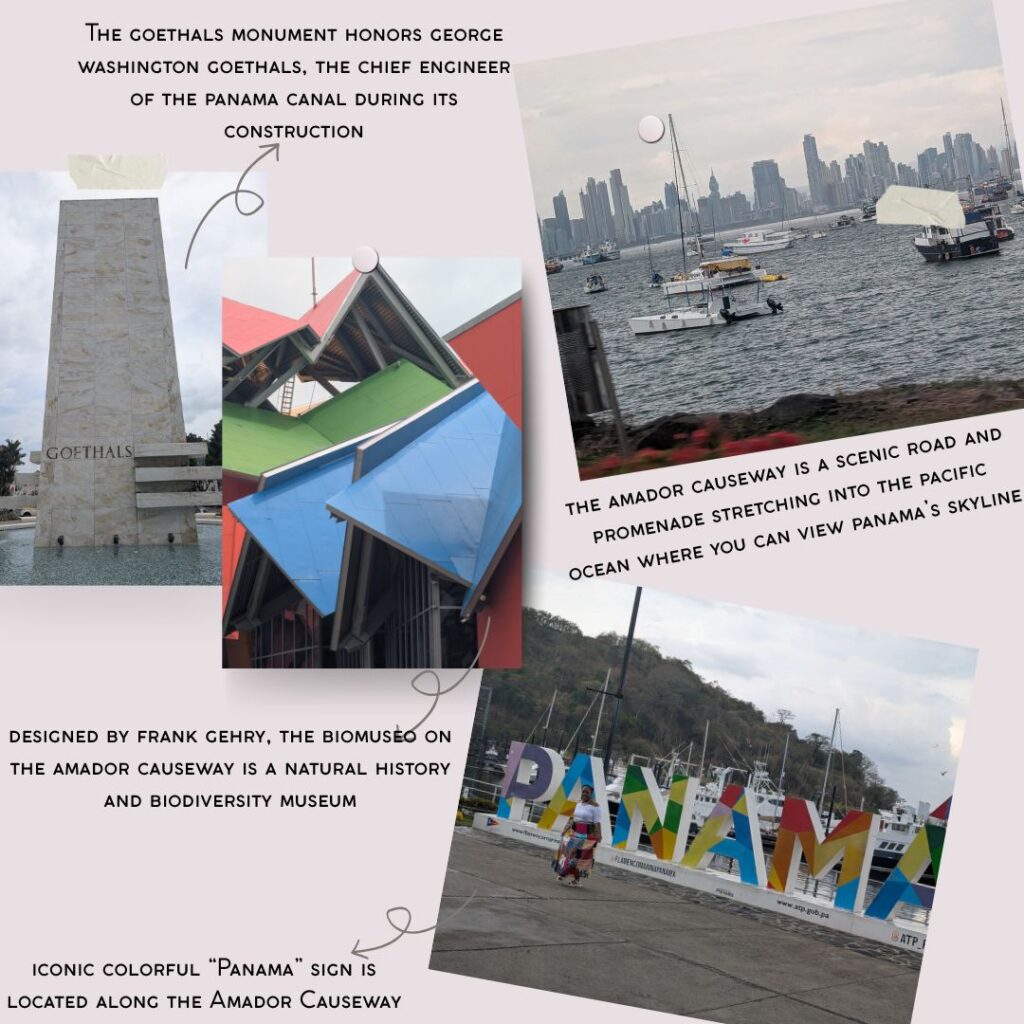
Our driver then took us through the neighborhood where he had grown up, again pointing out contrasts. He showed us areas where Americans had lived in the early 1900s when they were involved in building the canal. Many of those houses were once grand but now showed signs of age and neglect. We drove toward the Amador Causeway, caught a glimpse of the colorful Biomuseo designed by Frank Gehry, and paused at a monument to George Washington Goethals, the chief engineer of the Panama Canal.
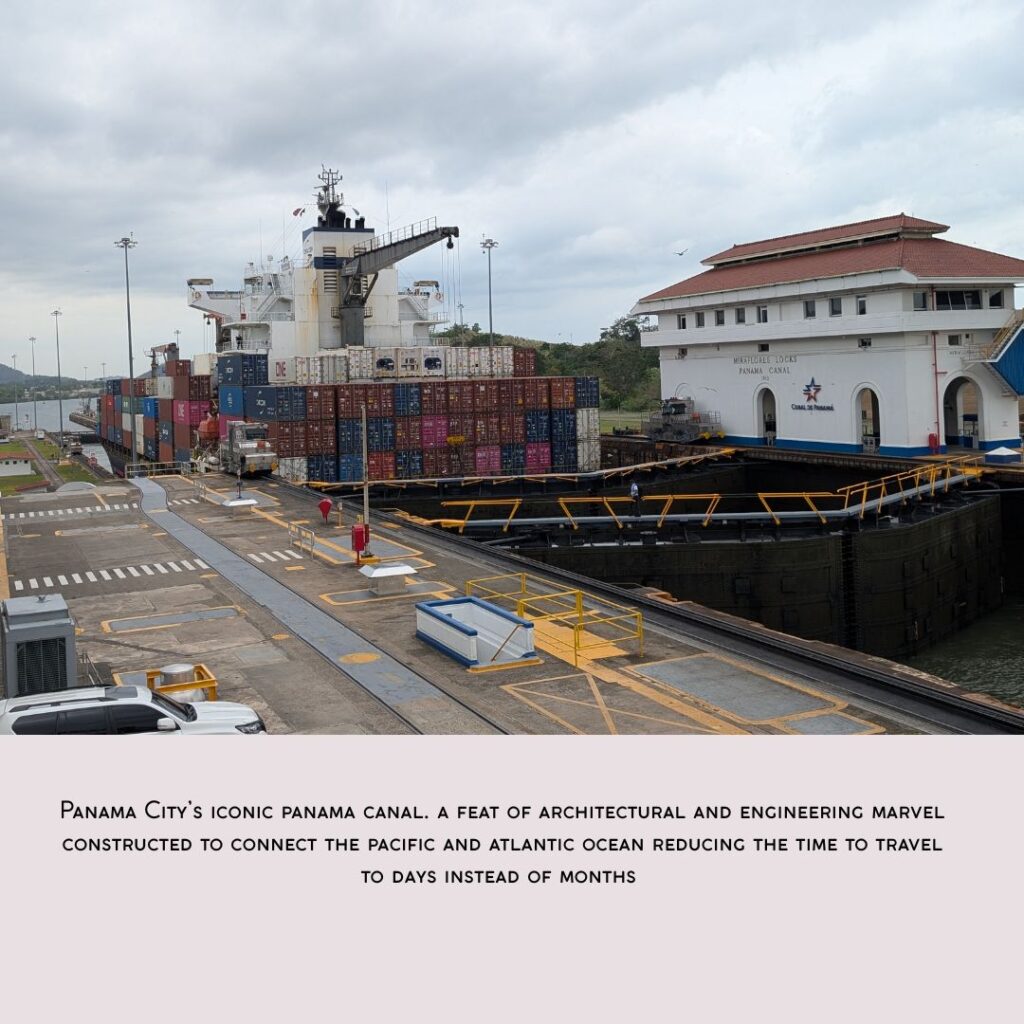
The canal was what we were most excited about. The Panama Canal is one of the most significant engineering projects in the world. It was originally built by the United States in the early 20th century and officially opened in 1914. Control of the canal was transferred to Panama in 1999, and it is now managed by the Panamanian government. It connects the Atlantic and Pacific Oceans, saving ships the long and dangerous journey around South America. Each transit can cost anywhere from a couple of hundred thousand dollars to over a million, depending on the size of the ship and the cargo. Cargo and passenger ships pay this to avoid the long journey. However, crossing the canal still takes an entire day. The way the canal works is fascinating. Engineers tried various methods of connecting the oceans, including building a railroad and even an undersea tunnel, but the challenging geography thwarted all attempts. Finally, they had the ingenious idea of creating an artificial lake, Gatun Lake, which sits at a higher elevation than the two oceans. Because of this, ships are lifted up to the level of the lake using a system of locks and then lowered back down on the other side at sea level. We watched massive cargo ships enter the locks, guided carefully into position. The water levels changed slowly, lowering the ships step by step until they reached sea level. Once the gates opened, they moved on toward the ocean. Traffic moves in one direction during certain parts of the day and reverses later to manage the flow.
This is an extremely precise operation. The ships are enormous, and the locks are narrow. Specially trained Panamanian pilots take control of the ships while they are in the canal, guiding them safely through. Watching this process unfold was fascinating. We saw a couple of ships lined up, moving through the locks one after another. There is also a short film shown at the visitor center that explains how the canal was built, the challenges faced, and the later expansion to accommodate larger ships. It is an impressive feat of engineering, connecting two oceans by reshaping the land itself.
By this point, it had already been a long and full day. Our driver, however, continued his running commentary, again commenting on the rising cost of living, randomly moving on to fish recipes, school stories, and pointing out local birds. We were tired and glad to get back to the airport. Thanks to having lounge access, we were able to rest for a couple of hours and have a bit to eat. As we were getting ready to board our flight to Washington, D.C., we had a completely unexpected surprise. One of our closest friends was boarding the same flight. They were returning from Costa Rica. The kids were thrilled to see familiar faces at the airport, and it turned into a fun, unexpected reunion. It was only a five-hour flight, but all of us fell asleep almost immediately after takeoff. It had been a full 12 days, but one of the best trips we have taken.