

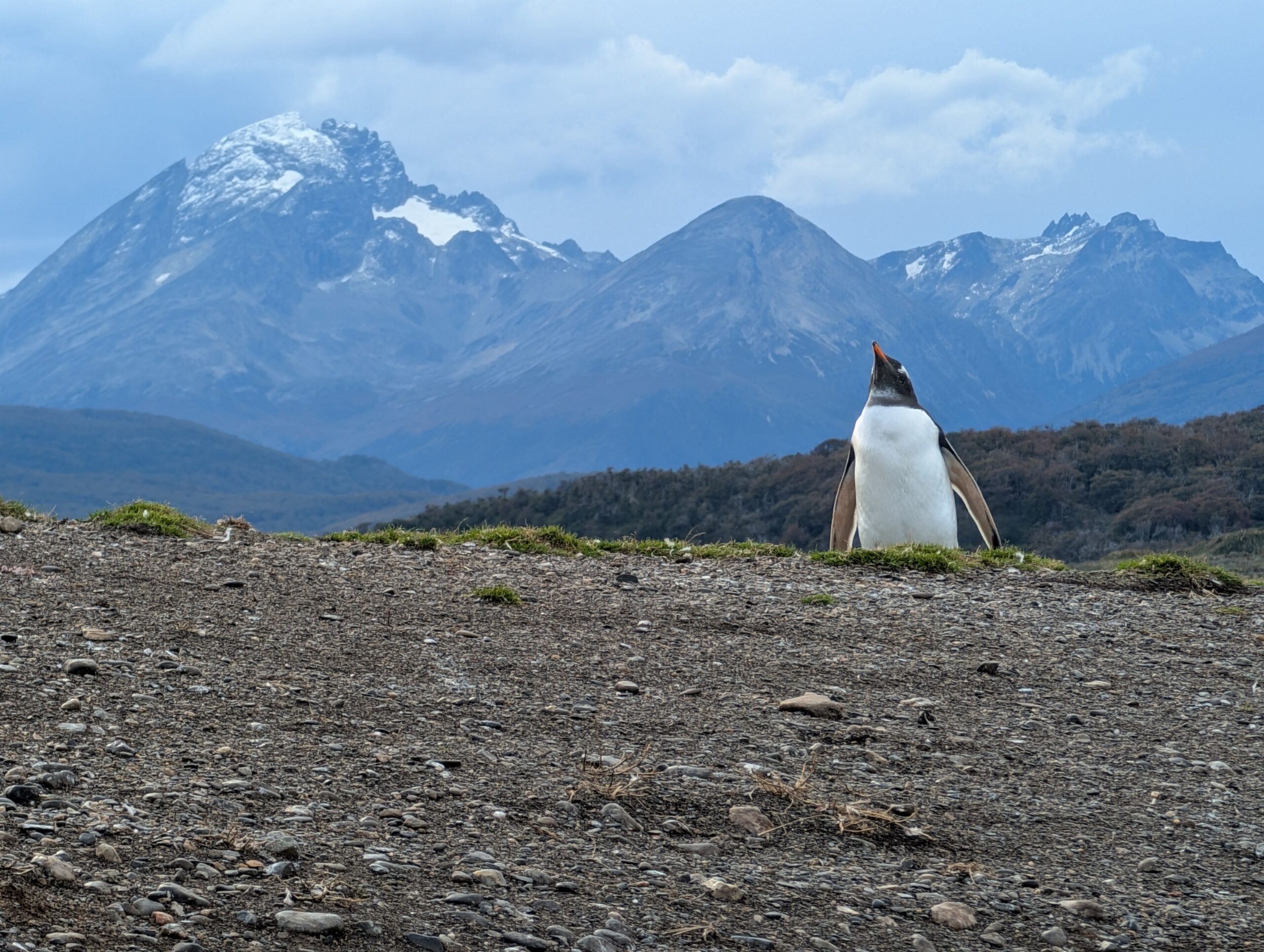
We flew to Ushuaia the day after we reached Buenos Aires on an early morning flight. We were in a hurry to get there because it was late March. Summer was ending, and we wanted to arrive before the penguins left for warmer climates.
Ushuaia is at the southernmost tip of South America and is popularly known as the end of the world. You see signs of “El Fin del Mundo” everywhere, and the town leans into this description with gusto. Ushuaia is hemmed in by the Beagle Channel on one side and the southernmost portion of the Andes mountain range on the other. It is also the gateway to Patagonia to the north and the gateway to Antarctica, with most Antarctic cruise ships departing from its port. Being the end of summer, we were at the tail end of the cruise season, but Ushuaia is clearly a very popular tourist town.
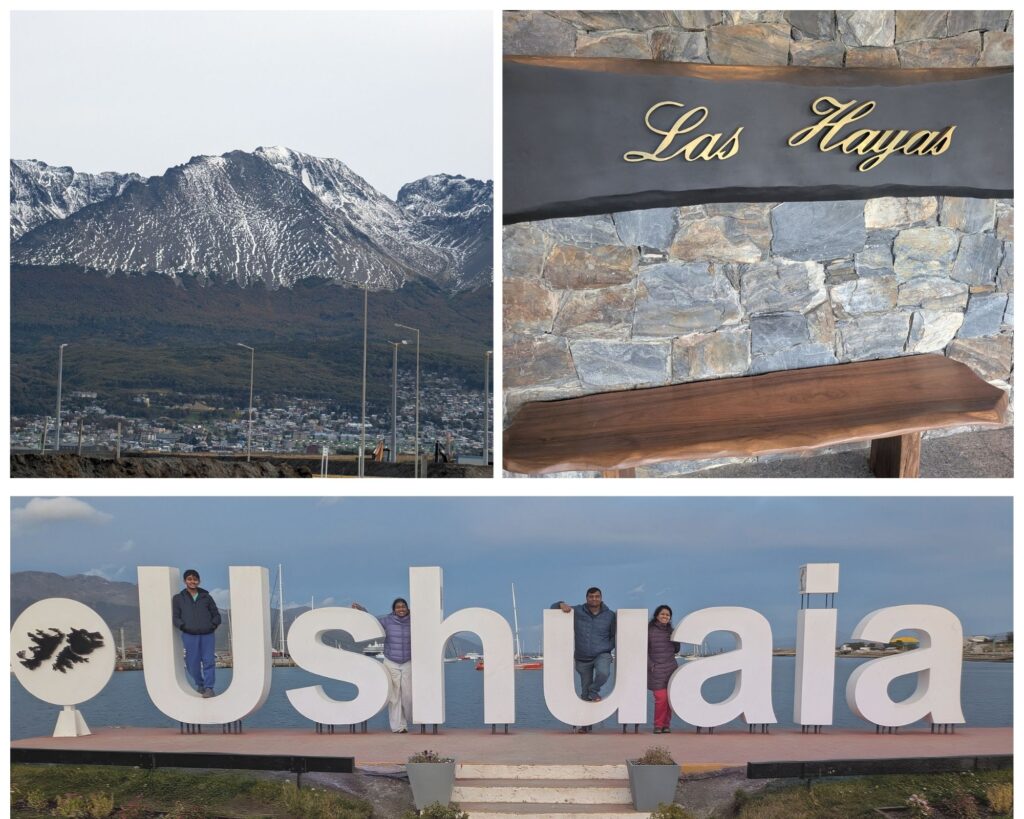
We were struck by the wonderful scenery as we landed. Snowcapped mountains surrounded us, and our rental car employee pointed out our hotel, Hotel Las Hayas, which was up on a hill with a great view of the water. We drove our rental car to the hotel for a quick stop to drop off our bags. By this time, we were hungry and had little time before our first adventure. The restaurant, Ramos Generales El Almacén, came recommended. We were told that when Leonardo DiCaprio stayed in Ushuaia for a month while shooting the final scenes of *The Revenant*, he frequented this restaurant and especially loved the pumpkin soup. We heard several versions of this story about other restaurants too, so I take it with a pinch of salt, but the pumpkin soup was indeed delicious.
The Beagle Channel Tour
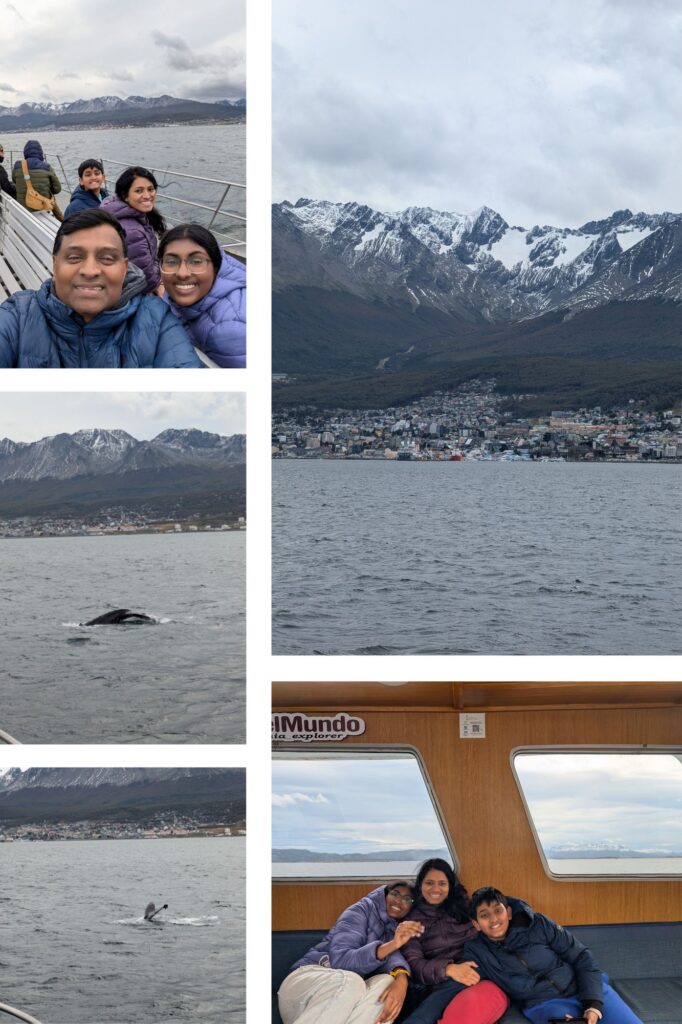
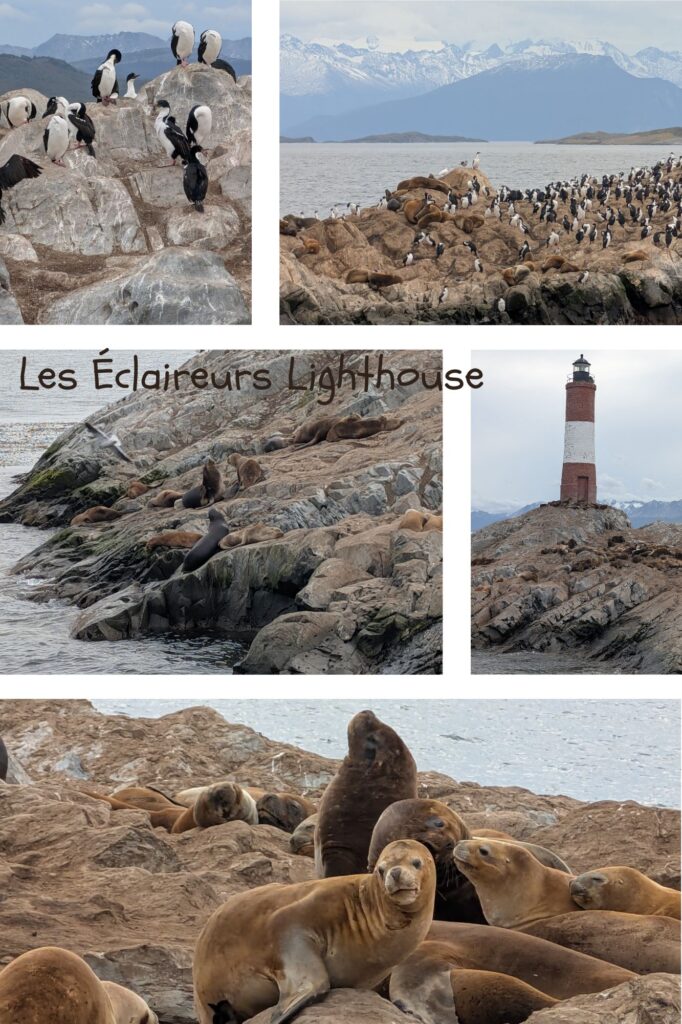
After lunch, we headed to the pier for our Beagle Channel boat tour that we booked via Viator. The Beagle Channel is not just an Argentine landmark; it is shared between Argentina and Chile, with parts of it forming the boundary between the two countries. Many of the small islands scattered across the channel belong to Chile, and the distant shoreline we could see was Chile. Our destination was Les Éclaireurs Lighthouse, perched on a small rocky islet not far from Ushuaia. But the boat ride itself was full of dramatic landscapes and beautiful scenery, and we sat with hot chocolate, just taking it all in. A humpback whale surfaced briefly, adding some excitement, and then we were near the famous red-and-white striped lighthouse. The rocky islets around it are home to several sea lions and seabirds, particularly cormorants. The sea lions lazed around, tangled with each other, barking occasionally, snuffling at times, shuffling across the rocks, and then sliding into the water with surprising grace. Our guide pointed out that most of these were females.
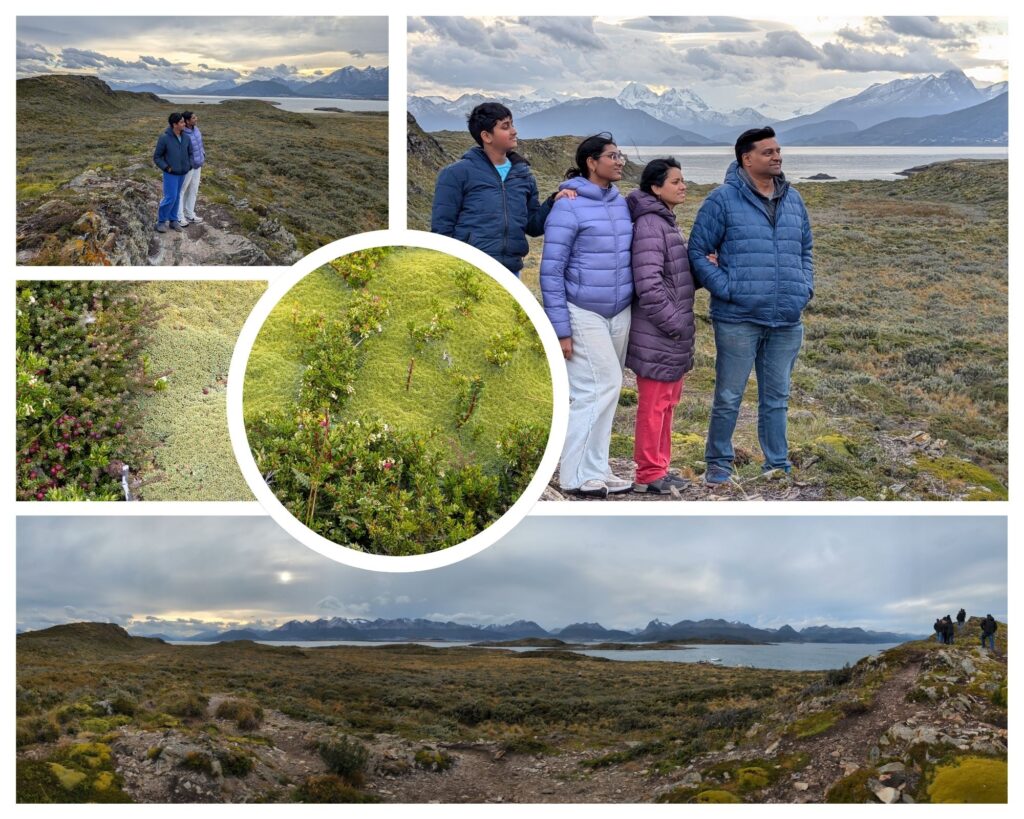
After the lighthouse, we had a short mini-trekking stop on one of the nearby islands. These are uninhabited islands, windy, stark, and isolated. The ground is covered in mosses and lichens that grow at an incredibly slow, almost glacial pace, a reminder of how delicate the ecosystem is. We walked up a small hillock and could see a 360-degree panoramic view of the Beagle Channel and the mountains. This is where I really felt that we were at the end of the world. If it weren’t for the sight of our boat docked nearby, it would have felt eerie.
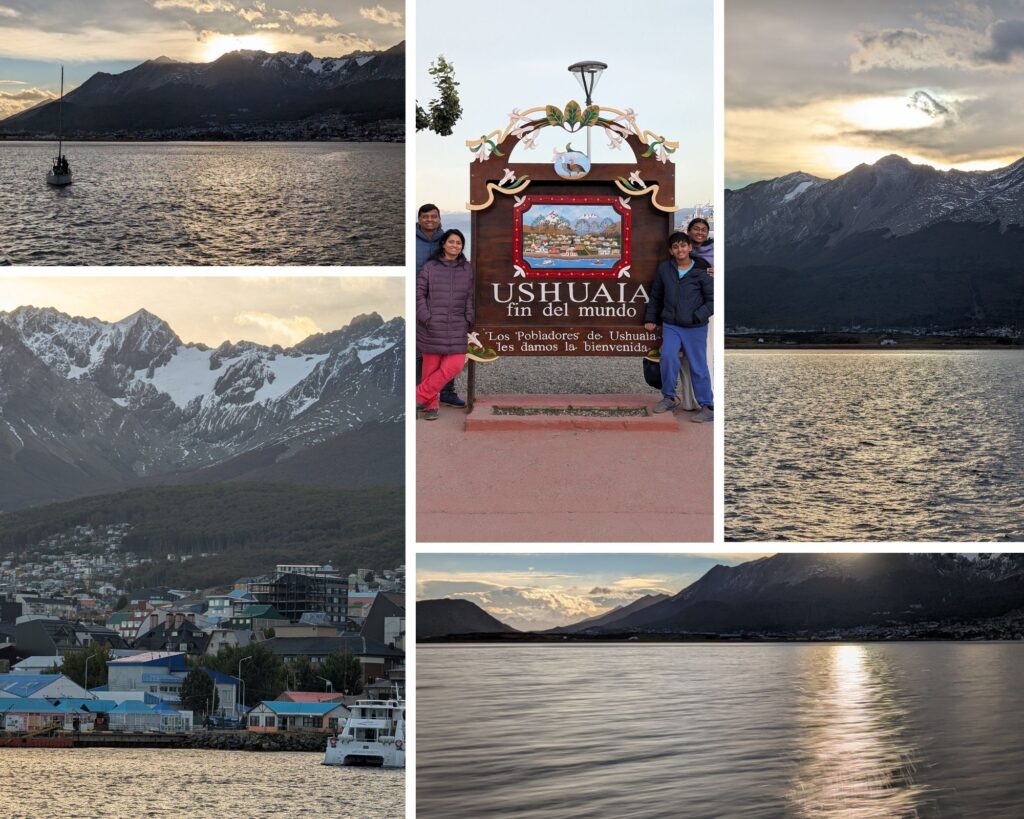
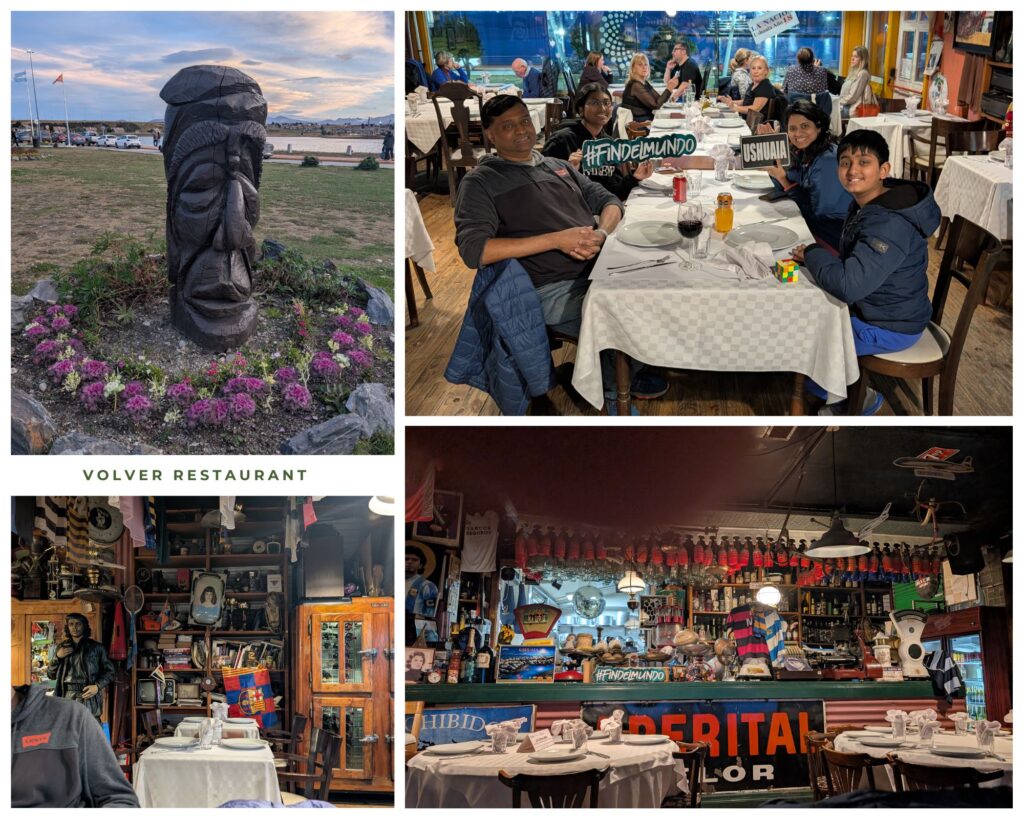
On our return to Ushuaia, we took advantage of the light to take some photographs at the port. This is clearly a tourist town, and there are several photo spots with “Fin del Mundo” or Ushuaia signs. We also caught a glimpse of the sunset behind the mountains. By then, we were hungry again, so we went to Volver. I thought Ramos Generales was atmospheric, almost like a vintage store, but Volver surpasses it. It feels like a curated junkyard, with vintage objects, curios, soccer T-shirts, and items that seem unrelated but somehow come together. The food was Patagonian seafood-heavy, and we gorged ourselves on king crab, sea bass, ceviche, and oysters.
Isla Martillo and the Penguins
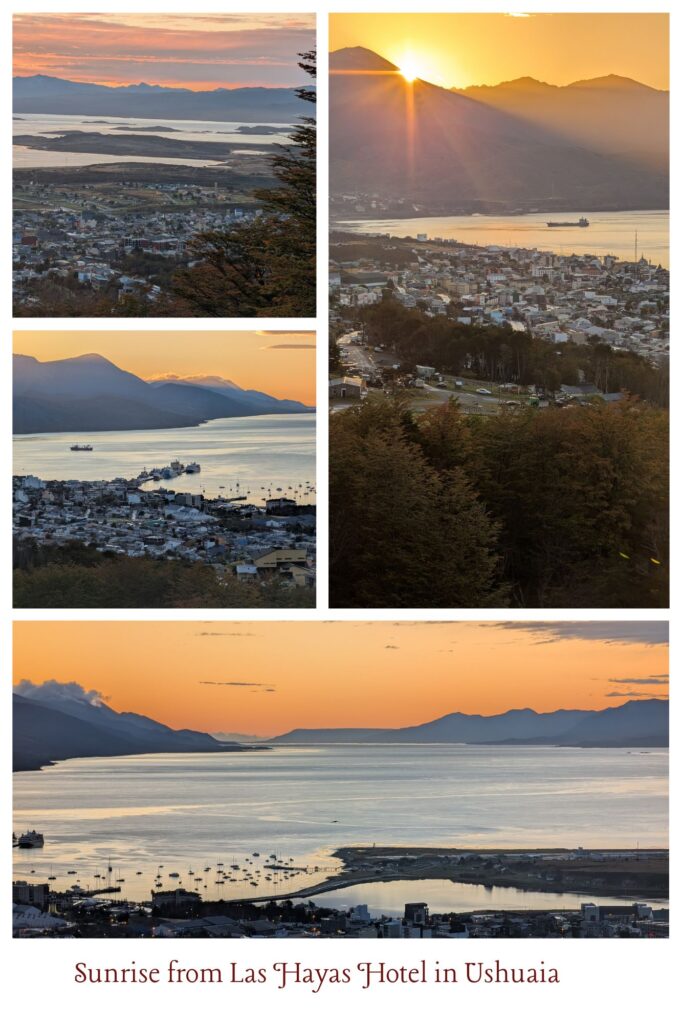
Las Hayas was quite possibly the best hotel during our stay in Argentina. It had two large, well-decorated rooms, plenty of space, and a nice free breakfast, but the highlight was the beautiful sunrise over the water that greeted us in the morning.
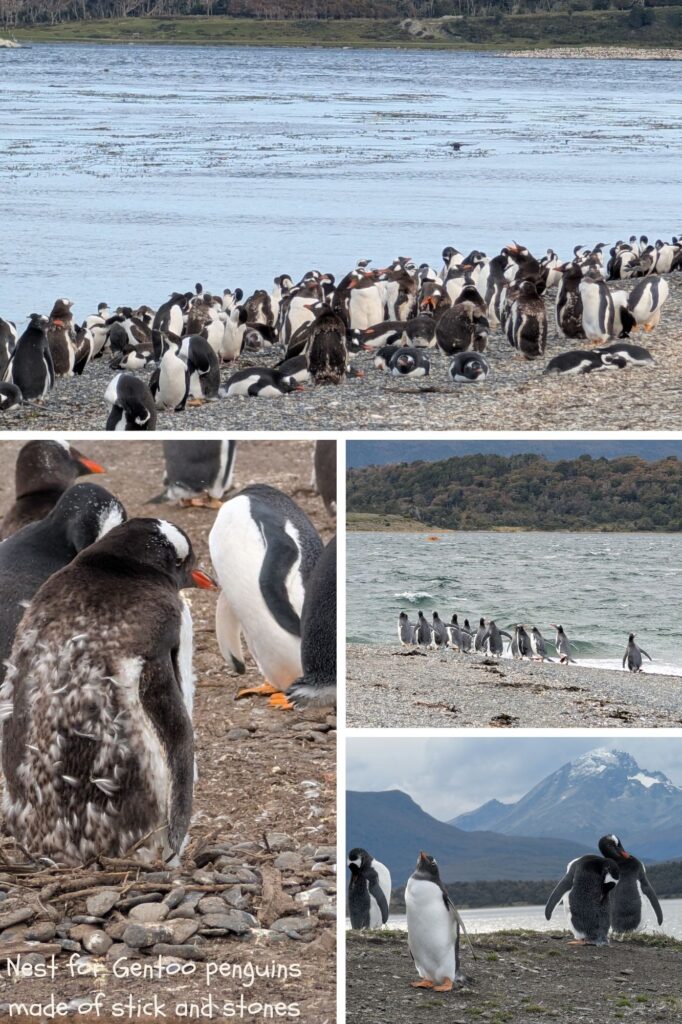
We were especially excited about the day ahead because we were going to see the penguins. Only one tour company, PiraTour, is allowed to take visitors onto the island. Getting tickets was an adventure. When I called about six months in advance, the WhatsApp response said tickets were unavailable. Disappointed, I booked a backup tour on Viator, unsure if they were reselling Piratour tickets or if we would just see penguins from a distance. A few days later, I asked my cousin’s Spanish-speaking wife to reach out. It turned out that something was lost in translation—“not available” actually meant that the bookings had not even opened yet. We were asked to check back later, and when we did, we managed to snag tickets on the exact date and time that we wanted. It was definitely worth the effort.
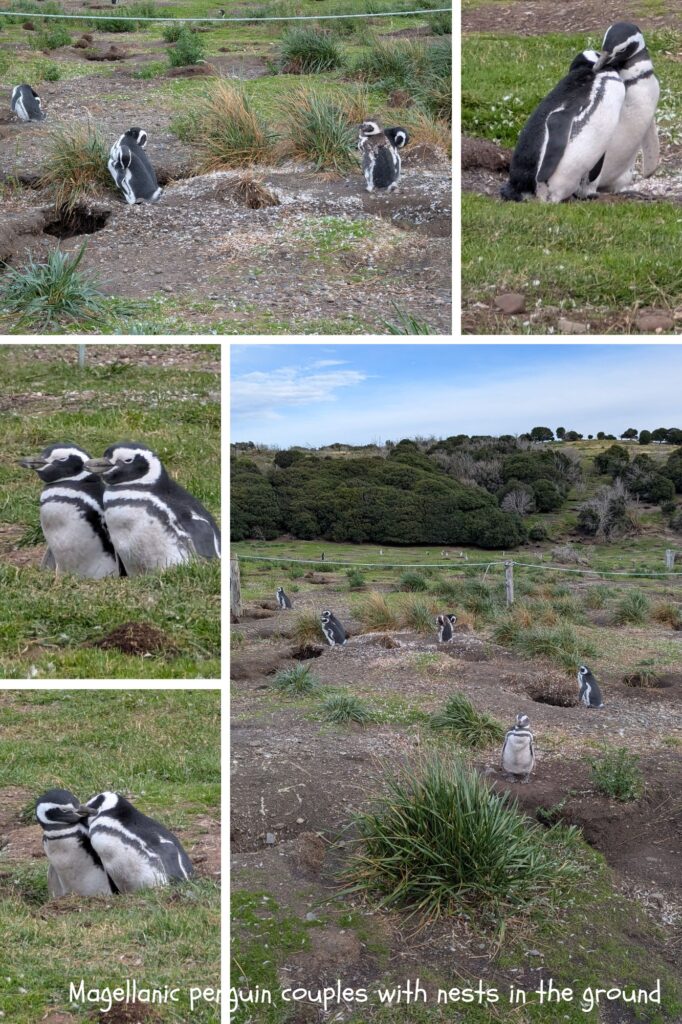
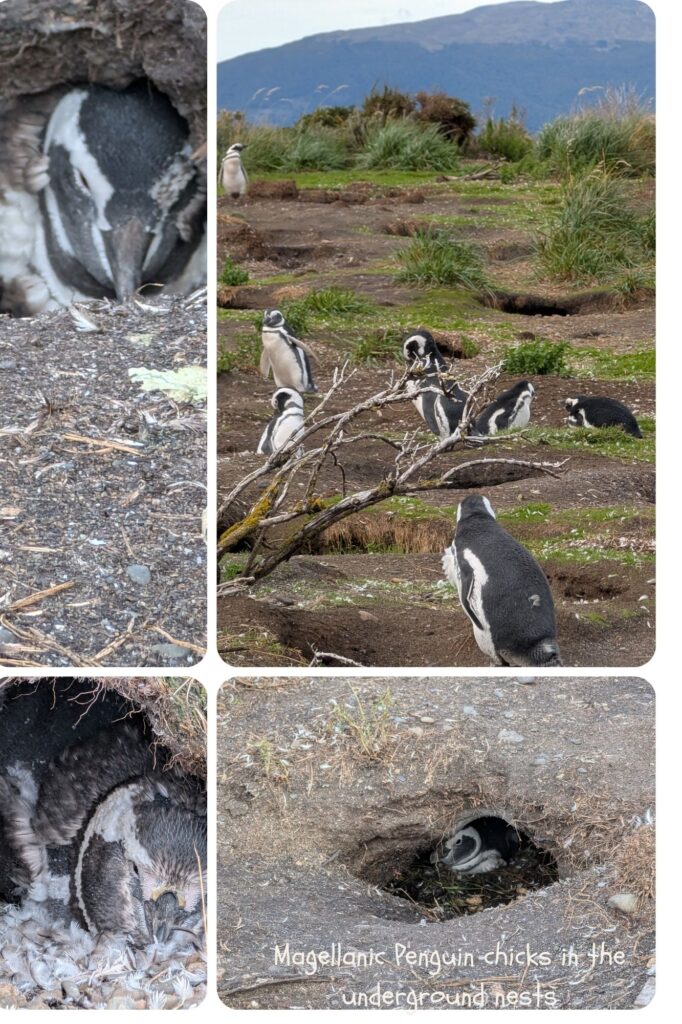
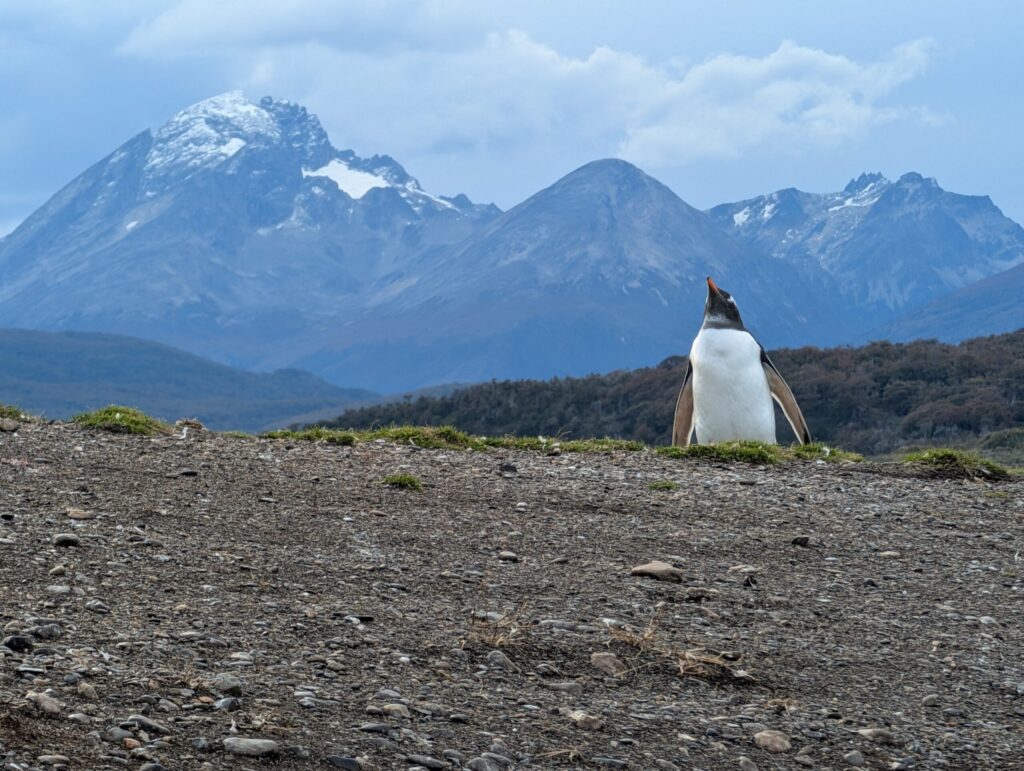
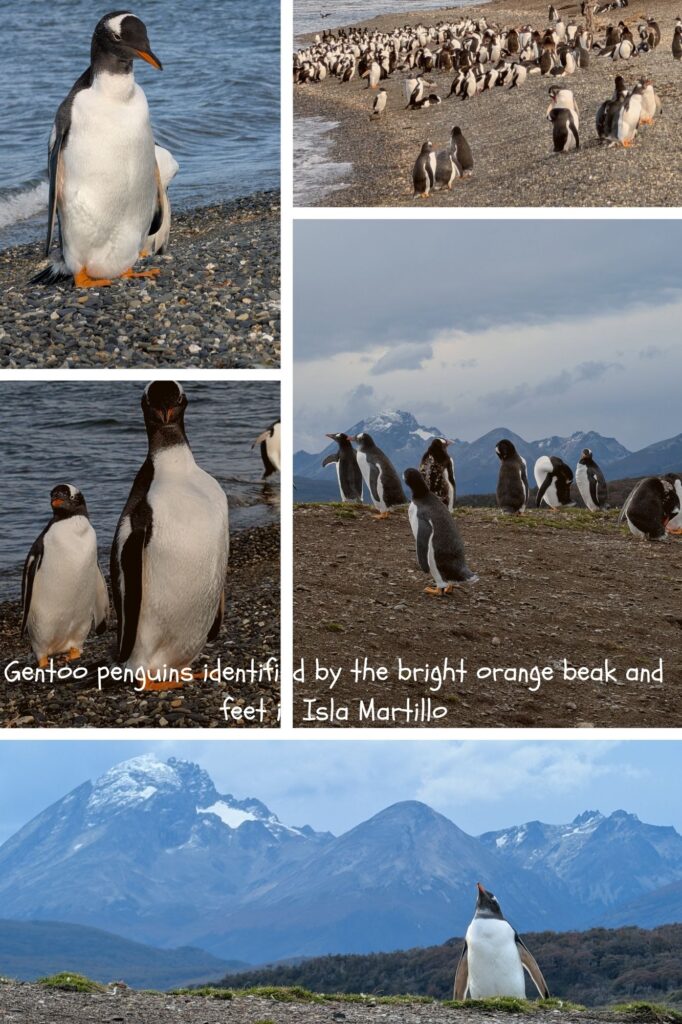
The Piratour team took us on a long bus ride to the privately owned Estancia Harberton. Half the group waited at a café while the others took a short speedboat ride to the island. Isla Martillo has two kinds of penguins: Gentoo penguins and Magellanic penguins. When we landed, the beach was full of Gentoo penguins, their bright orange beaks and feet reminding me of the penguin in *Happy Feet*. These penguins were there for breeding season and would leave with their chicks for warmer waters near Buenos Aires once winter arrived. They spend about six months in the water before returning in spring. The Magellanic penguins are truly black and white, with a stripe on their belly. They pair off and dig nests underground. We saw hundreds of these nests, each guarded by a pair, with chicks tucked inside. The male arrives first, checks the previous year’s nest, refurbishes it, and prepares it for the female. Together, they guard their eggs from predators, mainly skuas.
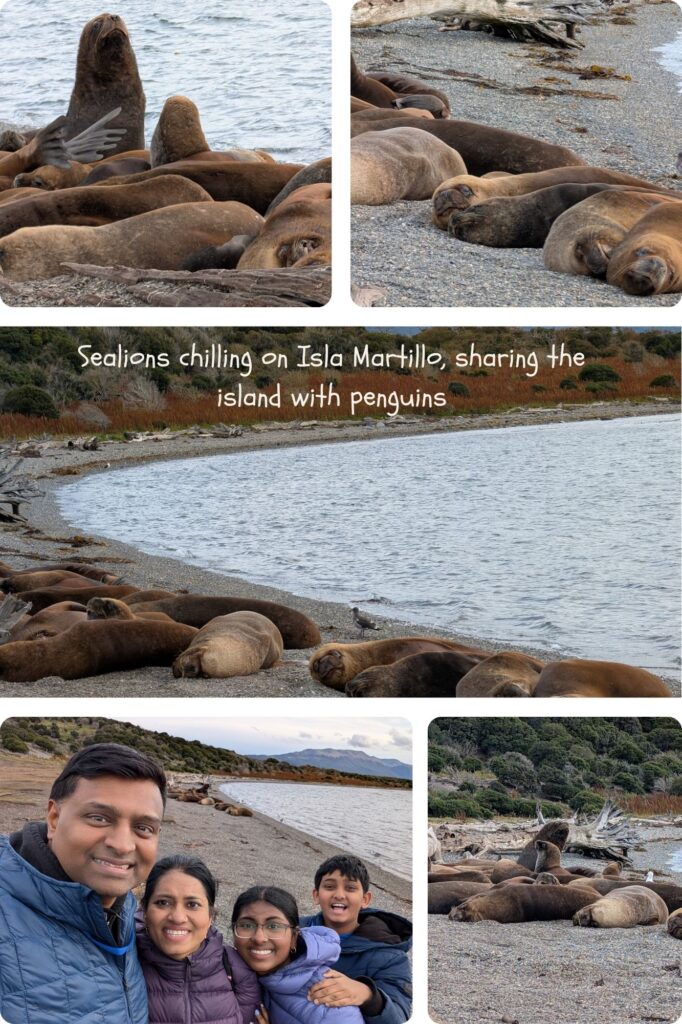
The Gentoo penguins, in contrast, build nests on the ground using twigs and stones. It was an incredible glimpse into their world. We were only allowed about 40 to 45 minutes on the island, but it was enough to see how these penguins thrive in such remote conditions. A small group of sea lions had claimed part of the island as well, so we saw them up close from land. It was a windy day, and as soon as the wind shifted, we could definitely smell them. We hated leaving the penguins and the sea lions, but the next group had arrived, so we headed back to the boat and warmed up with hot chocolate and alfajores at the estancia café. The day was not over yet.
We all napped during the long two-hour drive back to Ushuaia. We were tired and decided to eat at our hotel’s restaurant, Restaurant Le Martial. Tanay was a bit sick, but despite having to take him back to the room, we really enjoyed the food. The service was excellent, and I must mention how kind the waiters were when he was clearly unwell. The Patagonian lamb, the hake, and the ceviche were all excellen
t.
Tierra del Fuego National Park
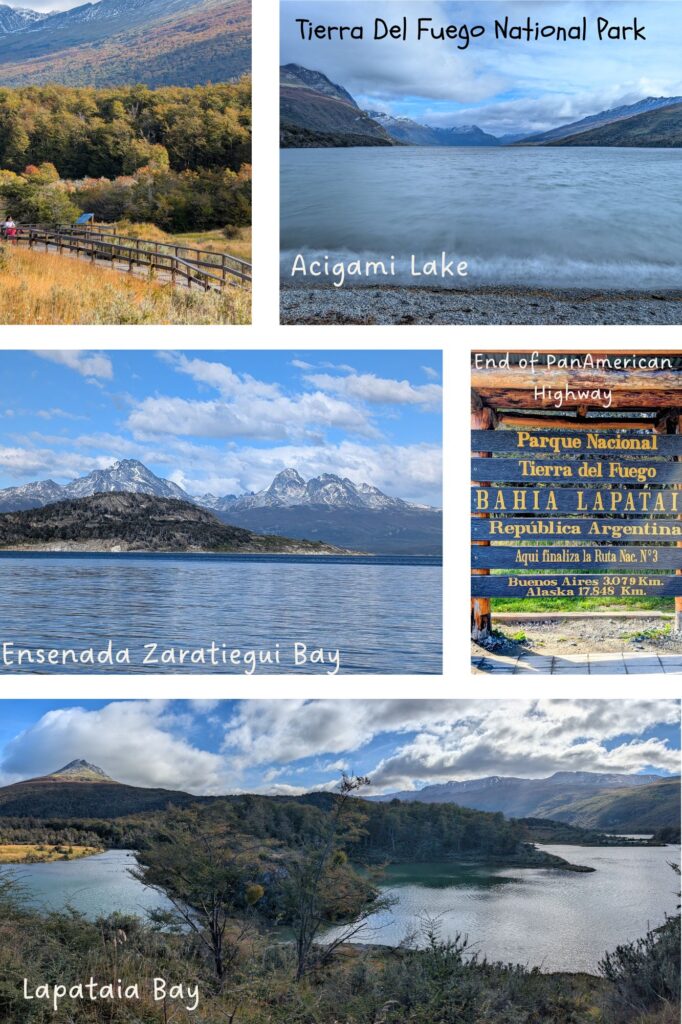
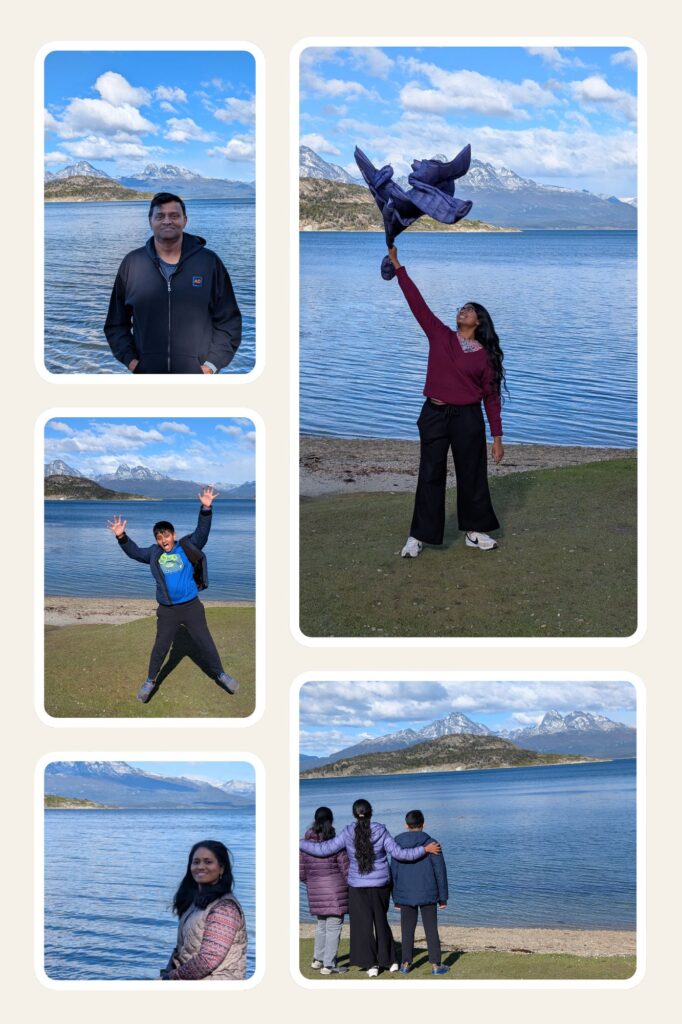
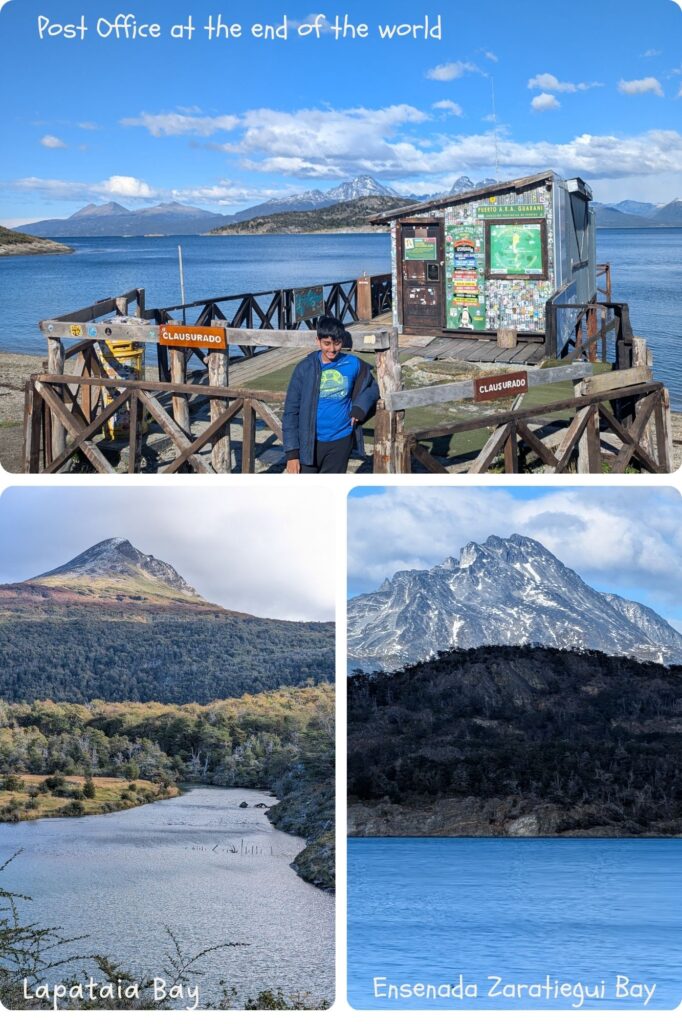
The next morning, we woke up to another beautiful sunrise. We had about half a day left, so we went to Tierra del Fuego National Park. It feels like true wilderness, with multiple hiking trails of varying difficulty. Seejo and I managed just one. We saw views from Lapataia Bay, where the Pan-American Highway from Alaska finally ends, as well as views from Lake Acigami and the Alakush viewpoint. Mountains, water, wind, and a sense of vastness that is difficult to put into words. My favorite view was at Bahía Ensenada Zaratiegui—the mountains, the clear water, and a sense of calmness with a beautiful coastal view. It also has the “end of the world” post office, which was closed for construction but is clearly a well-known and photographed landmark.
We did not have time to take the “Train at the End of the World” because we ran into an unexpected issue. The outer shell of our suitcase cracked, so we had to return to the city to buy a new one and still get to the airport to return our rental car and catch our flight to El Calafate. It was a rush to buy a suitcase, get some additional cash, grab a quick bite to eat, and then get to the airport, where we repacked our suitcase. I also spent time calling AWAY, our luggage manufacturer, to arrange for a replacement to be shipped home. Kudos to them—we indeed had a new suitcase waiting for us when we reached back home.