



One of our favorite Spring day trips is to Longwood Gardens. Longwood gardens has about 1000 acres of parkland of which approximately 300 acres are open to the public. There are sprawling outdoor gardens, woodlands, fountains, meadows, topiaries, and one of the most spectacular indoor conservatories in the country.
In early 1900s, Pierre Dupont bought this land from the Pierce family: a Quaker family, who were owners from the late 1700s. They had already planted a small arboretum on the land. Peirre du Pont probably was delighted with the arboretum and he wanted to make sure that the gardens are preserved for the future. He and his wife were keen horticulturists and developed the gardens, often getting ideas and seedlings from the various places around the world. The gardens have always been open for the public to enjoy.
Spring is perhaps Longwood at its most exuberant. More than 250,000 tulip bulbs are planted each year, many of them lining the 600-foot Flower Garden Walk in carefully choreographed patterns. The result feels both intentional and somehow joyfully untamed at the same time, with waves of color stretching endlessly through the gardens.
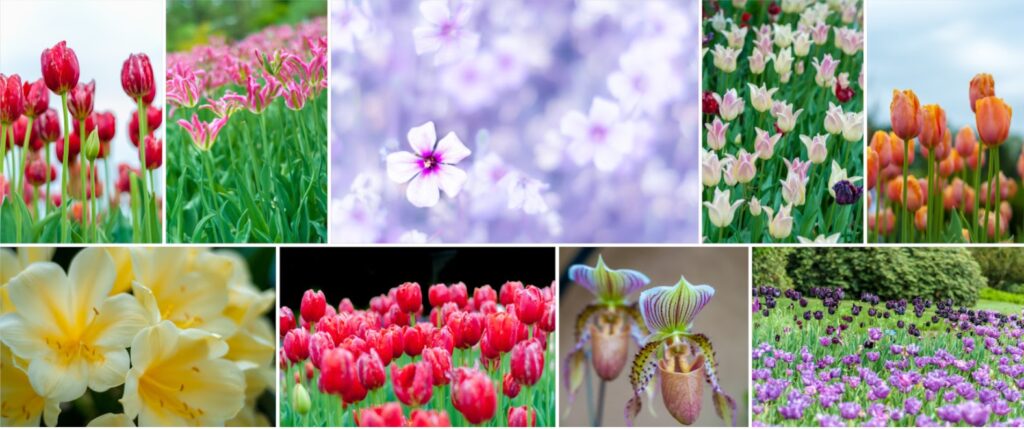
The indoor conservatory is equally extraordinary. Humid, floral, colorful, and surprisingly serene, it houses thousands of plants and flowers from around the world. Unlike the flowers at the florists where the flowers are often genetically modified and have no fragrance, the entire conservatory was redolent with gentle wafting perfumes from all these flowers. There are flowers from all over the world: giant hibiscus flowers with unusual colors and sizes, beautiful fragrant roses, various varieties of orchids that spill from their baskets, the exotic bird of paradise flowers just to name a few. Other than the flowers, the indoor conservatory also had a fern passage that had myriad varieties of pitcher plants, the Venus fly traps, giant ferns, a tiny fruit house with figs, clementines, kumquats and melons and a collection of amazing bonsais.

Outside, every garden feels distinct. There are symmetrical Italian water garden with several fountains, vast meadows lined with gigantic copper beech trees, a topiaries where evergreens are trimmed to create whimsical shapes, waterfalls, lakes, a tree-house and even an idea garden for those who wanted to carry off a tip or two to try in their own gardens.
Longwood is more than a garden. It is a living museum dedicated to the horticultural arts, to beauty and to the simple pleasures of making nature accessible to all.